  1. Home
  2. Cars
  3. News

General Motors to manufacture self-driving cars in Michigan starting next year

Add as a preferred source on Google

California’s Silicon Valley may be the face of self-driving cars in the U.S., but the first state to pass comprehensive autonomous vehicle regulations lies about 2,400 miles to the east. Michigan Governor Rick Snyder signed the SAVE Act legislation into law last week, and one automaker is already taking advantage.

General Motors announced today that it will begin autonomous vehicle production in The Wolverine State next year, starting with a fleet of self-driving Chevrolet Bolt EVs. Testing is already underway around the brand’s Technical Center campus in Warren, but after the holiday season subsides, the next generation of driverless vehicles will hit the streets, packing Lidar sensors, cameras, and a bevy of other autonomous hardware. According to GM, the future is just around the corner.

Recommended Videos

“Revolutionizing transportation for our customers while improving safety on roads is the goal of our autonomous vehicle technology, and today’s announcement gets us one step closer to making this vision a reality,” said General Motors CEO Mary Barra. “Our autonomous technology will be reliable and safe, as customers have come to expect from any of our vehicles.”
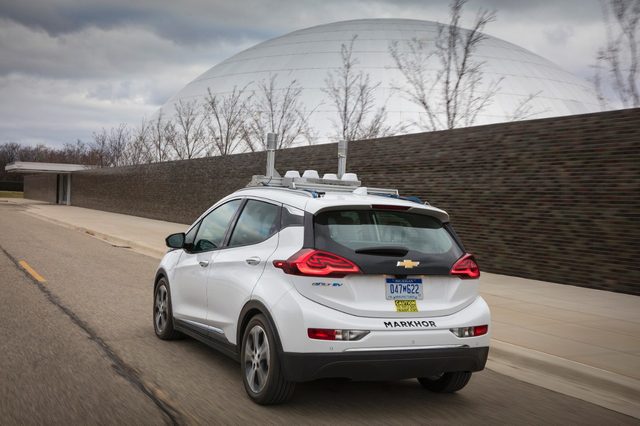
Chevrolet Bolt EV
Image used with permission by copyright holder

Unlike Silicon Valley — which is either blessed or cursed with perpetual summer depending on your perspective — Michigan’s weather can be a tad more harsh. This presents unique challenges and opportunities for GM, as driverless cars can struggle in low-visibility conditions like snow or ice. The company currently has more than 40 self-driving cars testing around San Francisco and Scottsdale, Arizona, but that number is sure to grow.

In addition to permitting autonomous vehicle testing and development, the SAVE Act establishes guidelines for the eventual sale of driverless cars and enables automakers to launch automated ridesharing services. The SAVE Act is also responsible for the newly christened Michigan Council on Future Mobility, which will propose industry standard policies, monitor connected vehicle networks, and determine how traffic data will be best utilized moving forward.

Andrew Hard
Andrew first started writing in middle school and hasn't put the pen down since. Whether it's technology, music, sports, or…
iOS 26.4 adds ChatGPT to you car’s infotainment screen
Apple's iOS 26.4 brings ChatGPT, Gemini, and Claude to your car's screen, adds calming ambient music widgets, and previews the in-car video future that drivers have been waiting for.
CarPlay shown in March 2025.

Apple rolled out iOS 26.4 recently, and while your iPhone got several upgrades, CarPlay quietly had one of its best days in years. The latest iPhone updates bring two meaningful features that can change the way you use CarPlay on your car’s infotainment screen. 

Would you use ChatGPT while driving?

Read more
Sony and Honda’s electric car dream with Afeela series is officially dead 
Sony Honda Mobility has shelved the Afeela 1 and its follow-up, and the EV market has another high-profile casualty.
Machine, Wheel, Adult

Sony and Honda’s shared dream of launching an electric car has just come to an end. The joint venture between the two brands — Sony Honda Mobility — has just announced that plans for the upcoming Afeela 1 electric car have been shelved. Additionally, the follow-up model has been nixed from the roadmap. 

But why did the Afeela go?

Read more
This AI checks if your driving habits signal crash risk
Researchers say eye tracking, heart rate, and personality data can flag risk early.
Person, Wristwatch, Car

A new AI model is taking aim at a question most drivers don’t ask soon enough. How likely are you to crash before you even start the engine?

The system looks at how you behave behind the wheel, pulling in signals like eye movement, heart rate, and personality traits to flag warning patterns early. Instead of waiting for real-world mistakes, it relies on simulated driving tests to surface behaviors linked to dangerous outcomes.

Read more