
“Imagine you step into your vehicle, push a button, and it drives you to the office.” This futuristic vision could have been conjured by any number of automotive or tech executives over the past decade or so as interest in autonomous-driving tech has boomed. This time it was General Motors CEO Mary Barra making the pitch at a media event in New York City, where the traffic-clogged streets can make even the most diehard driving enthusiast long for a robot to take the wheel.
Barra knows more than most that the road to autonomous driving is paved with unrealistic promises. GM has successfully fielded the hands-free Super Cruise driver assist system, but taking the next step has proved more challenging. The automaker now claims it will be ready to do just that in 2028, when it will launch a system that allows drivers to not only take their hands off the wheel, but to take their eyes off the road. Here’s how it plans to get there.
Incremental improvement
GM’s autonomous-driving plans once centered around startup Cruise and a ride-sharing model. After absorbing the assets of Cruise following a series of safety lapses by the startup, GM is taking a different approach, but one that doesn’t require a complete do-over.
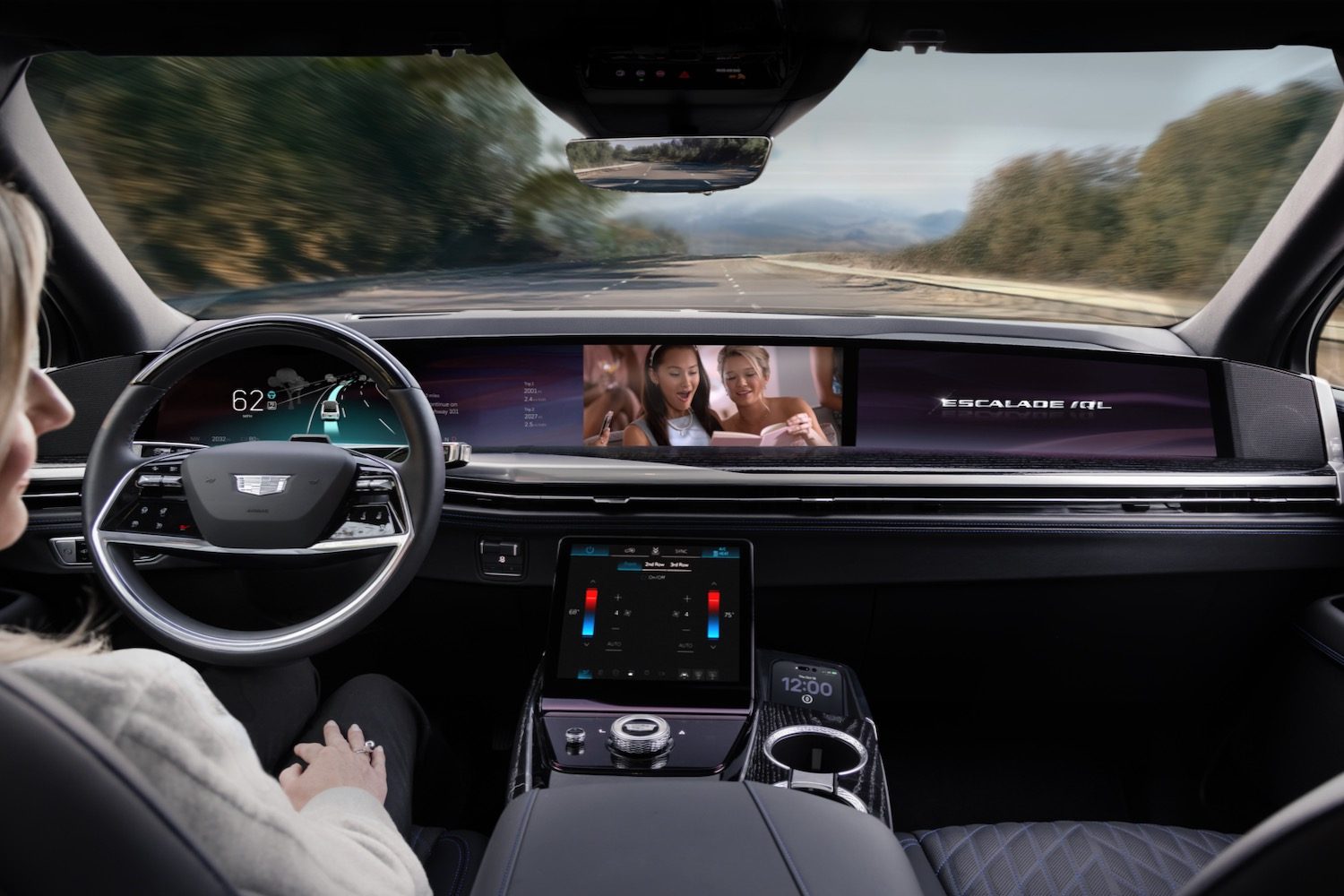
That new approach is focused on bringing autonomous-driving tech to personal vehicles via an expansion of the capabilities already built into many of them via the current Super Cruise system. Launched in 2017, Super Cruise lets drivers take their hands off the wheel as long as they continue to keep their eyes on the road. It can be used on 600,000 miles of pre-mapped roads in North America, according to GM, and is available on 23 models from the $36,495 Chevrolet Equinox EV to the $340,000 Cadillac Celestiq.
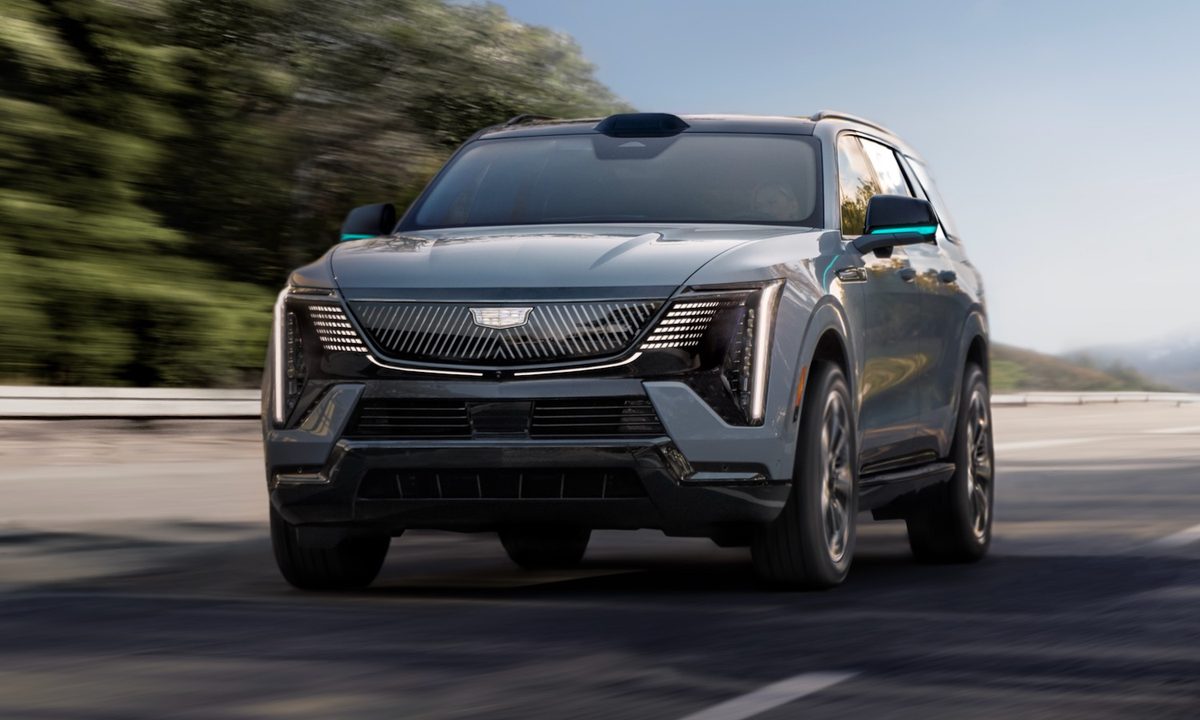
Going “eyes-off,” as GM puts it, will require more sensors and new software derived in part from Cruise’s work, backed by a new electrical and computing architecture. All of these elements will first combine into a system designed for highway driving only, debuting in the Cadillac Escalade IQ electric SUV. Unlike the Mercedes-Benz Drive Pilot system currently available on a limited basis in the United States, the unnamed GM system will work at full highway speeds. Later updates will cover other driving scenarios, although the door-to-door autonomous driving described by Barra is likely much further out.
Hardware upgrades
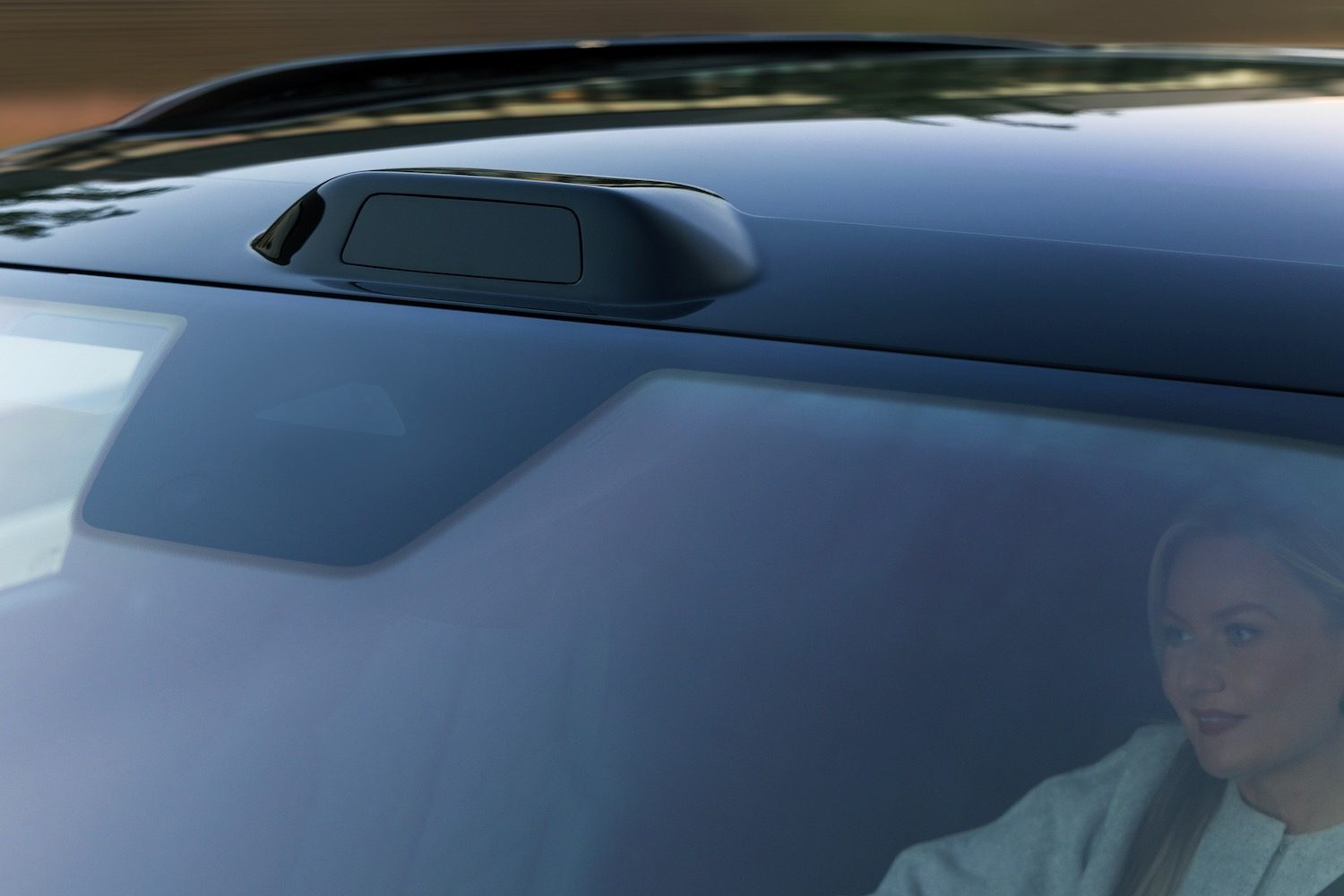
Like the majority of companies developing advanced driver-assist and autonomous-driving systems, GM will rely on a combination of cameras, radar, and lidar to allow the vehicle to “see” its environment. Super Cruise already takes advantage of the first two sensor types, but the addition of lidar will provide greater precision and earlier detection of obstacles, making greater automation possible, Aamir Ali, associate head of product for advanced driver assistance systems at GM, told Digital Trends.
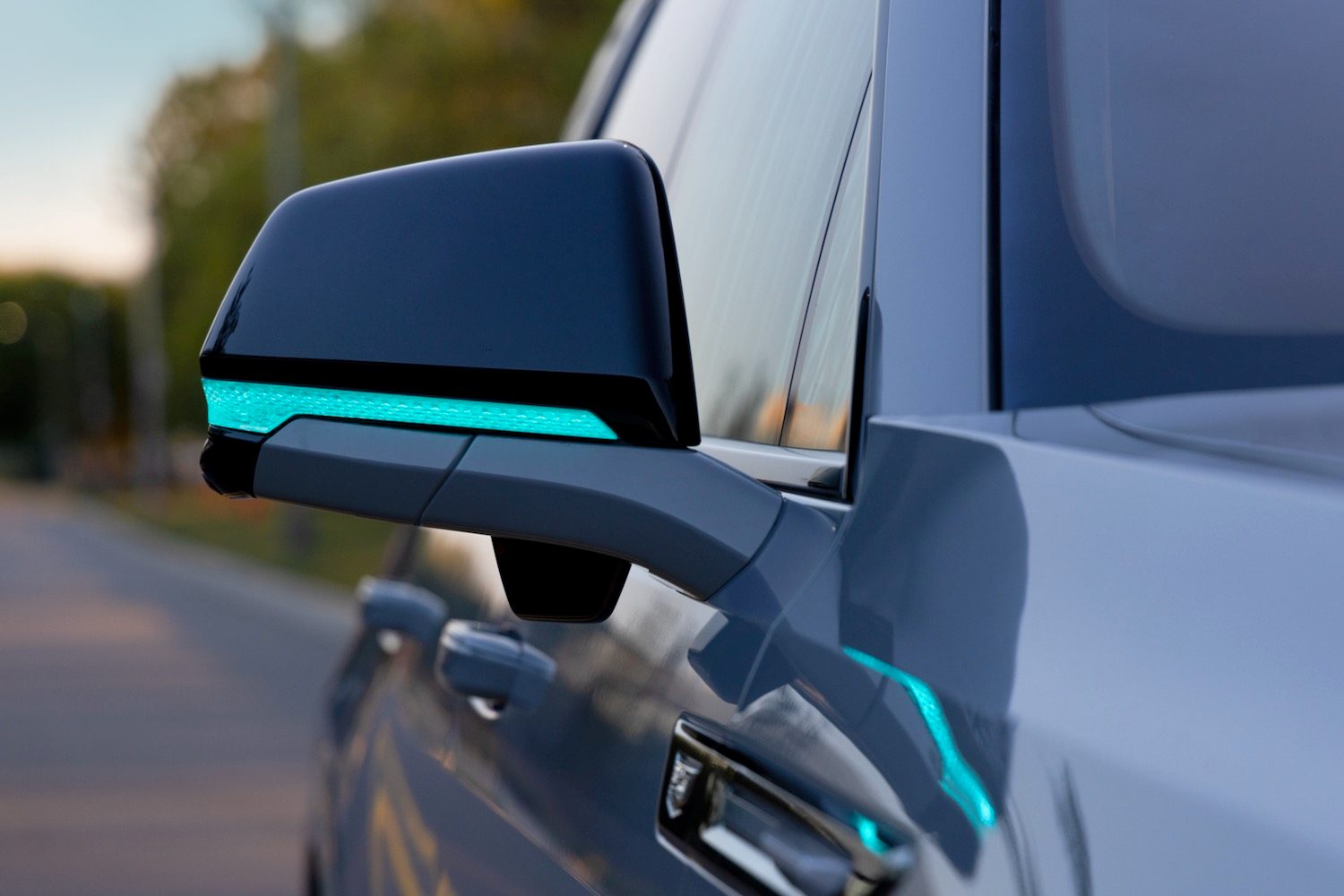
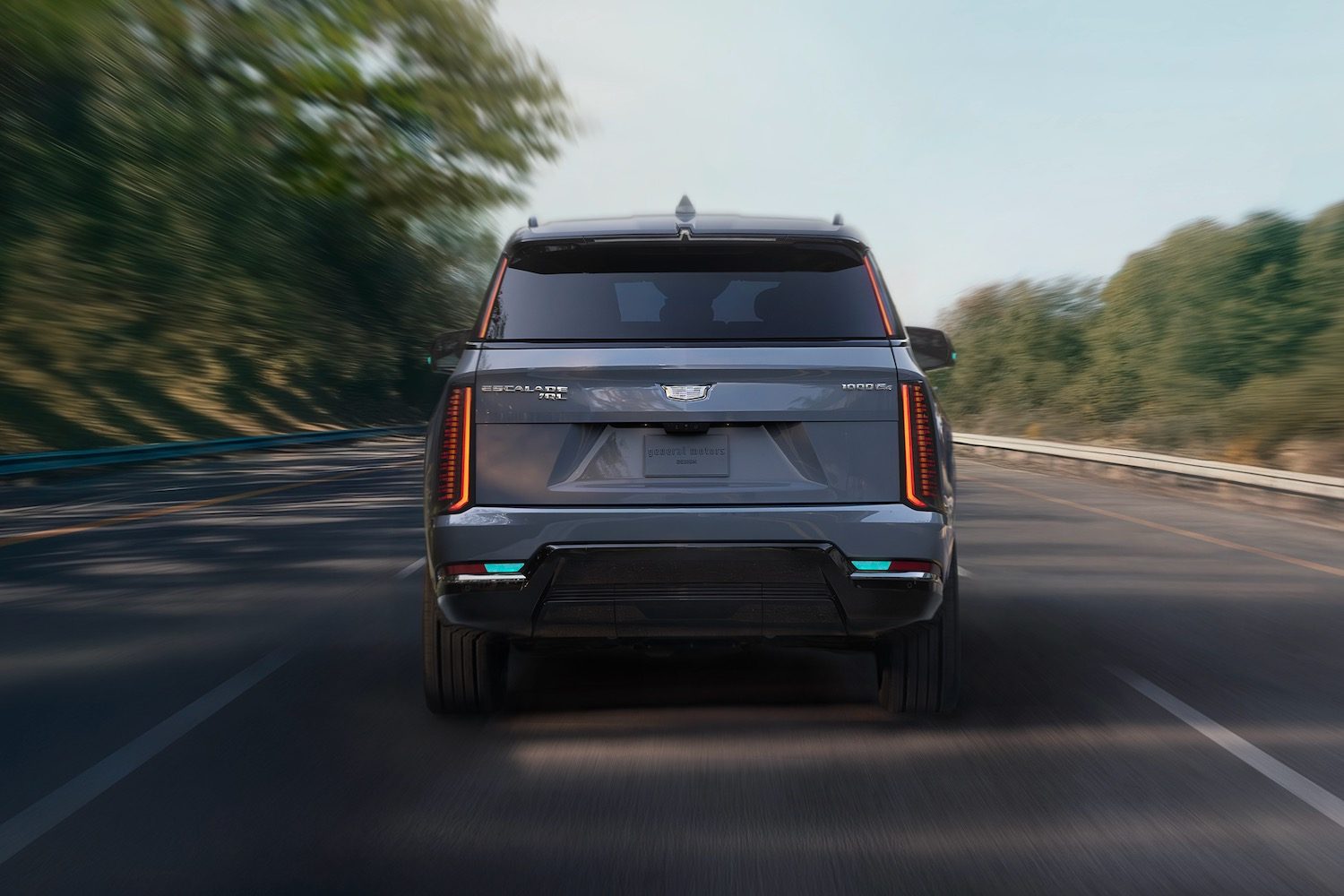
GM showed a mock-up Escalade IQ with a lidar sensor mounted above its windshield, the same configuration as in the Volvo EX90, the only lidar-equipped vehicle currently sold in the U.S. However, the final number of sensors and their placement hasn’t been finalized. What is likely to carry over to production is turquoise lighting inside and out to confirm that a vehicle is in eyes-off mode.
While the sensor suite is specific to this future driver-assist system, all new GM vehicles will eventually get a new streamlined electrical architecture. Like many other established automakers, GM is moving away from dedicated modules for specific features and functions in favor of a more centralized approach. A powerful liquid-cooled compute module will do most of the work, then send commands out to different parts of the vehicle via three “aggregators,” which are essentially junction boxes for routing signals.
More flexible software
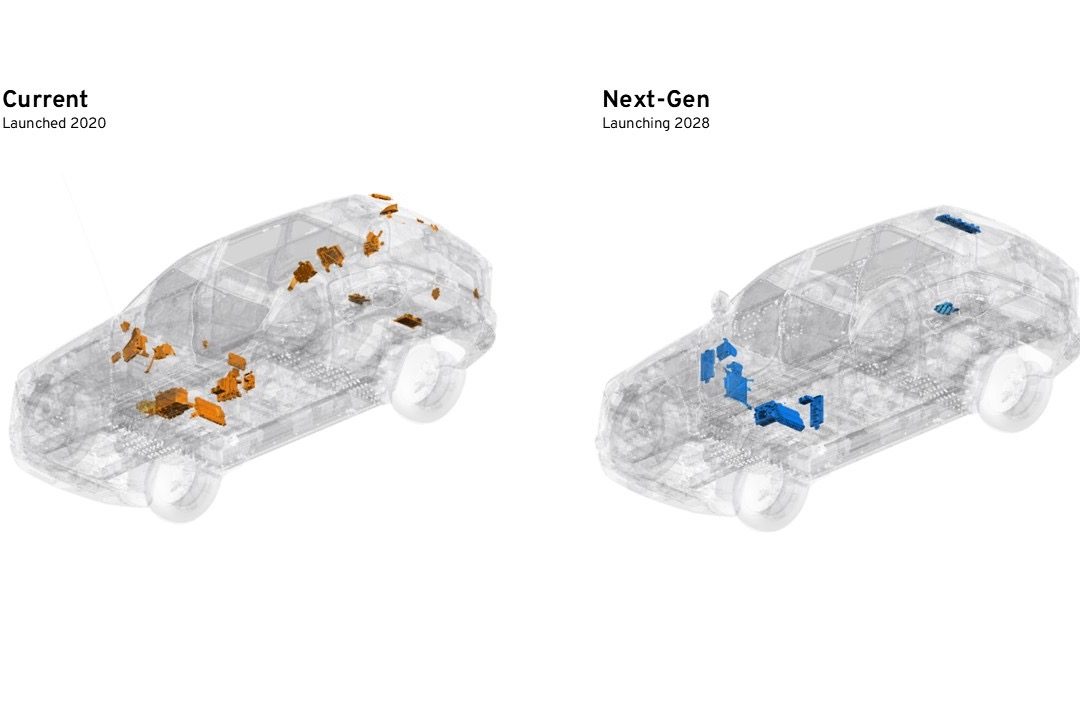
Why is this centralized structure better? It saves material costs on chips, fuse boxes (the aggregators use software “e-fuses” instead) and the considerable wiring needed to connect individual modules to each other. It also means new software can be developed more quickly, since it only needs to be validated across one architecture rather than numerous hardware combinations.
“It’s critical for us,” Dave Richardson, GM senior vice president of software, told Digital Trends. “Fundamentally, to move fast in software and deliver these kinds of features at a cadence that customers expect, you really have to decouple the software from the hardware.”
“That lets us iterate faster, more efficiently,” Richardson said, comparing it to the computer industry’s switch from manufacturer-specific software to device-agnostic operating systems like Windows and Linux. “That’s going to let us take decades of software experience, and libraries, and standards, and bring that to the vehicle.”
Other automakers have developed or discussed “zonal architecture” with a handful of processors, but GM is working to centralize things as much as possible around a single unit. That would seem to place a lot of demand on this one unit, especially considering that GM is rolling out not only a more advanced driver-assist system but also AI voice recognition, first with Google Gemini, and then its own in-house system. But the unit is upgradable enough to future-proof it, Richardson said.
Safety first
This approach will let engineers push over-the-air (OTA) updates faster, but unlike Tesla, GM isn’t planning to launch a partially-finished system as a “public beta” test and refine it later with updates. Those updates will instead focus on non-highway driving and other add-ons beyond highway driving.
“When we ship that, we have to be rock-solid confident that it is safe, it’s reliable, and the bar for that is very high,” Richardson said. “As soon as you can do that on a highway, doing it on different roads or [in] different conditions is, we think, an easier challenge because it’s incremental.” The key is making an eyes-off system reliable enough for people to trust, he added.
Conversely, GM isn’t trusting drivers to stay even partially aware while the system is operating. There won’t be any abrupt handoffs if the system encounters something it can’t parse, Bariş Çetinok, GM senior vice president of software services and product management, said, explaining that “human intervention cannot be the escape hatch for safety.” Instead, vehicles will pull over or undertake evasive maneuvers when needed.
Are we there yet?
This is not the first time we’ve heard an automaker promise to relieve us from the chore of boring highway driving with more sensors, more computing power, and cleverer software, so it’s hard not to look at GM’s latest effort with skepticism. GM deserves plaudits for its methodical approach, and it’s already made impressive progress with Super Cruise, steadily adding features without interfering with the system’s core reliability. But many questions remain.
Can GM really achieve the benefits of lidar needed to level up to its tech, something Volvo has failed to achieve with its lidar integration? Will the software really be good enough to make use of the higher-quality sensor data if it does? And will GM’s new electrical architecture be truly scalable, or will the automaker have the same problem it did when launching Super Cruise? That system was initially available only in the short-lived Cadillac CT6 until GM could integrate its hardware with other models.
In terms of automotive development cycles, 2028 isn’t that far away. Getting so many new components and processes in place and working properly by then will be a challenge. At least it won’t be surprising if, in a few years’ time, it turns out that GM overpromised.