
In an age where distracted driving is a daily headline and in-car tech seems to increase the distraction quotient with every model year, there’s one place where a pure focus on the road ahead seems to persist: on a motorcycle.
But that experience is changing as well, as more riders put their lids on over their earbuds or take calls while riding with a new generation of Bluetooth-enabled helmets that pair with a smartphone. Of course, the next logical progression is the ability to view data in the helmet on either a device like Google Glass – or a Heads Up Display (HUD).
Still, many riders treasure the temporary divorce from the ever-connected world while out riding, but a helmet maker in California thinks more tech in the helmet is a good thing – properly done, of course. Is he right?
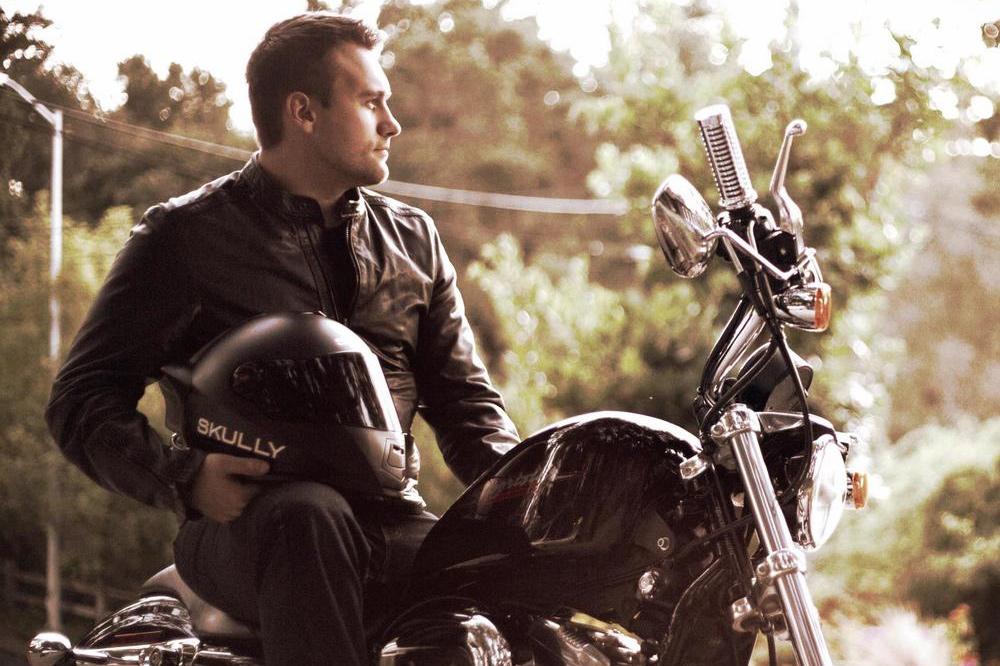
Marcus Weller rides a Ducati Monster and is also Chairman and CEO of Skully Helmets, which is close to beta testing a helmet called the P1 that features a built-in computer and heads-up display system. The way he (literally) sees it, technology can “augment the awareness of a rider rather than detract from it,” Weller told Digital Trends in a telephone interview.
Weller says he is especially concerned about rider safety following a crash he had while riding in Barcelona where he says he rear-ended a car because he was trying to read a street sign. He was not seriously injured. After the incident, he said he had dreams where he relived the crash – until one night when the dream changed. He said in that dream, he envisioned a GPS map floating in space ahead of his bike that allowed him to get directions while also being able to see the car stop ahead of him. He was able to hit the brakes in time and an idea was born.
Weller is no mere garage tinkerer and brings a Ph.D. in psychology to the project, among other skills. He said he focused his talents on the Skully helmet design with two primary goals: use technology to actually cut down on distractions riders face and expand a rider’s view of the world around them. Along with turn-by-turn instructions on the HUD display in the Skully P1 helmet, a tiny camera similar to a car’s backup camera is located on the back of the helmet and pipes a 180-degree rear view to the semi-transparent HUD screen – all the time.
Presto: 360-degree situational awareness for riders who are used to mainly seeing their elbows in the often near-useless rear view mirrors that come stock on most motorcycles. Plus, the helmet can pair with a smartphone (Android at this point) to add phone call, music playback functionality, and more if riders want it.


In this world of “an Internet of things” as Weller describes our now cellphone-centric e-lives, the P1 is unusual in that it’s a standalone device and does not need the connection to a smartphone to operate: the GPS, HUD, power supply, and the operating system (called Synapse) are all built into the helmet, which looks much like any high-end helmet on the market today and functions as a data hub rather than an accessory for a phone. Synapse operates via voice commands and also speaks back to the rider. The HUD system in the P1 sits low and to the right, out of the rider’s main forward vision. Weller said he chose that position because it’s second nature for many people to look in that area for the GPS system in their cars – at least, it was for him.
While many riders might scoff at the notion that putting a HUD and a camera in helmet is reducing distracted riding, Weller claims just that and makes a good argument: any time a rider looks at a street sign, in the mirrors or performs an over-the-shoulder glance to make sure a lane is clear (often called the “lifesaver look”), their eyes are briefly off the road ahead where hazards await. Add up all that look-away time and the typical rider is logging a lot of distance with their eyes off the road ahead, just as Weller’s were that day in Barcelona when he was trying to decipher a road sign. Put navigation and a rear camera view in a helmet and a rider spends much more time eyes-up and forward, Weller argues.
Also, while navigation systems in cars becomes more and more detailed with 3D and split screens, Weller went the opposite direction and made the P1 nav system as simple as possible: simple arrows with voice prompts. “We wanted the system to request your attention, not demand it,” Weller said. In the Skully promo video, the system displays a rear camera view with a simple arrow for directions while the Synapse system keeps voice prompts equally simple with directives like “turn left here.”
“Technology is reaching a state where it has a massive ability to keep us safer,” Weller said. He said in initial tests – conducted using a bicycle – the HUD navigation system was a revelation to him in terms of enhancing his feeling of safety, while riding with the rearview camera system was a close second.
Naturally, cramming a battery, computer, HUD display screen, speakers and whatever else will be needed into a helmet while maintaining its primary function – protecting your noggin – won’t likely be cheap. Weller didn’t have a price but basically inferred it will come close to what riders spend today on a good helmet, bar-mounted GPS unit, Bluetooth com system and maybe an iPod in the mix as well, so not cheap. But, like the old saying goes, if you have a ten dollar head, wear a ten dollar helmet.
Weller said he hopes to have the P1 ready for the road following a beta rollout in the spring of 2014.
Skully is looking for beta testers to help develop the P1, so head on over to their website to sign up for the program. What do you think? Is HUD in a helmet safer or more distracting for riders? Leave a comment below.


