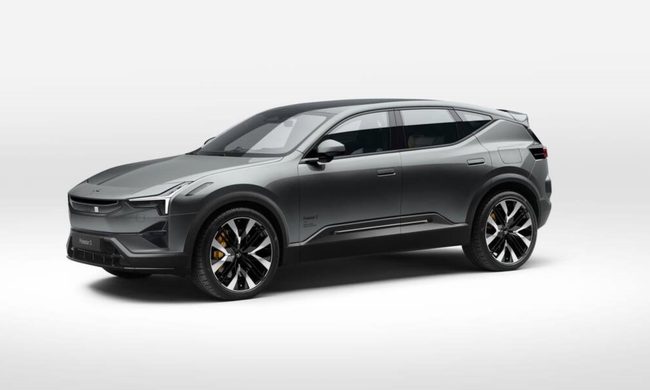
The Lucid Air is a marvelous electric car. It offers more range than any EV currently on sale, plus impressive performance and tech. However, it’s also a sedan, and therefore will always have limited reach in a marketplace dominated by SUVs. Enter the Lucid Gravity, a seven-passenger, three-row SUV launching in 2024 that will allow Lucid to reach a wider audience.
The Gravity is a sensible follow-up to the Air. Having introduced itself to the world with that sedan, Lucid can now channel some of the buzz into a vehicle aimed at a larger patch of the market. But it also presents a challenge. In order to create a true SUV, Lucid had to make the Gravity heavier and less aerodynamic than the Air, cutting into the efficiency that was a hallmark of the sedan’s design.
Even with this less-than-optimal package, Lucid claims 440 miles of range. That’s less than the Air’s 516-mile maximum range, but still more than any other current EV — SUV or otherwise. A coefficient of drag (Cd) of 0.24 helps. That’s better than the 0.26 of the Mercedes-Benz EQS SUV, and it matches the Tesla Model X.
That aerodynamic envelope still leaves room for passengers and cargo. Sliding second-row seats include integrated tables, while the third row boasts “remarkable legroom,” Lucid claims. The Gravity has 112 cubic feet of cargo space with both the second and third rows folded, plus a large frunk with a low lip that allows it to serve as a bench for tailgating.


Up front, a 34-inch curved OLED panel serves as both the instrument cluster and infotainment touchscreen. As in the Air, a smaller screen with additional touch controls sites below it. The Gravity introduces what Lucid calls its next-generation software, with continual over-the-air (OTA) updates over the life of the vehicle.
Lucid didn’t quote horsepower, but said the all-wheel drive Gravity will be able to do zero to 60 mph in less than 3.5 seconds, and will boast a 6,000-pound towing capacity and 1,500-pound payload capacity. An optional air suspension system will allow for some degree of off-road capability, while a 900-volt electrical architecture shared with the Air will provide ultra-fast charging that can add up to 200 miles of range in 15 minutes.
Full pricing information will be released closer to the planned start of production in late 2024, but Lucid is targeting a base price of less than $80,000. That will put the Gravity in the middle of a crowded field of electric luxury SUVs, including not only the aforementioned Mercedes and Tesla, but also the Audi Q8 e-tron, BMW iX, Cadillac Lyriq, and Rivian R1S. None of these rivals can match the Gravity’s range, or its charging speed, though.