
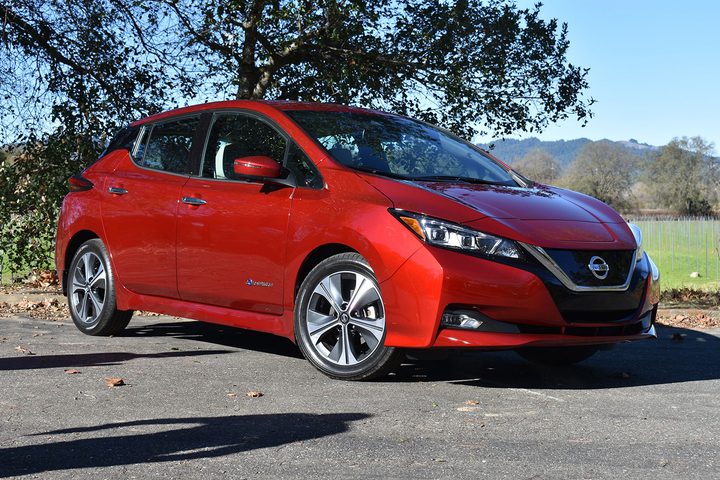
On the eve of the 2018 Los Angeles Auto Show, Nissan announced a program called Nissan Energy, designed to help individuals and communities make the transition to electric vehicles and smart power grids. An important part of the Nissan Energy program involves reusing electric car batteries after vehicles reach the end of their life cycle.
“This is the future we want to build,” stated Denis Le Vot, the chairman of Nissan’s North American division, during a media event in Los Angeles.
The Nissan Energy program has three main parts, starting with energy supply. Nissan will promote the installation of appropriate charging stations in homes and businesses, and it will encourage increasing the number of available charging stations on public property. De Vot added Nissan will also include charging station location information in its navigation systems, meaning Leaf drivers will know exactly where to charge even if they’re traveling in a city they’ve never been to before.
Secondly, De Vot described greater integration with smart grids and smart charging systems that use fully charged electric cars as energy sources during peak demand periods. With a full charge, an electric car can provide power to the owner’s home or feed it directly into the grid when electricity is in high demand, such as early in the evening, and then recharge itself overnight during off-peak hours. Called bi-directional charging, this practice reduces the strain placed on the electricity grid while saving electric car owners money; it’s a win-win situation.
Finally, De Vot described how Nissan is refurbishing used Leaf batteries for use as energy storage systems for stationary requirements. He mentioned that the Amsterdam Arena — a gigantic soccer stadium in Holland — has a backup power system built from a bank of used batteries salvaged from Leaf models that are now off the road. The system has 4 megawatts of storage capacity. These systems don’t need to be stationary, however; Nissan can also use Leaf battery packs to power electric forklifts, for example.
Similar projects are underway in Japan and in China, and Nissan is looking at powering some of its North American facilities with Leaf batteries. These initiatives provide a second life for electric car batteries and solve the problem of recycling them once a vehicle reaches the end of its life cycle.


