  1. Home
  2. Cars
  3. Legacy Archives

Tech-heavy 2014 Range Rover Sport won’t drive itself (but comes close)

Add as a preferred source on Google
Range Rover Sport 1
Image used with permission by copyright holder

Check out our full written review of the 2014 Land Rover Range Rover Sport.

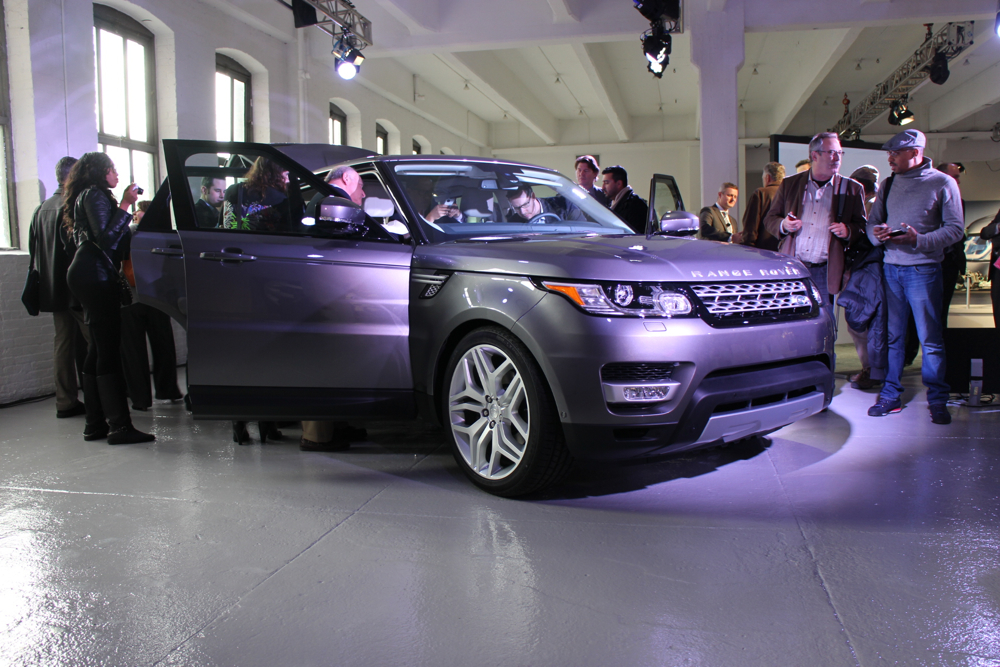
At a private event held the day before the 2013 New York Auto Show, Land Rover removed the velvety curtain off its all-new 2014 Range Rover Sport.

Recommended Videos

The iconic SUV has been completely revamped for the 2014 model year, with Land Rover talking up a number of enhancements including an improved power train, body and interior design, a drastic weight reduction (800 lbs worth!) and a host of new customer-oriented onboard tech.
Range Rover Sport 3
Image used with permission by copyright holder

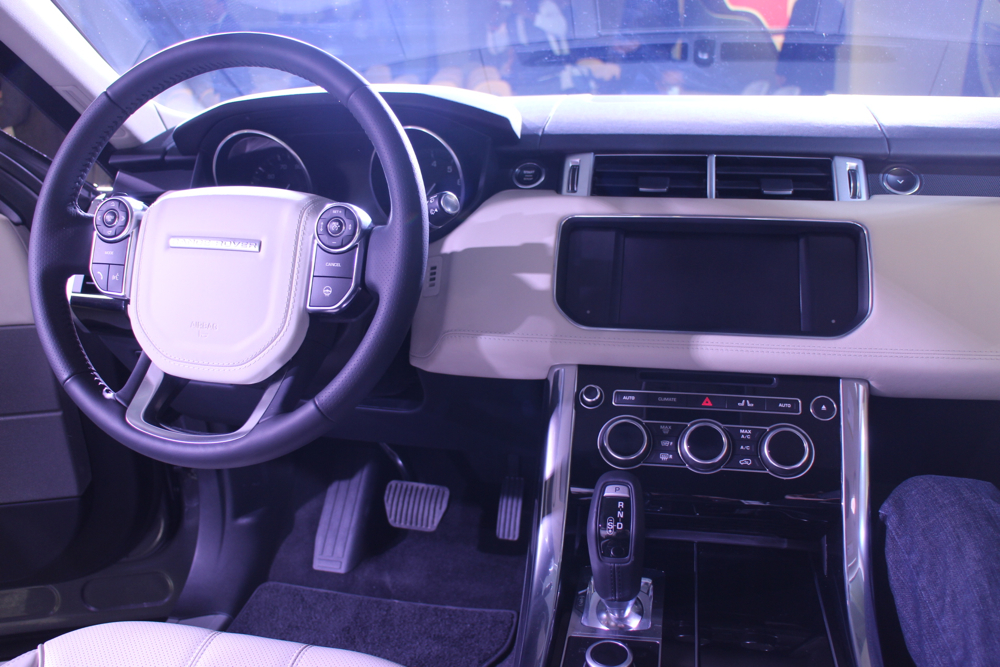
The 2014 Sport has been imbued with a number of driver assistance technologies including enhanced park assist, blind spot monitoring, and active lane departure warnings.

A new traffic sign recognition system will also makes its way into the new Range Rover Sport, which utilizes a forward facing camera and front-mounted sensors to inform the driver of the current speed limit, road closure signs, and passing regulations, all through a high-res LCD display nestled between the instrument cluster.

Land Rover will also introduce an enhanced version of its adaptive cruise control system in the 2014 Range Rover Sport. Drivers will be able to set the desired speed and following distance. The Range Rover Sport will even come to a complete stop during traffic, with the driver needing only to tap the accelerator to resume cruise functions.
Range Rover Sport 4
Image used with permission by copyright holder

Finally, a new reverse traffic detection system called Flank Guard will up the luxury SUVs’ distance sensor count from four to six. These sensors will be able to detect potential side impacts during tight maneuvering, such as in parking garages, near pillars, and other physical obstacles.

Flank Guard will warn the driver via an audible beep and works in conjunction with the vehicle’s central cluster display to indicate proximity of objects and hazards.

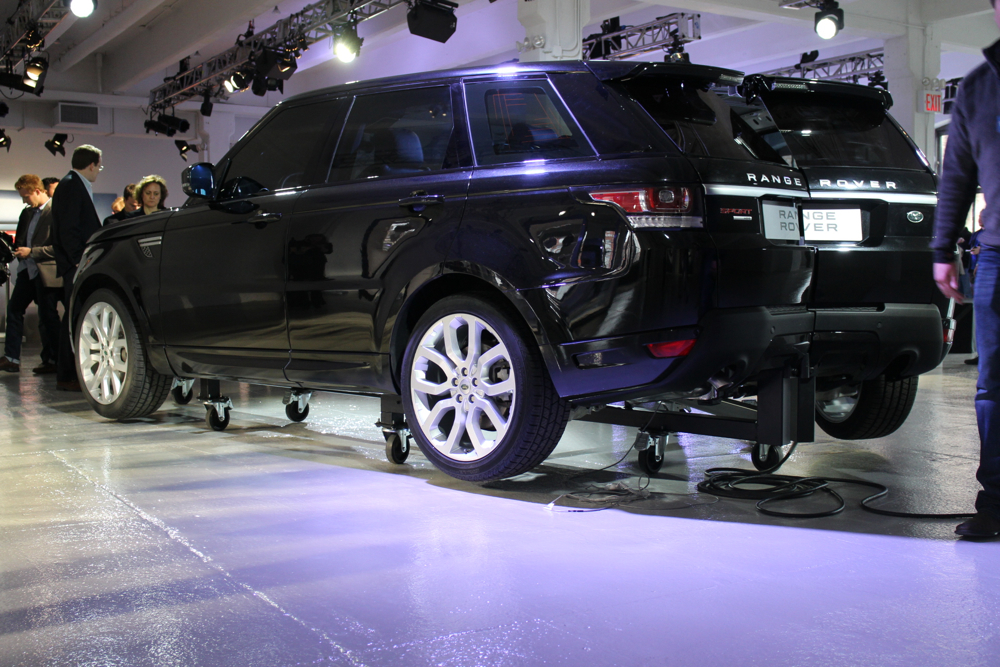
Drivers will have a choice between 340 horsepower supercharged V6 or a 510hp supercharged V8.
Range Rover Sport 2
Image used with permission by copyright holder

Land Rover says the V6 will scoot from 0-60 mph in 6.9 seconds and pumps out 375 horsepower, while the V8 will make the same dash in less than five seconds.

Base price for 2014 Range Rover Sport SE will start at $63,495 with that figure rising to $79,995 for the supercharged V8 version.

Amir Iliaifar
Former Associate Automotive Editor
Associate Automotive Section Editor for Digital Trends, Amir Iliaifar covers the ever increasing cross-section between tech…
iOS 26.4 adds ChatGPT to you car’s infotainment screen
Apple's iOS 26.4 brings ChatGPT, Gemini, and Claude to your car's screen, adds calming ambient music widgets, and previews the in-car video future that drivers have been waiting for.
CarPlay shown in March 2025.

Apple rolled out iOS 26.4 recently, and while your iPhone got several upgrades, CarPlay quietly had one of its best days in years. The latest iPhone updates bring two meaningful features that can change the way you use CarPlay on your car’s infotainment screen. 

Would you use ChatGPT while driving?

Read more
Sony and Honda’s electric car dream with Afeela series is officially dead 
Sony Honda Mobility has shelved the Afeela 1 and its follow-up, and the EV market has another high-profile casualty.
Machine, Wheel, Adult

Sony and Honda’s shared dream of launching an electric car has just come to an end. The joint venture between the two brands — Sony Honda Mobility — has just announced that plans for the upcoming Afeela 1 electric car have been shelved. Additionally, the follow-up model has been nixed from the roadmap. 

But why did the Afeela go?

Read more
This AI checks if your driving habits signal crash risk
Researchers say eye tracking, heart rate, and personality data can flag risk early.
Person, Wristwatch, Car

A new AI model is taking aim at a question most drivers don’t ask soon enough. How likely are you to crash before you even start the engine?

The system looks at how you behave behind the wheel, pulling in signals like eye movement, heart rate, and personality traits to flag warning patterns early. Instead of waiting for real-world mistakes, it relies on simulated driving tests to surface behaviors linked to dangerous outcomes.

Read more