  1. Home
  2. Cars
  3. Smart Home
  4. News

Tesla wants to buy SolarCity to achieve vertical integration in the energy space

Add as a preferred source on Google

Tesla is first and foremost an electric car company, but the brand has always had its eye on the big picture. In 2012, the automaker began building a network of Supercharger stations so its customers would never run out of juice, and three years later, Tesla debuted the Powerwall home battery unit. The brand has taken yet another step toward end-to-end energy dominance by offering to buy SolarCity, one of the largest solar technology providers in the world.

If the all-stock offer is accepted, Tesla hopes to become a vertically-integrated energy company, a one-stop shop if you will.

Recommended Videos

“I think most of our customers have an interest in solar; I’d be shocked if they don’t,” Tesla CEO Elon Musk said in a conference call. “But only a small percentage of them actually have it. I think there will be a large number of customers where we can provide them with a complete solution.”
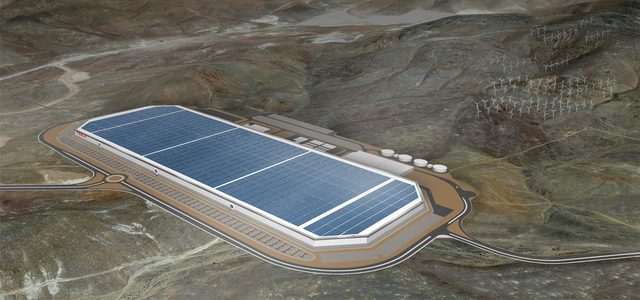
Tesla Gigafactory
Tesla Gigafactory Image used with permission by copyright holder

Musk’s vision of a comprehensive energy solution is not unrealistic. If SolarCity is acquired, customers could theoretically walk into a Tesla store and buy solar panels to power their home, a Powerwall to store energy, and an electric car to get them around. Those solar panels could charge their vehicle as well, which means Tesla would offer utility services from the sun to the streets.

“That’s what people want,” Musk said.

The relationship between Tesla and SolarCity is not a new one — Elon Musk serves as the company’s Chairman and Tesla has provided battery packs for various solar projects in the past. If accepted, the automaker promises to advance solar panel technology, which includes creating units that “add to the look of your home.”

Read more: Blisteringly fast then blissfully refined, Tesla’s P90D is ludicrously livable

For a closer look at the deal itself, check out Tesla’s blog, where a copy of the offer has been posted.

Andrew Hard
Andrew first started writing in middle school and hasn't put the pen down since. Whether it's technology, music, sports, or…
BYD’s latest EV costs just over $10,000, goes 250 miles, and packs a LiDAR, too
LiDAR, 250 miles, and a five-figure price tag: the 2026 Seagull is proof that the future of affordable EVs is already here, just not in the West.
BYD 2026 Seagull.

BYD has officially unveiled the 2026 Seagull, sold internationally as the Dolphin Mini or Dolphin Surf, and the numbers deserve your attention. 

The updated compact EV’s price starts from 69,900 yuan, which is around $10,300, in China, and tops out at 85,900 yuan, which is around $12,600. It debuted at the 2026 Beijing Auto Show before going on sale this week (via CarsNewsChina). 

Read more
BYD’s blazing-fast Flash charging tech for EVs got hot enough to roast a turkey
A real-world test of BYD's Megawatt Flash Charge pushed battery temps to 169.6°F.
BYD Flash charging

A real-world test of BYD's Megwatt Flash Charge technology showed the battery hitting 169.6°F during a charging session. That's hot enough to roast a turkey, and well above China's recommended safety ceiling of 149°F for lithium iron phosphate battery cells. The test, conducted by an automotive blogger who livestreamed the session (via ChinaEVHome), has raised concerns about whether the heat generated by ultra-fast charging degrades long-term battery health.

Why the heat matters

Read more
Tesla’s latest Cybertruck recall sounds almost comical
This time, it involves wheels potentially falling off.
Tesla Cybertruck Official Top View

Tesla’s Cybertruck recalls are starting to sound like parody headlines at this point. Because the company’s latest issue reportedly involves something that most drivers generally prefer their vehicles to keep attached at all times: the wheels.

Yes, Tesla is recalling Cybertrucks over concerns that the wheels could literally detach while driving.

Read more