
As the venerable master Yoda would say, “size matters not,” but while we hate to go against the teachings of a Jedi master, the truth is: it kinda does. At least that’s what a recent study by Truecar.com has us searching our feelings for what we know to be true.
According to the site’s third annual demographic study on the buying habits of men and women, when it comes purchasing a new car, men tend to focus on the size and power of a car, while women have a habit of gravitating to more fuel and cost-efficient rides.
So what is the number one automaker that women flock toward? Sitting at the summit is the Mini. This compact British car’s purchasing audience is 46.2 percent female. Nissan comes in a close second with 47.7 percent, and barely missing out on silver medal is Korean automaker Kia with 45.6 percent.

Driving in the opposite lane are men who – not all too surprisingly – favor exotic car makers such as Ferrari, whose owners are 92.5 male. (We wouldn’t mind getting acquainted with the 7.5 percent of female Ferrari drivers out there — just saying.) And finally, coming in at numbers two and three on the manly male motorist list is Bentley, whose owners are 83.4 percent all man and Maserati with 82.8 percent male buyers.
In a press release issued for the study Truecar’s senior analyst Kristen Andersson pointed out that women buyers routinely set price points at or below $25,000 for many of the cars and crossovers they wish to purchase, with women much more interested in smaller vehicles and greater fuel economy. Meanwhile, when it came to picking a car, guys consistently gravitated towards fast exotic cars, SUVs, or bigger pickup trucks.
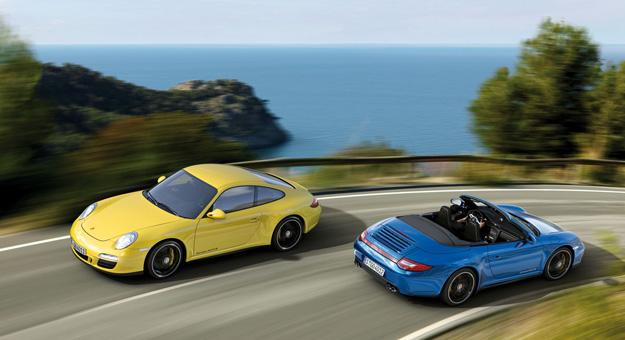
In keeping pace with the study, the car with the highest percentage of testosterone-infused buyers was the Porsche 911 which sold to 88.2 percent male buyers. By contrast, the car with the largest percentage of female buyers was the Volvo S40. Figures place the number of female Volvo S40 buyers at an overall majority of 57.9 percent.
Okay, so women are from Venus and men want to drive cars the size of Mars, right? Well, yeah, but that’s not the whole story. While women are stereotypically labeled as wanting to be pampered and men, of course, are tough, strong, and all the other superlatives you can conjure up, it is actually men who enjoy being pampered when it comes to cars – specifically inside their luxury vehicles.
Women on the other hand have a far less superficial desire when it comes to their cars, often forgoing luxury vehicles altogether, with Andersson explaining how women actively prioritize safety as opposed to more exorbitant automotive needs. Of course, this factor can also be read as a reflection of increased buying power men enjoy over women — a thought Andersson also seems to echo.
“While gender preferences amongst the buyers of various automotive brands still exist, the gap is narrowing,” said Jesse Toprak, Vice President of Market Intelligence at TrueCar.com in a statement. “The SUV and truck heavy mix of the domestic automakers continue to generate a disproportionate number of male customers, while the exotic brands remain to be the best medicine for a midlife crisis.”

Indeed, as the 2011 study shows, 12 out of the top 20 brands most men flock to were exotic or luxury branded cars, while 16 out of the top 20 brands for women were made up of foreign import brands (not counting Fiat, which was counted as domestic in this study).
While the study isn’t exactly telling us anything we don’t already know, it does provide an interesting window into the automotive buying patterns of the sexes, and perhaps more importantly may also give us yet another look at the continued economic disparity between men and women.


