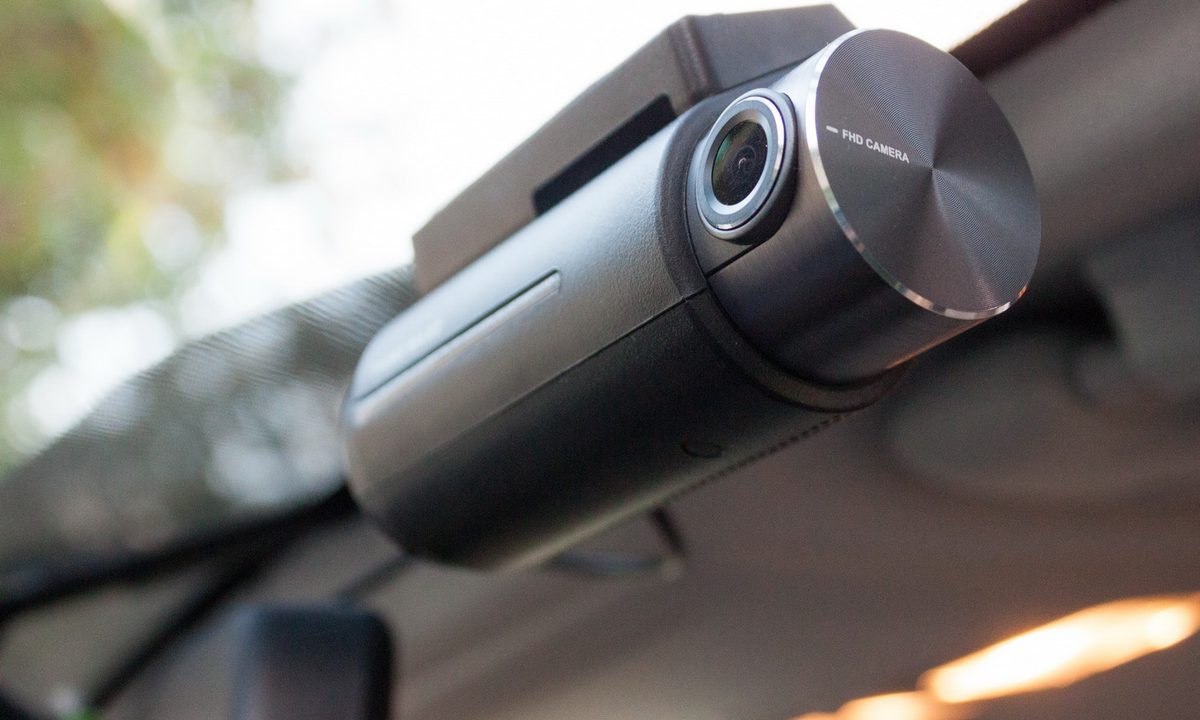
“Despite the narrow view, the Thinkware system is one of the clearer dual camera setups that we have tested at this higher price point.”
- High 1080P video quality
- Intuitive mobile app
- Micro SD card dual save backup feature
- Lane departure and frontal collision warnings
- Higher price
- No GPS or Speed display on video
- Road alert system can become annoyance
“Why you can trust Digital Trends – We have a 20-year history of testing, reviewing, and rating products, services and apps to help you make a sound buying decision. Find out more about how we test and score products.“
Thinkware is one of newest innovators in the dash camera market and is looking to both protect and record your drive with its F750 dash camera. The camera includes road alerts and various safety features that hope to separate it from the growing number of competitors. We spent some time with both the F750 and the Thinkware Rearview camera to see if the combo is up to snuff.
In the box
The Thinkware F750 system comes with the main camera unit, a 12v car charger, adhesive mounting tape, 16GB MLC Type MicroSD Memory Card, and a MicroSD card adaptor. The MicroSD card is a proprietary device sold by Thinkware that has 512mb flash memory dual support to save a backup clip of any emergency recording. The body of the F750 camera is made up of hard plastic with a rotating metal cylinder that contains the camera lens. On one side, the unit has places to plug both the DC power source and the Micro USB port for the rear camera. The only buttons on the device power it on and off, start and stop recording, mute the sound, format the MicroSD card, and turn Wi-Fi on and off. The system is about four inches wide and two inches deep, but mounts flush with the windshield. You can also enable a white LED on the front of the unit that display similar to the lights on KITT from Knight Rider to let any intruders know they are being recorded. The Thinkware rear camera that can be purchased separately for $90 is small, cylindrical, and includes a 21-foot Micro USB cord to allow even those with longer vehicles to mount it in the rear window.
Initial camera setup
Securing and detaching the F750 camera to the front windshield is simple with a removable plastic mounting plate that adheres to the glass with the help of the included 3M tape. Once the unit receives power from the 12-volt car charger, it will light up and give a vocal reminder to regularly format the memory card. The unit will completely turn on and start recording in about 30 seconds and gives a vocal alert to let you know that “continuous recording” has started. The F750 will also give a vocal and LED alert when the device has found a GPS signal and is tracking your location.


To check the video alignment, you will need to first press the Wi-Fi button on the unit and second connect the camera to your smartphone. The Thinkware Dashcam Viewer application is available for Android and iOS and is necessary to view clips and adjust camera settings on the go. While the Wi-Fi is on and connected to a smartphone it will stop recording video. The system will show both the front F750 camera and rear camera if connected. For the front camera, you will get guidelines to help line up the camera in the proper spot for features like the Lane Departure Warning and Front Collision Warning System.
Video recording quality
Despite the additional cost to add the rear camera accessory, both the front F750 and rear camera film at a high quality 1920 x 1080p at 30fps. Generally, other manufacturers such as BlackVue or Cobra will make the rear camera lower quality so the advantage from the Thinkware camera is apparent. Video clarity is also slightly better with the front F750 camera due to a wonderful Sony Exmor Sensor that helps give a brighter picture and bring out more details in low light. The biggest criticism of both the F750 and rear camera is a rather small viewing angle of only 140 degrees. Most other popular front dash cameras have around 160 or even 170 degree viewing angles and there is a noticeable “keyhole” view at times.. Despite the narrow view, the Thinkware system is one of the clearer dual camera setups that we have tested at this higher price point if you combine the $250 price of the F750 with $90 for the rear camera.
Parking mode is typically a standard feature, but the Thinkware F750 requires a $30 hardwiring cable kit.
Both front and rear cameras record simultaneously and clips are limited to one minute segments without any options to change the time length. Although the system does record GPS and speed, these numbers are not listed on the video and are only viewable within the Thinkware PC Viewer desktop program. Instead, the video timestamp shows only the date, time, and seemingly useless information like the power voltage to the camera (Update: The latest firmware update displays the speed on the video). The camera defaults to continuous recording mode which records the one minute clips and simply overrides the older clips as you run out of space, only saving important clips if an emergency recording is triggered but the G-sensor. While most other dash cameras have a parking mode as a standard feature, the Thinkware F750 requires a $30 hardwiring cable kit. Only with this kit will the system record while you are away and let the motion sensors trigger on both the front and rear cameras.
Safety features
The Thinkware F750 dash camera also includes various systems to help keep you alert on the road. Within the Thinkware mobile application, you can enable/disable each system and modify the sensitivity to ensure you don’t get too many false alerts. The Lane Departure Warning System will beep twice if it detects that your vehicle is drifting out of your desired lane. This particular alert worked well but cannot determine if you are changing lanes intentionally and can become annoying over time. The forward collision warning is meant to alert you if an object in front of the car is approaching too fast and give you time to apply the brakes. This alert seemed to be too sensitive in congested traffic, even with the lowest sensitivity setting and would often beep when a car merged at a relatively safe distance. The last alert is a general safety camera alert that is meant to warn drivers of upcoming speed traps or red light cameras. This particular alert seemed responsible for various beeps throughout town with little indication of what was going on. While all these systems seem like convenient features, we found over time that we would completely disable them on longer drives to avoid the annoyance.
Our Take
The Thinkware F750 dash camera offers a reliable and clear video system without many of the complicated setup problems that we have seen from other competitors. While the additional safety features seem like a nice selling point for the higher price tag, they often fall short on their utility.
Is there a better alternative?
If you’re looking at the higher price range dual camera setups then the F750 is less complicated than the BlackVue with similar quality. But for a single dash camera unit there are much cheaper alternatives with better quality.
How long will it last?
Dash cameras have stayed around 1080P for awhile and the F750 offers enough quality and features to keep it relevant to most buyers even without any major updates.
Should you buy it?
Do buy if you are willing to spend extra money for the road safety features that the cheaper competition doesn’t have. Don’t buy if you are looking for the best quality at the best price.