
Electric cars are strongly associated with the latest technology and high performance, partly because of the possibilities electric powertrains create, and partly because their makers are desperate to prove that EVs deserve consideration alongside internal combustion cars. But Nissan has always taken a different approach. Where the Tesla Model S wooed customers with quick acceleration and a big touchscreen, the original Nissan Leaf — which went on sale before the Tesla — was just a basic small car with an affordable price, and without a tailpipe.
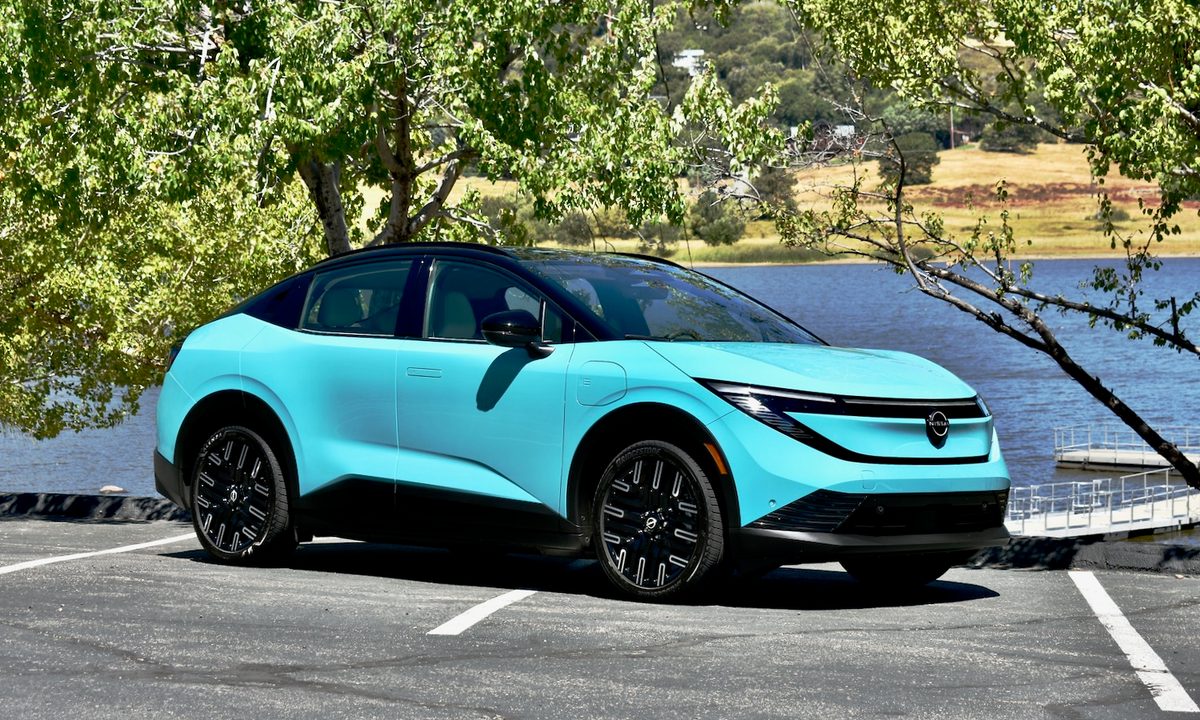
The 2026 Nissan Leaf shows that there is still life in that format. It looks radically different inside and out, but the new Leaf is still fundamentally a small EV that won’t break the bank. It launches in S+ form with 303 miles of range and a $31,485 base price. That makes it the least-expensive new EV currently sold in the United States and, according to Nissan, is consistent with the base pricing of the two previous Leaf generations when they launched as 2011 and 2018 models, adjusting for inflation and feature content.
With a dearth of affordable EVs, there’s no better time for Nissan to reboot the Leaf. But will new car buyers be giving up too much for that attractive price point? We recently had the opportunity to drive the 2026 Leaf (albeit in pricier Platinum+ form) and can report that it’s the real deal.
Takes full advantage of a clean-sheet opportunity
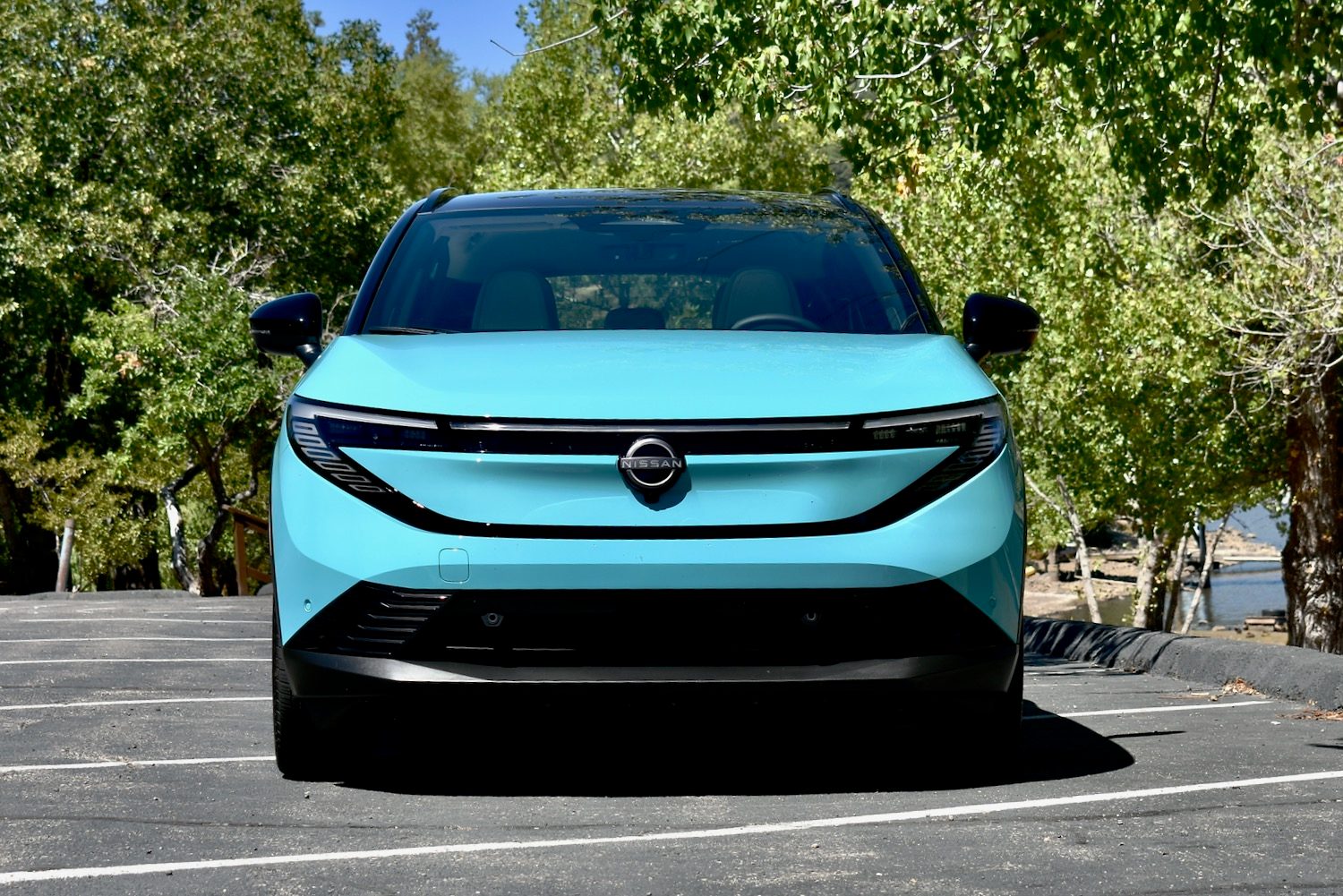
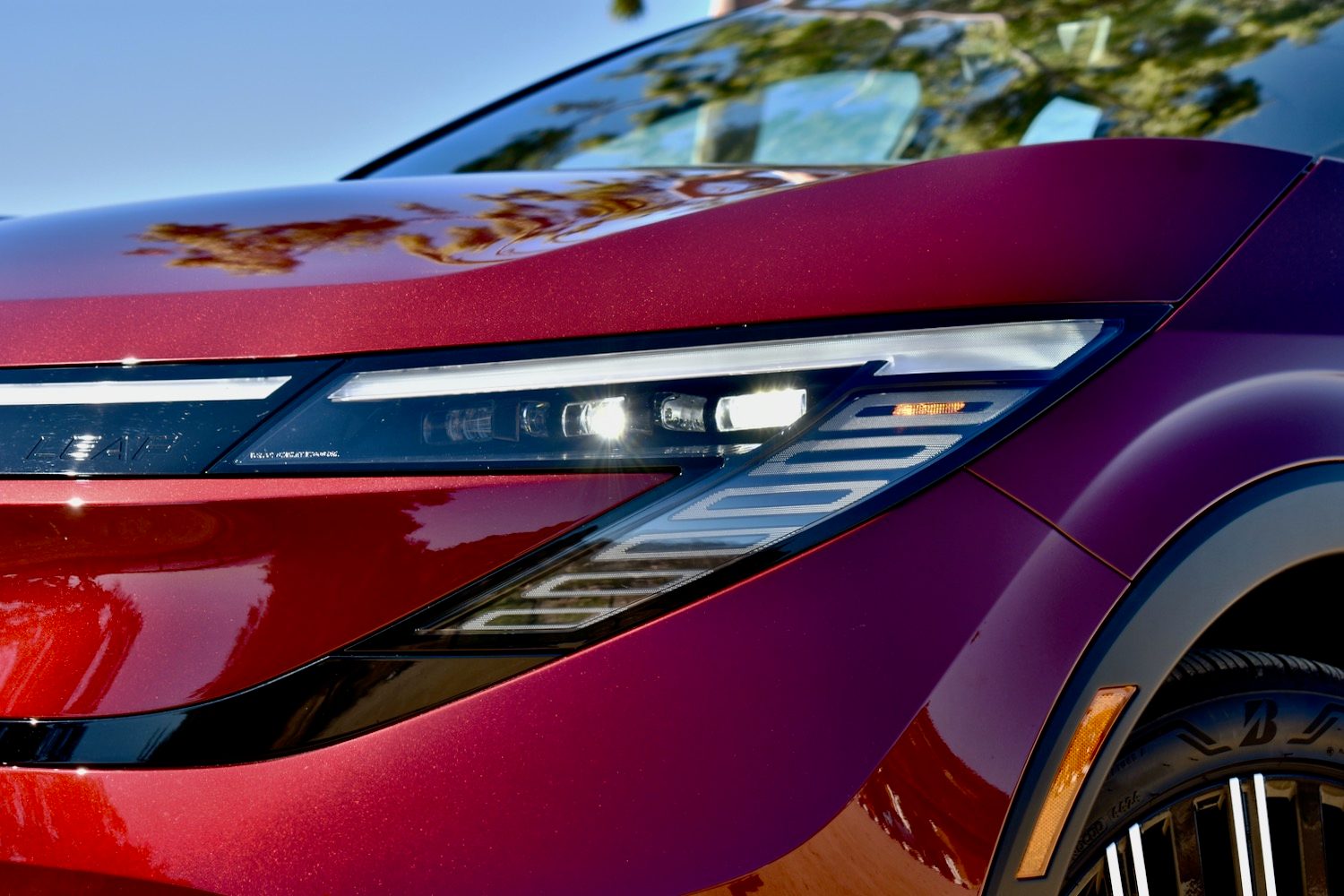
Unlike the previous two generations, the third-generation Leaf is based on a dedicated EV architecture, specifically the CMF-EV architecture used by the larger Nissan Ariya (which is due to be discontinued, see below) and the European-market Renault Renault Mégane E-Tech. That means designers didn’t have to work with gasoline-car proportions and were able to give the Leaf a distinctive shape. The new Leaf is clearly an EV, but it doesn’t look like a prop from a low-budget sci-fi film. And while it’s three inches shorter than the outgoing model, the new Leaf preserves interior space and has the substantial appearance of current crossovers.
Under the skin, a liquid-cooled 75-kilowatt-hour battery pack replaces the air-cooled 60-kWh pack as the larger of two offerings. A Leaf S model with a 52-kWh pack will launch sometime after the 75-kWh models, at an even lower price point. The new Leaf also ditches the outgoing model’s esoteric CHAdeMO DC fast-charging connector for a NACS port that allows connectivity with Tesla Supercharger stations. Platinum+ models like our test car also get vehicle-to-load (V2L) capability, letting you draw power from the battery pack to charge devices, tools, and toys.
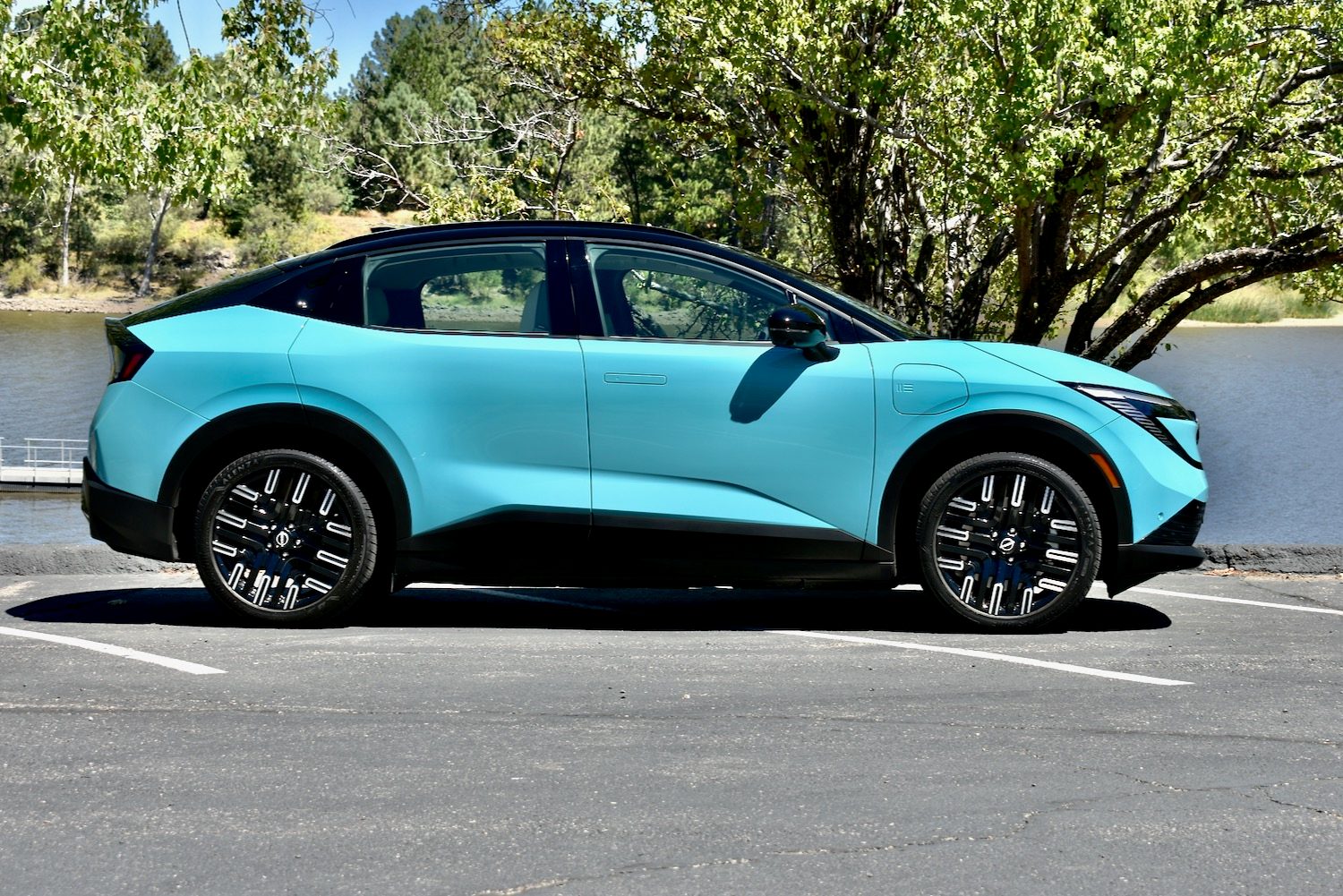
Nissan still doesn’t offer a dual-motor all-wheel drive option, and the 214 horsepower and 261 pound-feet of torque available in big-battery front-wheel drive models (the base Leaf S is rated at 174 hp and 254 lb-ft) isn’t Earth-shattering. That’s okay, as the chassis had trouble dealing with even mildly-enthusiastic driving and the steering seemed meant for a bus rather than a compact car. Still, ride quality was impressive for the price point and a big improvement over the outgoing Leaf, thanks in part to a switch to multilink rear suspension.
Infotainment tech has changed a lot since the previous-generation Leaf arrived in late 2017, but the new model makes up the lost ground. All models feature a digital instrument cluster and central touchscreen placed side-by-side in a clean installation, plus standard wireless Apple CarPlay and Android Auto. The screens are 12.3 inches in Leaf S and S+ models, and 14.3 inches in SV+ and Platinum+ models. Google built-in apps are available on those two higher trim levels, including Google Maps for seamless road-trip route planning, and Platinum+ models get a 10-speaker Bose Personal Plus system with front-headrest speakers.
Still feels like an economy car in some places
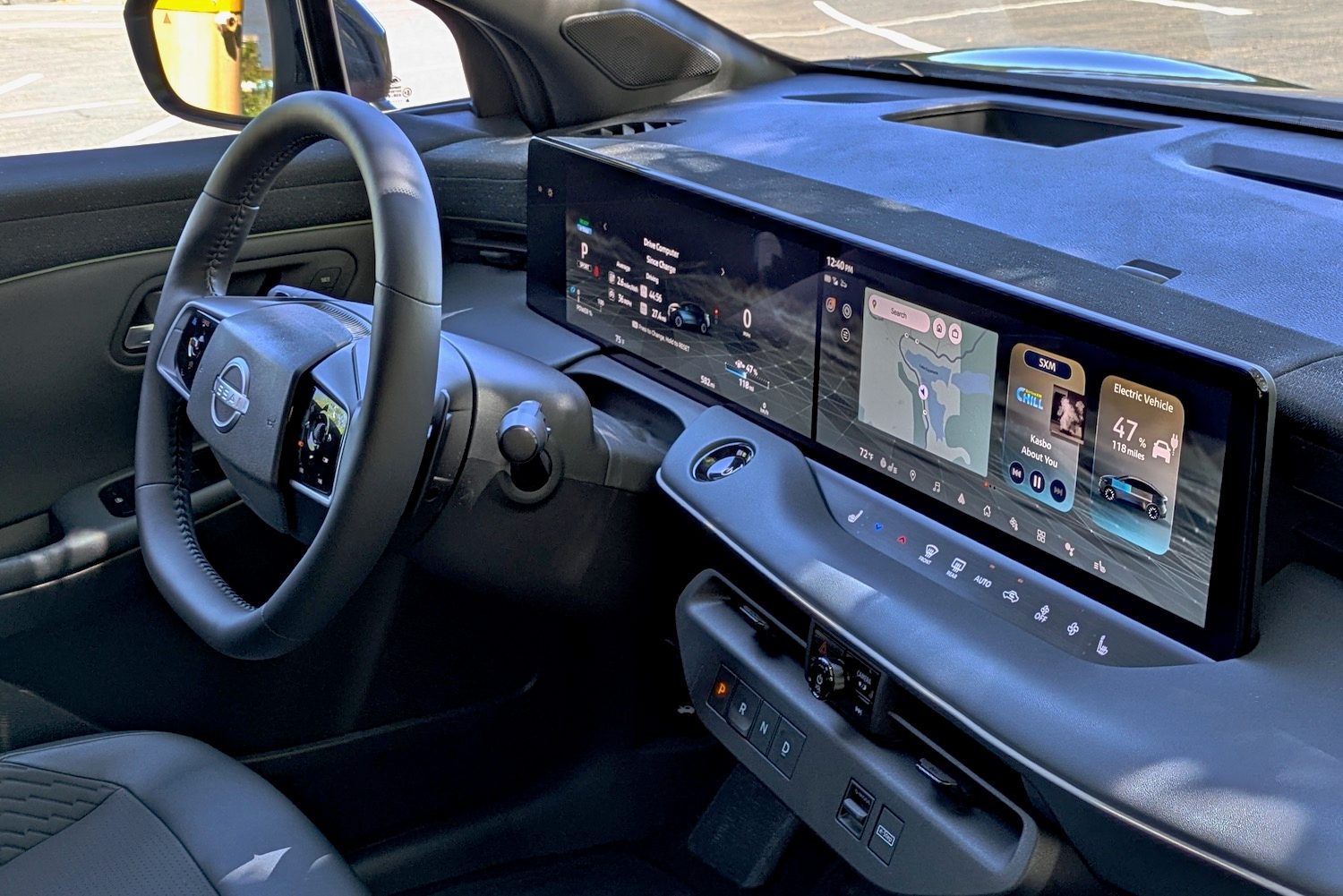
Up-to-date tech, a 303-mile range, and NACS charging address the previous Leaf’s biggest issues, but there’s a catch. Opt for the mid-level SV+ and range drops to 288 miles while the price rises to $35,275. Because of its larger 19-inch wheels and higher curb weight, the top Platinum+ only delivers 259 miles of range, and it costs $40,485. The Leaf S+ is clearly the one to get, then, although its lack of Google integration will make planning charging stops on road trips less straightforward.
Shoppers also shouldn’t expect anything more than an economy car. Even in Platinum+ form, with TailorFit artificial leather upholstery (made from 65% recycled materials, Nissan says), the Leaf’s interior is best described as nondescript. Even cool design touches like the two-spoke steering wheel and practical pushbutton shifter couldn’t detract from the rental-car-grade materials. And while the new Leaf does have NACS fast charging, it can only charge at 150 kilowatts, meaning a 10%-80% charge takes 35 minutes. Nor does the Leaf get the most-advanced version of Nissan’s ProPilot Assist driver-assist tech available in pricier models.
Those points shouldn’t matter much to thrifty EV drivers, though. The Leaf might not be the best car for a road trip, but for daily use with home or workplace charging, it’s perfect, offering more range than entry-level EVs like the Hyundai Kona Electric and Kia Niro EV. Fold the rear seats, and you’ll also get more cargo space than a Kia EV6, which is nearly a foot longer than the Leaf. There’s also nothing bargain-basement about the way the Leaf drives, even if we were expecting it to be nimbler, given its small size. Overall, Nissan has done a great job of making the Leaf relevant again.
Meanwhile, Nissan’s troubles continue
As it deals with financial troubles that nearly drove it into a merger with Honda, Nissan could certainly use a win. The automaker enacted a turnaround plan earlier this year, with painful cost cuts, but the Trump Administration’s tariffs and anti-EV policies have made things even more difficult in what remains one of the automaker’s most-important markets. Consequently, the new Leaf will soon be a solo act.
Automotive News reported earlier this week that the Nissan Ariya would be discontinued for the 2026 model year due to the impact of new 15% tariffs on the Japan-assembled electric crossover. The Ariya only recently arrived as a 2023 model (after some delays), but it’s a much weaker product than the Leaf. Positives like attractive styling, a well-appointed interior, and a sharp-handling all-wheel drive variant are cancelled out by a high price (the 2025 model starts at $41,160 and fully-loaded models cost $55,760), confusing trim-level structure, and middling range and performance.
Tariffs will also affect the new Leaf, which will be built in Tochigi, Japan, and imported to the U.S. Leafs have been built in the U.S. in the past, but Nissan has not discussed plans to do so with the new model. That it’s moving ahead with the launch without raising prices is admirable, although another recent report said output would be capped initially because of battery shortages. The hits just keep on coming.