
Volkswagen is making a huge investment in its Chattanooga, Tennessee, factory to bolster its electrification offensive. The Wolfsburg, Germany-based firm will expand the site over the coming years to build electric vehicles, it announced on the sidelines of the 2019 Detroit Auto Show. The expansion will cost $800 million, and it will directly create 1,000 jobs.
As of 2019, the Chattanooga factory builds vehicles developed in America, for America, like the Passat — which is getting a thorough redesign for the 2020 model year — and the seven-seater Atlas. The expansion will enable the plant to produce battery-powered vehicles built on the modular MEB platform that will underpin over a dozen models around the world. It’s too early to tell which models or how many cars will be added to Chattanooga’s roster because Volkswagen is still at the planning stages of the expansion.
“For us, it makes obvious sense to choose Chattanooga,” Scott Keogh, the head of Volkswagen’s American arm, told Digital Trends during a roundtable discussion. He added electric car production will start in 2023. Most of the cars will be sold in the United States, Canada, and Mexico, but Volkswagen is open to the idea of exporting some of the production run overseas. The final decision depends on the models built in Chattanooga, and the demand for them from abroad.
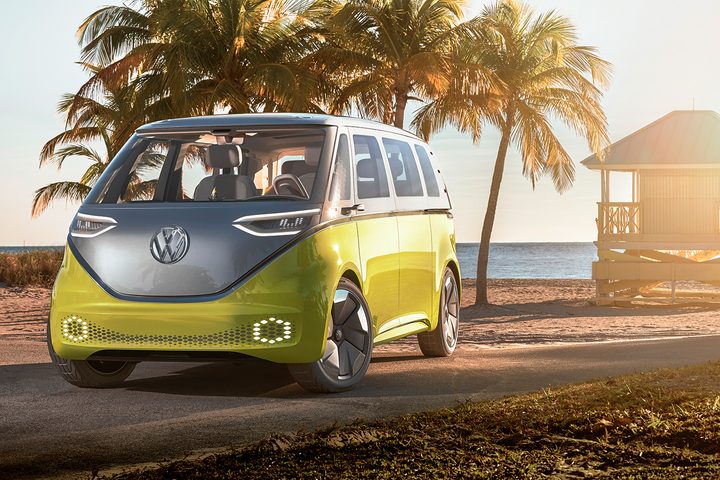
Volkswagen will launch its electric car offensive in America before it finishes expanding the Chattanooga factory. That means it will import the first next-generation electric vehicles it sells in the United States from a factory in Germany. Officials have previously hinted the U.S. market wouldn’t get the production version of the I.D. hatchback concept revealed in 2016, though Keogh didn’t rule it out. Other upcoming electric cars include a crossover previewed by the I.D. Crozz concept and a modern interpretation of the emblematic, rear-engined Bus inspired by the I.D. Buzz concept (pictured).
Electric cars aren’t the only new products Volkswagen will build in Chattanooga. The firm will also add the five-seater version of the Atlas it previewed with the Cross Sport concept at the 2018 New York Auto Show. Keogh told Digital Trends the model is scheduled to begin arriving in showrooms in early 2020, meaning it will likely break cover before the end of 2019. His team is also preparing an additional crossover positioned below the Tiguan for a 2021 launch, though we don’t know where it will be built yet.


