

When it comes to electric cars the automotive industry has been polarized on how best to tackle the growing electric market. Companies like Toyota threw in their support for hybrid vehicles early on with vehicles like the Prius, while others like Nissan – and its Leaf — opted to produce an all-electric car for the mass market. General Motors approached the problem with a different solution, releasing the Chevrolet Volt which utilized a hybrid gas-electric powertrain. Of course, not to be left out, Ford will offer both hybrid and plug-in hybrid electric versions of its 2013 Fusion and 2013 Focus later this year.
And while most companies seek to implement a more robust electric strategy, some still believe the shift towards electrification is taking place too rapidly, and that unrealistic goals being set by governing bodies will harm the automotive industry.
Speaking at an industry seminar in Brussels, Volvo CEO Stefan Jacoby candidly let loose his opinion on the current state of electric auto industry stating that it is “far too early to dismiss the conventional diesel and petrol powertrains.”
In his speech, Jacoby asked for increased and continued support of vehicle electrification from the EU governments. He also pointed out that government mandates set out by the EU – reducing greenhouse gas emissions by at least 60 percent by 2050 and the reduction of nearly half of conventionally fueled cars in cities by 2030 (and later phased out altogether by 2050) – will be virtually unachievable without help — highlighting the prohibitive cost of electric vehicles and lack of infrastructure as the biggest obstacles.
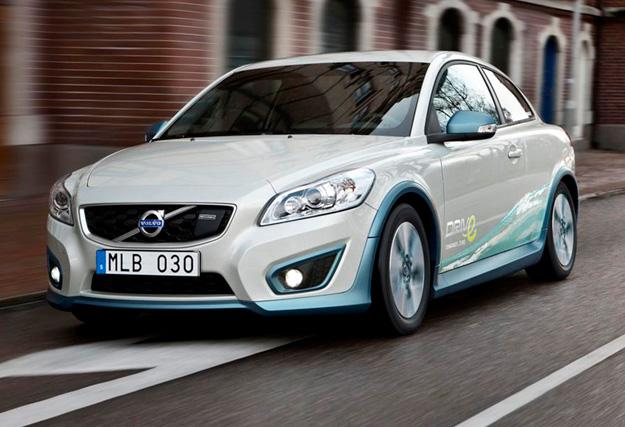
Of course Jacoby isn’t arguing against electric cars — Volvo has its own C30 electric and XDC60 plug-in hybrid in the works – instead he is calling on uniformity and coordinated government incentives for electric vehicles in Europe.
As it stands now, each European government offers different incentives. For example, in the U.K. consumers wishing to purchase an eligible EV are given a 25-percent grant towards the total cost of the car, which is capped at £5,000 (about $7,800). Other EU countries like Spain and Ireland offer similar grants to those offered in the U.K, while countries such as Germany and the Netherlands offer no direct purchase subsidies, but instead offer exemption from annual registration fees and taxes.
The absence of a harmonized approach to EV incentives, Jacoby argues, is one of the main reasons holding back the widespread adoption of electric vehicles. “European car manufacturers are facing a very difficult challenge when CO2 legislation requiring electrified cars are implemented without initiatives that make these cars affordable for a growing number of consumers,” explained Jacoby.
Indeed, according to figures, only 50,000 battery electric vehicles were sold in the world in 2011. According to a study conducted by the European Commission: ‘A European Strategy on Clean and Energy Efficient Vehicles,’ the market share of EVs – both electric and plug-in hybrids — are predicted to increase by only 3-4 percent by 2020, and later rise to 30 percent by 2030.
Those figures, argued Jacoby, are wholly unrealistic, stating that “the market share for electrified vehicles will struggle to pass the one percent mark by 2020.”
But it isn’t just unrealistic targets, lack of standardized funding, and uniform governmental incentives that Jacoby and Volvo are concerned about. With countries like China earmarking nearly $15 billion towards its electric vehicle industry – a figure that far outstrips the EU and the U.S. – Jacoby warns that if nothing is done, the Europe automotive industry risks losing its present role as a technological leader.


