
AMD has just announced an unexpected “exclusive” partnership with Bethesda and Starfield, and people aren’t happy. The partnership brings into question if the game will support tech like Nvidia’s DLSS and Intel’s XeSS, and we don’t have a clear answer right now.
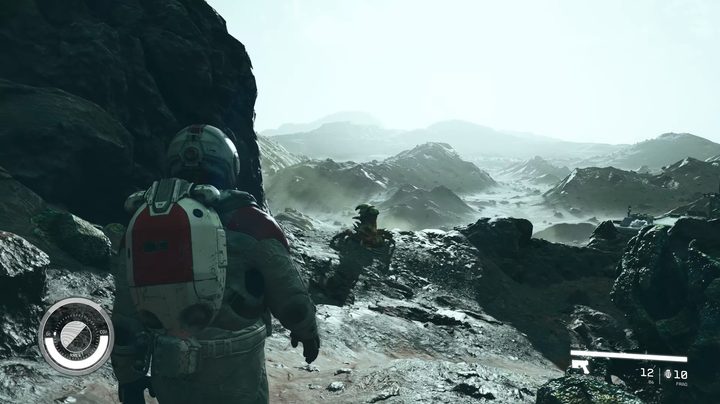
Starfield is the most anticipated game of the year, likely to make use of some of the best graphics cards currently available. This partnership bodes well for AMD, but will Nvidia users still be happy to play Starfield?

AMD broke the news in a quick video that shows a bit of Starfield gameplay alongside commentary from Jack Huynh, AMD’s senior vice president of the Computing and Graphics group, and Todd Howard, Bethesda’s game director.
Bethesda and AMD worked closely together to bring Starfield to life, optimizing the game to the max. We know that it will support AMD’s FSR 2 to boost frames and make everything look even better.
“We have worked hand-in-hand with Bethesda Game Studios to optimize Starfield for both Xbox and PC with Ryzen 7000 series processors and Radeon 7000 series graphics,” said Huynh in the video. “These optimizations both accelerate performance and enhance the quality of your gameplay using multi-threaded code that both Xbox and PC players will get to take advantage of.”
Howard then added that AMD engineers are currently working in Bethesda’s code base, working on FSR2 image processing and upscaling to make everything “look great and run great.”
So far, the reactions to the announcement are a mixed bag, and that’s mostly because not much has been revealed. Calling it an “exclusive” partnership implies that Starfield may not support Nvidia’s DLSS or Intel’s XeSS, and that in itself is controversial.
AMD’s FSR tech is open-source, which means that even gamers with Nvidia GPUs can enable it in games whenever they want to in order to score some extra frames per second (fps). Knowing this, the partnership is a good thing, because gamers will have access to upscaling tech from the start without needing to wait for further optimizations.
However, the lack of access to DLSS and XeSS could be worrying. Especially for Nvidia, DLSS 3 still has an edge over FSR 2, and it’s a major selling point for Nvidia cards. Not being able to take advantage of it in a title that’s as demanding as Starfield may be a huge blow to Nvidia gamers.
Many folks are voicing concern over the possible lockout. John Linneman of Digital Foundry pleaded to “please ensure that DLSS and XeSS are supported” on Twitter. The Verge’s Tom Warren described the move as “anti-consumer.”
Eager players weren’t as level-headed. One commenter said this “is a big middle finger to PC players blocking DLSS from the game,” and they aren’t alone. Dozens of players are voicing concern over the lack of clarity on if the game will support non-AMD tech.
Enabling DLSS and XeSS, once FSR 2 has already been implemented, shouldn’t make much of a difference to Bethesda. The question is whether the partnership with AMD will allow that to happen or not. So far, we don’t know whether all three upscaling technologies will be supported. There’s also the question of sheer hardware power. AMD doesn’t have the top graphics card on the market right now — that spot belongs to Nvidia’s RTX 4090. It also doesn’t seem to have any plans to release a rival to Nvidia’s best GPU.
It’s no wonder that the response to the partnership has been lukewarm, even on the AMD subreddit. Let’s hope that Bethesda can clarify soon whether we can expect to see the full upscaling trio in Starfield or if FSR 2 will be the only option. The game is still a few months away, set to launch on September 6.


