
AMD’s FidelityFX Super Resolution is an image upscaling algorithm made to improve gaming performance. It was meant to be the company’s response to Nvidia’s Deep Learning Super Sampling (DLSS) technology. While AMD FSR was supposed to be entirely new, digging through the source code showed that it is, in fact, based on the same technology as Nvidia’s old sharpening filter.
AMD previously claimed that the algorithm used in FSR was built entirely in-house, but @VideoCardz on Twitter found that to be untrue. A deeper look into the source code revealed that FidelityFX Super Resolution was based on the Lanczos resampling algorithm which has been around for several decades. What’s perhaps more interesting is the fact that it is also in use by Nvidia.
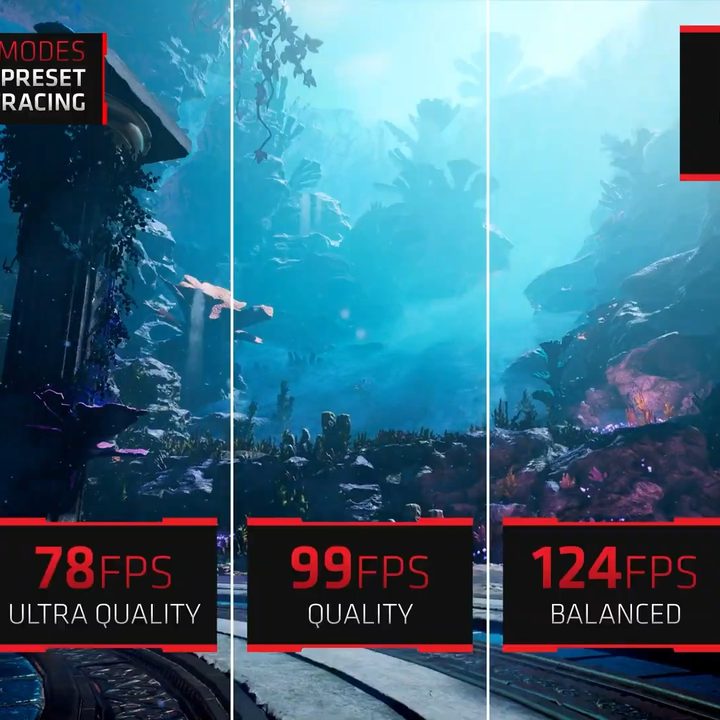
The same algorithm that AMD made use of in the creation of FSR is utilized by Nvidia for its upscaling and sharpening filter. It was released with Nvidia drivers several years ago. As such, it’s been available to Nvidia users within the GeForce control panel for quite some time. However, AMD has obviously done much more legwork than to simply reuse Lanczos resampling.
When AMD FSR was announced, there was a lot of hope for AMD fans who wanted to utilize the same technology that Nvidia has already been providing for some time. FidelityFX Super Resolution was said to offer up to twice the performance in 4K gaming with ray tracing enabled. It comes with adjustments that make it run faster and prevent the halo effect from appearing during sharpening. All in all, it stands a chance at becoming a real competitor to Nvidia’s DLSS, although AMD will not be optimizing it for the users of the best graphics cards by Nvidia.
While FSR is still new, AMD’s open-source approach has already started picking up pace. The technology has already been adopted by close to 30 games as well as Unreal Engine and Unity Engine. The technology is supposed to be applied to 3D rendered content, meaning it’s only meant to be visible in games. If used properly, it can turn a 1080p title into 1440p as long as it’s supported. However, when used on flat elements such as the game UI, it can make the text difficult to read or blurry.
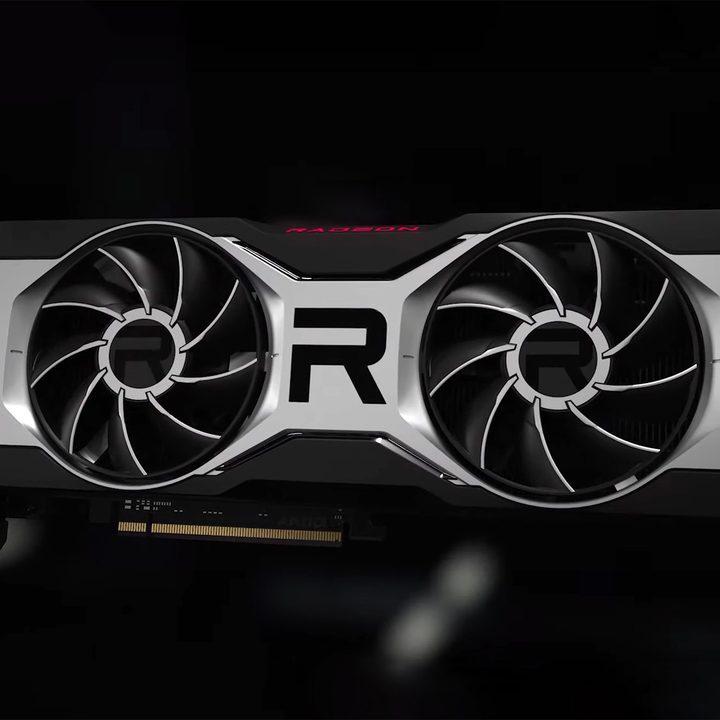
The main benefit of this technology lies in its accessibility. While Nvidia users can only benefit from DLSS if they have an RTX graphics card, AMD’s FSR is meant to work on any GPU. According to the Steam Hardware Survey, only 17.6% of all PCs have an RTX-based graphics card. This is where AMD pulls ahead, allowing FidelityFX SR to be used on each and every GPU out there.
Although it turns out that FSR is not quite the 100% made-from-scratch technology that AMD claimed it to be, it presents a solid option for Radeon card users. Previously excluded by Nvidia’s RTX-only DLSS, owners of AMD GPUs can now benefit from this image upscaling technology too. All that remains now is to hope that the technology will continue to spread across different brands and game studios.


