
AMD’s upcoming next-gen graphics cards will reportedly support PCIe Gen 5.0 compatibility, according to a new report.
As reported by VideoCardz and Wccftech, technology insider Kepler_L2 found the interesting tidbit within GFX11 architecture patches.
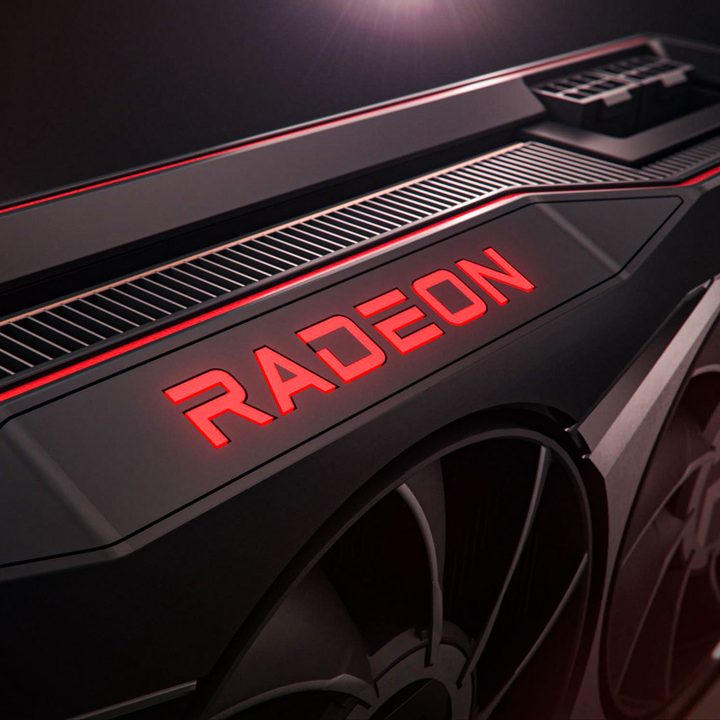
If the details discovered in the new updates do ultimately prove to be true, then Team Red will be the first company to bring a PCIe Gen 5 graphics card (the rumored flagship AMD Radeon RX 7900 XT) to the market.
AMD has been releasing numerous updates for GFX11 via Linux kernel patches — GFX11 is specifically associated with the next-gen RDNA 3 architecture. In particular, it seems that Navi 31 boards (the most powerful range of next-gen AMD video cards) will be the GPUs that feature PCIe Gen 5.0 x16 lanes support.
Of course, it was always expected that AMD would integrate PCIe Gen 5.0 support for the Radeon RX 7000 GPUs, or at least some of them. As highlighted by Wccftech, AMD was also the first company to outfit its RX 5000 series and HD 7000 series with PCIe Gen 4.0 and PCIe Gen 3.0 compatibility, respectively.
As for the advantages that PCIe Gen 5.0 will offer compared to the current-gen PCIe Gen 4.0 standard, the transfer rates will be doubled from 64GB/s (16 GT/s) to 128GB/s (32 GT/s). VideoCardz says “this will have a significant impact on bandwidth for the next-gen storage.”
But does that bring any tangible benefits to the end consumer, namely gamers? Well, not really. In fact, Nvidia, the largest GPU manufacturer in the world, is reportedly set to stick with PCIe Gen 4.0 for the RTX 40-series.
Why? Tom’s Hardware aptly points out that opting to design its future cards with PCIe 4.0 compatibility instead would see gamers receive optimum performance from RTX 40 boards via existing platforms from AMD through Zen 3 processors. Simply put, there’s a much broader audience with PCIe 4.0.
PCIe 5.0 vs PCIe 4.0
Furthermore, ultimately, PCIe 5.0 is a new standard. In any case, you really won’t notice any difference when gaming, whether you have PCIe 4.0 or the former.
That said, Tom’s Hardware does point out that should AMD decide to develop its Radeon RX 7000 GPUs with PCIe 5.0 support, then Team Red would theoretically have an upper hand when it comes to marketing.
As for the other design approaches AMD is taking with RDNA 3 GPUs, some of these will indeed deliver significant improvements over any existing video cards. Particularly, the company is said to be developing Radeon RX 7000 boards with a multi-chip module (MCM). Reliable technology insider Moore’s Law Is Dead even stressed that multiple dies are a “major advantage over Ada Lovelace.”
We’ve also heard that AMD next-gen GPUs will “decimate Nvidia in efficiency across the entire lineup.” Nvidia, obviously, has its own tricks up its sleeve. They have reportedly invested at least $10 billion already, and they have access to a significantly larger amount of funds to tap into compared to AMD.
Either way, both companies are clearly not holding back when it comes to the battle of next-gen. Nvidia is expected to introduce the first products for the upcoming generation in September, while AMD is said to be preparing for its Radeon RX 7000 launch a few months later.


