
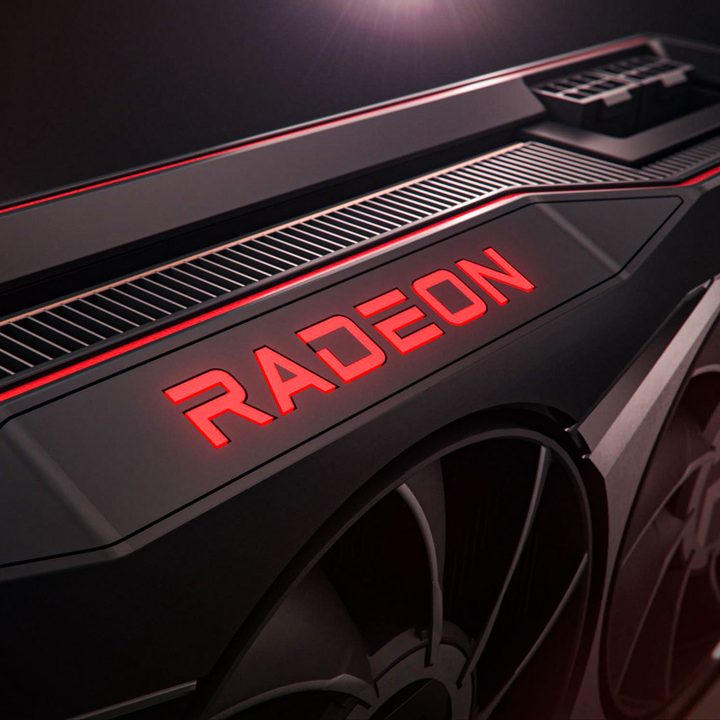
AMD’s Radeon RX 6950XT could be due for a launch sooner than previously reported, while another report suggests that the rumored refresh of the RDNA 2 Radeon RX 6000 series of GPUs may retain the same 7nm node as their predecessors.
Greymon55 had initially mentioned a potential June or July release for the RX 6x50XT series, but YouTuber coreteks believes the flagship model of the lineup is actually scheduled for a mid-April launch instead.
The latter tipster, as VideoCardz notes, has correctly predicted several AMD product launches, including the release of Team Red’s FidelityFX Super Resolution.
Interestingly, coreteks also stated that the RX 6950XT is the only upgraded Navi 21-based video card that is in the pipeline. Previously, it was reported that AMD was working on the RX 6850XT and RX 6750XT GPUs as well.
Elsewhere, another industry insider, Moore’s Law is Dead, tweeted that the upcoming RDNA 2 Radeon RX 6000 series refresh will utilize the same 7nm node technology that is found on the standard models. It was originally expected that these GPUs would use 6nm nodes. As such, the cards would predominantly deliver a memory speed boost as opposed to a complete revamp.
In any case, even with the same 7nm node process, MLID states “that still leaves room for an above 10% boost when combined with 18Gbps memory.” He therefore stresses that the 6950XT will be a “far better product” than Nvidia’s upcoming monster graphics card, the RTX 3090 Ti.
MLID specifically mentions the 6950XT, 6850XT, and 6750XT in his tweet, which conflicts with coreteks’ sources indicating that only the 6950XT is in the works. We’ll have to wait until AMD’s official announcement to see which leaker is ultimately correct.
Whatever AMD decides to release will offer an alternative to Intel’s Arc Alchemist video cards, as well as Nvidia’s recent refresh to its RTX 30 series.
AMD is also reportedly set to expand its RDNA 2 lineup with new budget GPUs. For example, the RX 6500 will cost just $130, representing a $70 decrease compared to the XT variant’s price tag.
Looking ahead, AMD will launch its highly anticipated RDNA 3 graphics cards later this year in the form of the RX 7000 series. The company will also introduce its next-gen processors in 2022 via Zen 4-based Ryzen 7000 silicon, which will incorporate 3D VCache technology.


