
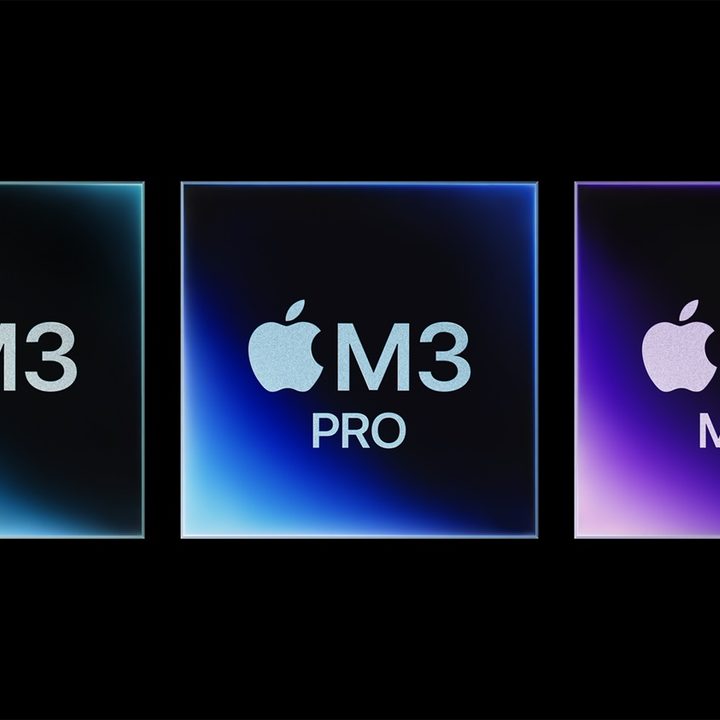
Apple announced the M3 series of chips today but has switched up the rollout in a significant way. In previous years, the company started with the base configuration of the chip series, whether that’s the M1 or the M2. The initial releases would build the foundation of what these chips could do on entry-level devices like the MacBook Air or Mac mini.
Intel rolls out its chips in a similar way, starting its annual refresh of laptop chips with its entry-level stuff first.
But at its “Scary Fast” launch event, Apple went in a very different direction. By announcing the M3, M3 Pro, and M3 Max all at once, Apple’s entire hand is played. Aside from the M3 Ultra, which is presumably being saved for 2024, we now know the range of performance of Apple’s new line of chips.
But if Apple wanted to truly make a splash with the M3, it needed to lead with performance. And that’s exactly what it did.
From the looks of it, the M3 generation of Macs won’t offer many refreshed designs. That means performance will need to be the primary driver of sales for Apple in 2023 and 2024. Fortunately, this isn’t your average generational refinement. The M3 is based on a 3nm process, offering a significant jump in efficiency and performance-per-watt over its predecessor. Even before Apple spilled the beans, we were all anticipating a more impressive generational leap than the M2 was over the M1.
And where better to show off that extra performance than on its 14-inch and 16-inch MacBook Pros? These laptops were already extremely powerful and specced out, but the buyers of these Macs will always be drawn to more power. That’s especially true when you have features to show off like hardware-based ray tracing, mesh shading, and Dynamic Caching. From the sounds of it, these GPU features are at the heart of the massive leaps ahead in performance, especially on the graphics front.

Going from the M2 to the M3 on a MacBook Air, though, is a much harder sell. The extra performance afforded by the M3 is more or less wasted on people buying a MacBook Air. With how powerful the M1 and M2 already were, the M3 doesn’t provide a huge incentive to upgrade — especially if you’ll be able to find the M1 or M2 MacBook Air at a discount.
Don’t think the base M3 wasn’t left out though. First of all, it’s being used in a new entry-level 14-inch MacBook Pro that replaces the old 13-inch MacBook Pro. I even got a chance to see a preview of how powerful even the base M3 will be in these MacBook Pros in a demo of Lies of Pi, which managed to run the game at max settings and still average over 60 frames per second. MetalFX Upscaling is helping there, but it’s still incredibly impressive.
Then, there’s the refreshed 24-inch iMac, which was previously stuck on just the M1 and is now being bumped to the M3 too. While we’re still waiting on a larger, more powerful iMac, plenty of potential buyers may be tempted by the extra performance provided by the M3. It’s Apple’s only option for that form factor, making it a go-to option.
All in all, Apple was smart to roll out the M3 in this way. Whether or not it continues this type of rollout is yet to be seen, but this felt like Apple’s best attempt to fight back against the rapid drop in Mac sales this year. Nothing will likely get them back to the success of the initial Mac boom of Apple Silicon, but this is Apple putting its best foot forward for this generation of chips, and that’s key for building a long-term road map for future chips.


