  1. Home
  2. Computing
  3. News

Apple hid one of the best features of the M4 MacBook Pro

Add as a preferred source on Google
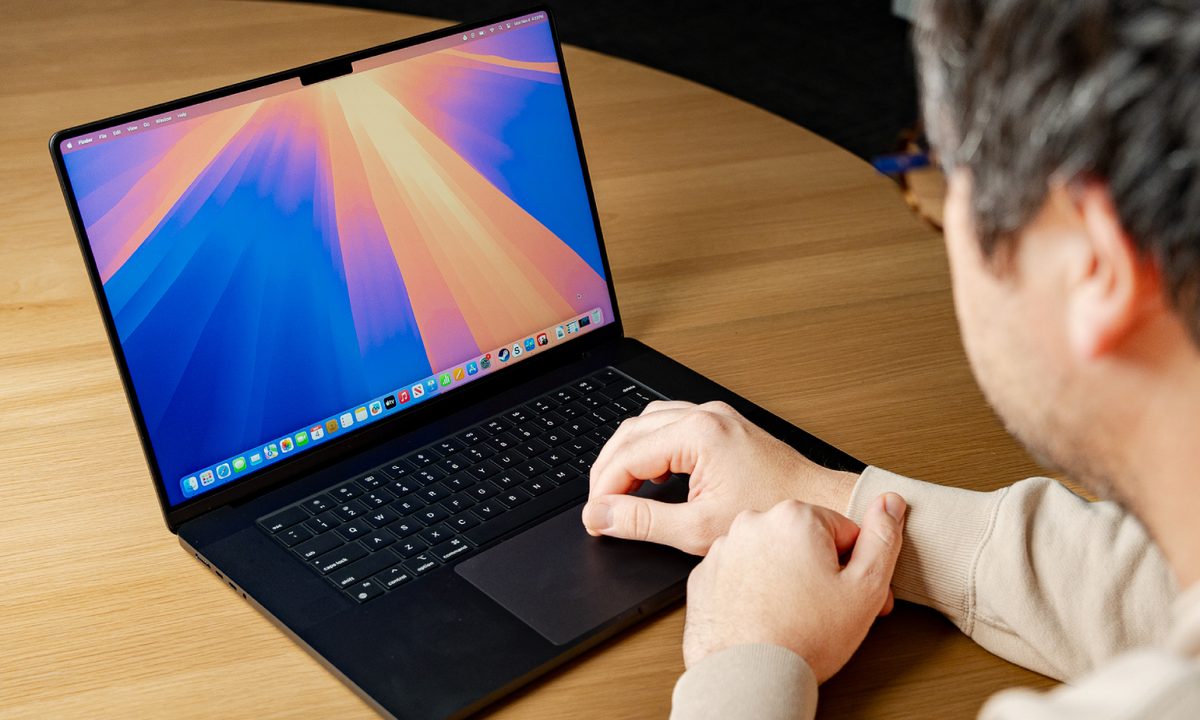
Someone using a MacBook Pro M4.
Chris Hagan / Digital Trends

Apple’s new M4 MacBook Pro is great. It earned a rare Editors’ Choice badge in our M4 MacBook Pro review, and it’s cemented itself as one of the best laptops you can buy. Even with so much going for it, Apple hid one of the most exciting developments it made with its new range of laptops — the use of quantum dot technology.

Like the last few generations of MacBook Pro displays, the M4 range is using a mini-LED backlight. There’s no tandem OLED like we saw on the iPad Pro earlier this year. However, according to Ross Young, CEO of Display Supply Chain Consultants (DSCC), Apple added a layer of quantum dots to the M4 MacBook Pro. This, according to the display expert, offers better color gamut and motion performance compared to the solution Apple previously used.

Recommended Videos

Big Apple display news, they have adopted quantum dots for the first time. The latest MacBook Pro's (M4) use a quantum dot (QD) film rather than a red KSF phosphor film.

In the past, Apple went with the KSF solution due to better efficiency and lack of cadmium (Cd), but the… pic.twitter.com/5olq9lEHs9

— Ross Young (@DSCCRoss) November 14, 2024

We have a deep dive on how quantum dot tech works, but in short, they’re a layer of phosphorescent crystals that sit between the backlight and the color filter of a display. This layer allows pure white light to hit the color filter — LED backlights don’t produce perfect white — by mixing blue, green, and red primaries that quantum dots produce when exposed to light. This not only gives you more accurate and vibrant colors, but it also improves brightness, as the color filter doesn’t need to correct the errors of the backlight.

Young says Apple previously used a “KSF solution,” referring to KSF phosphor powder, which is used in wide-gamut displays like the MacBook Pro to help produce the wider gamut — see the sharp red spike in the post above. With quantum dots, the MacBook Pro is able to provide much more consistent color coverage.

There are a lot of holdouts for an OLED MacBook Pro, and that was a point of contention we mentioned in our review. However, the inclusion of quantum dots significantly improves the color quality of the M4 MacBook Pro, even if it’s unable to match the heights of a true OLED display. In addition, Apple isn’t charging a premium for the new inclusion — you’ll find the quantum dots regardless of if you spend the extra $150 for the nano-texture display option.

Jacob Roach
Former Lead Reporter, PC Hardware
Jacob Roach is the lead reporter for PC hardware at Digital Trends. In addition to covering the latest PC components, from…
Microsoft’s new Surface PCs are cheaper — but there’s a catch
Cardboard, Box, Carton

The tech industry’s favorite balancing act is getting harder by the month. Component prices are rising, memory costs refuse to settle down, and laptop makers are scrambling to keep sticker shock under control. Microsoft’s latest Surface refresh feels like a direct response to that problem.

The company has introduced new entry-level versions of its 12-inch Surface Pro and 13-inch Surface laptop, offering lower starting prices without changing the processor or storage. On the surface, that sounds like good news for budget-conscious buyers. Dig a little deeper, however, and you’ll find a compromise hiding in plain sight.

Read more
A new supercomputer has dethroned the U.S — here’s why it matters
Crowd, Person, Architecture

The race to build the world’s fastest supercomputer has been dominated by the United States. Now, China has stormed back into the lead. A newly ranked system called LineShine has claimed the No. 1 position on the latest Top500 list, a closely watched ranking of the planet’s most powerful supercomputers. The machine, located in Shenzhen, pushed past the U.S. government’s El Capitan system and became the first Chinese computer to top the list since 2017. That’s notable on its own. But what makes LineShine particularly interesting is how it got there.

The tortoise just outran the rocket

Read more
I rounded up the best Prime Day 2026 laptop deals, and these five are the ones I’d buy
Memory costs are up, laptop prices are following, and Prime Day 2026 might be your best window before both climb further.
Prime Day Deals on Apple Products

If you’ve been keeping up with recent laptop launches, you’ve probably noticed just how expensive they’ve become. Laptop prices have been climbing for the past year, and there’s little indication that they’re coming down anytime soon. That makes the ongoing Prime Day 2026 sale an exceptionally good time to buy a new laptop.

Many of the discounts apply to devices at or near their original launch prices, making the savings more meaningful. I’ve sifted through several Amazon Prime Day laptop deals, but only these five hold up at their discounted prices. To make things easier for you, I’ve arranged them from the most affordable option to the most expensive.

Read more