
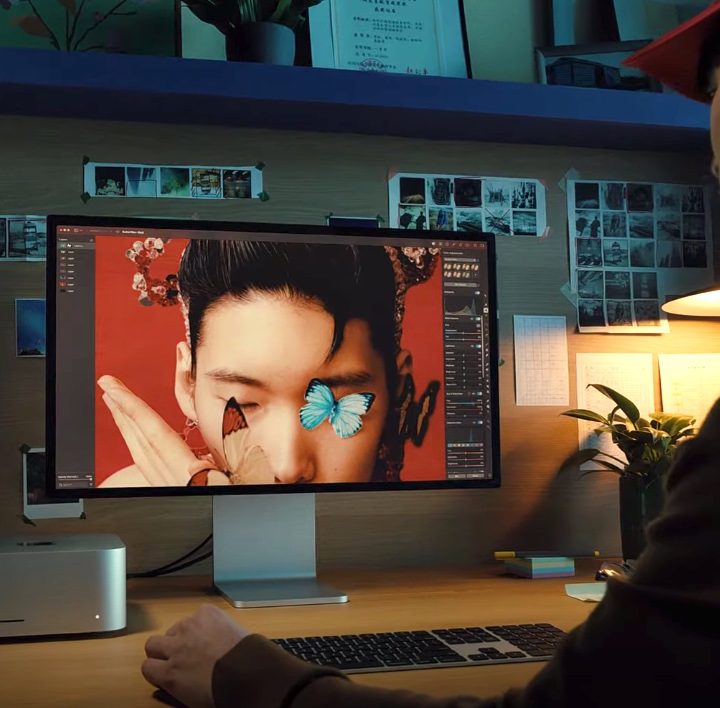
A new rumor has surfaced that suggests Apple may be focusing on upgrading the display technology on many of its products. If accurate, 2025 could see Apple introduce a 24-inch iMac and Studio Display with a 90Hz refresh rate display panel.
An anonymous source recently shared information on the Upgrade podcast hosted by Myke Hurley and Jason Snell. The source detailed that Apple’s timeline included a launch of the M3 iPad Air with a new and improved 90Hz panel, followed by a 24-inch iMac launch with the updated display technology, and finally the 27-inch Studio Display with the new panel. In addition to the upgraded Mac panels, the same bump from 60Hz to 90Hz is reported to also come to the next-gen iPad Air.
It’s worth noting that this can be solidly classified as a rumor, but it’s certainly enough to get me interested.
“I have news on screen improvements for the next generation of the M3 iPad Air. Apple is working on a higher refresh rate LCD display with a new liquid motion panel fixed at around 90Hz,” Hurley and Snell claim the source told them. “They’re also working on expanding it to other models or products like a 24-inch iMac and a next-gen Studio Display.”
All three products currently use displays with a standard 60Hz refresh rate. The industry is especially looking to see the Studio Display get an update as it has had no tweaks to its original iteration since its introduction to the market in March 2022. However, there have been no other claims of a 90Hz display technology for Apple devices so far.
Analyst Ross Young has linked the 120Hz ProMotion display with the rumored iPhone 17 series, 9to5Mac noted. That is the only other instance of a high-refresh device being discussed for potential release.
Bloomberg has also made claims that the coming iPad Air will likely launch in early 2025. With Apple having recently announced the 24-inch iMac with the M4 chip, a subsequent model is likely not in the cards until a similar time next year. Though the Studio Display is included in this rumor, there are few other current details about the product. Young also reported in April 2023, Apple scrapped plans to develop a new Studio Display with 120Hz ProMotion technology and mini-LED backlighting.
The current Studio Display Buy at Amazon , starting at $1,600.


