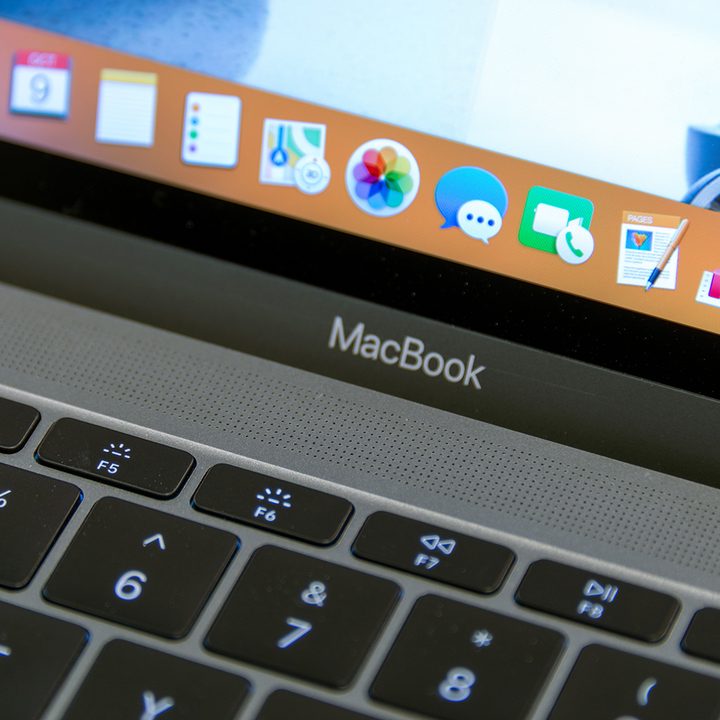
Time for MacBook owners to rejoice, at long last your troubles are at an end. Well, one of them, maybe. According to a patent application made public on Thursday, March 8, Apple could be developing a new MacBook keyboard designed to prevent crumbs and dust from getting those super-shallow MacBook keys stuck.
“Liquid ingress around the keys into the keyboard can damage electronics. Residues from such liquids may corrode or block electrical contacts, getting in the way of key movement and so on,” the patent application reads.
The application goes on to describe how those problems might be remedied: With the careful application of gaskets, brushes, wipers, or flaps that block gaps beneath keycaps. One solution would include a membrane beneath each key, effectively insulating the interior of the keyboard from the exterior, while another describes using each keypress as a “bellows” to force contaminants out of the keyboard.
“A keyboard assembly [could include] a substrate, a key cap, and a guard structure extending from the key cap that funnels contaminants away from the movement mechanism,” the patent application reads.
Apple’s engineering is notoriously exacting, it’s why products like the MacBook Pro and iPhone command such high prices compared to their competitors. Whether or not those prices are warranted is another matter entirely, but Apple’s brand is built upon the promise of premium and highly engineered user experiences.
When a stray piece of dust can ruin one of those experiences, it’s no wonder Apple is investing in keeping those crumbs out of its keyboards. As with all patent filing news, it remains to be seen whether or not this particular change to the MacBook design will make it out into the real world, but it’s an improvement that solves a very real problem.
It might seem like a small issue, but for owners of the latest MacBook Pro, it’s been a bit of a sticking point. On a laptop that can run you around $3,000 depending on specs, losing keyboard functionality because of a stray crumb is a big deal. There is even a song about it. With the MacBook line slated for an update in 2018, we might see crumb-resistant keyboards sooner rather than later.