
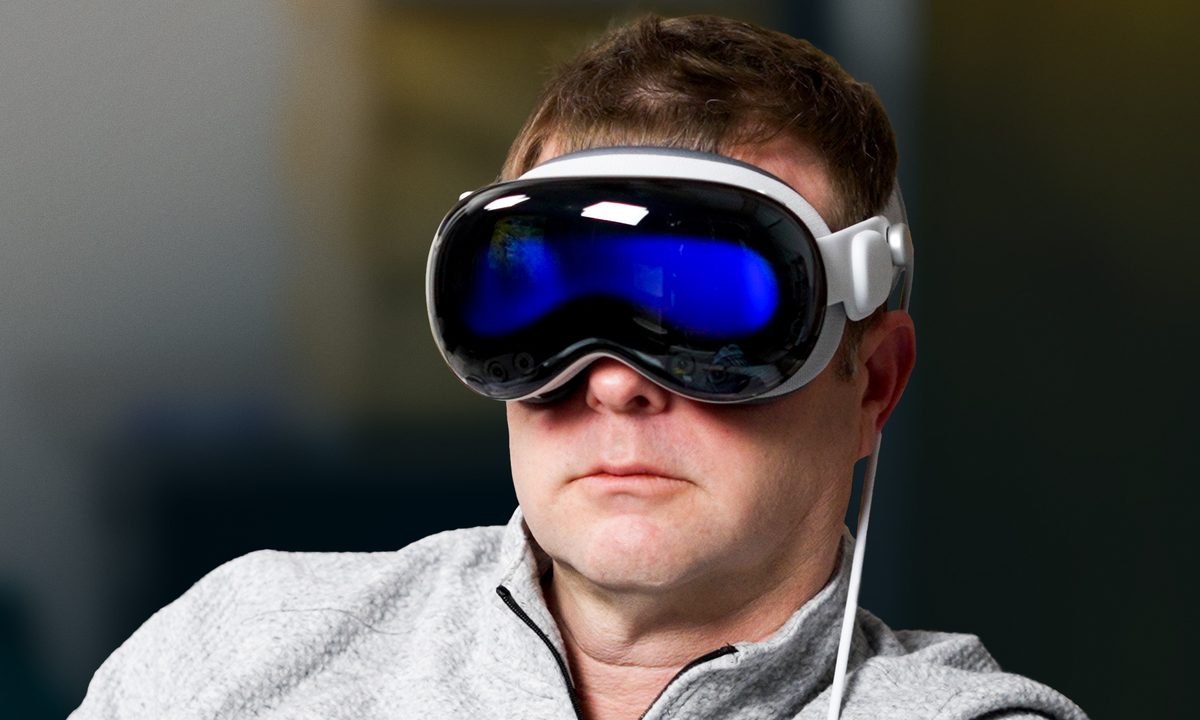
It looks like a more affordable take on the $3,500 Vision Pro mixed-reality headset has taken a backseat at Apple. In January this year, The Information reported that a lower-priced version with toned-down innards could arrive in 2025.
Now, renowned supply chain analyst Ming-Chi Kuo claims that the pocket-friendly headset won’t be hitting the shelves within the next three years. “As I understand it, production of the cheaper Vision Pro has been delayed beyond 2027 for a while now,” Kuo wrote on X.
According to Bloomberg, plans to eventually introduce a lower-priced model were in place even before the Vision Pro was launched. The company was hoping to bring this variant — currently in development under the codename N107 — to the market by the end of 2025.
Apple was reportedly eyeing a price tag in the ballpark of $1,500 to $2,000 for the watered-down variant, which would supposedly skip features like the EyeSight display and might embrace lower-resolution display units. 
However, the Vision Pro’s lukewarm reception is partly due to a lack of a killer use case. Kuo’s latest update also shares similar apprehensions. “I think what really drove Apple to delay the cheaper Vision Pro is that simply reducing the price wouldn’t help create successful use cases,” he notes.
Notably, Kuo also mentions that Apple could fill the gap in the product launch window with an updated Vision Pro model that would employ the next-gen M5 silicon. The current iteration relies on the 8-core M2 processor and an R1 co-processor.
Responding to a user query underneath the same post, Kuo further iterates that what Apple considers an affordable take on the Vision Pro might still be too pricey when compared to the competition. That status quo becomes even more challenging from an adoption perspective, considering the niche software ecosystem for the headset.
Looking over at the industry in general, gaming continues to be the biggest driver in the field of extended reality (XR) wearables, but the mainstream products are far more affordable. Take a look at the Meta Quest 3S, which starts at $300, while the Quest 3 goes for around $500 and often gets discounts.

The flagship Quest Pro, on the other hand, comes with a sticker price of $1,000. Then we have the continued popularity of smart glasses design, where players like Xreal, RayNeo, and Viture have cultivated a solid fan base focused mostly on content consumption and gaming.
As far as the more advanced VR and VR applications go, both Meta and Snap have recently showcased their next-gen vision for the category. Google and Samsung are also working on their respective smart glasses, with Qualcomm as the silicon supplier, according to CNBC.
Apple has yet to comment officially on its smart glasses ambitions, though rumors suggest the company is eyeing that goal in the long term. But until those murmurs materialize, Apple’s XR plans hinge on the success of the headset design with the Vision line. Only time will tell whether Apple can emerge as a key player or squander the lead to other players.


