  1. Home
  2. Computing
  3. News

Apple’s AI-focused M5 chip enters mass production

Add as a preferred source on Google
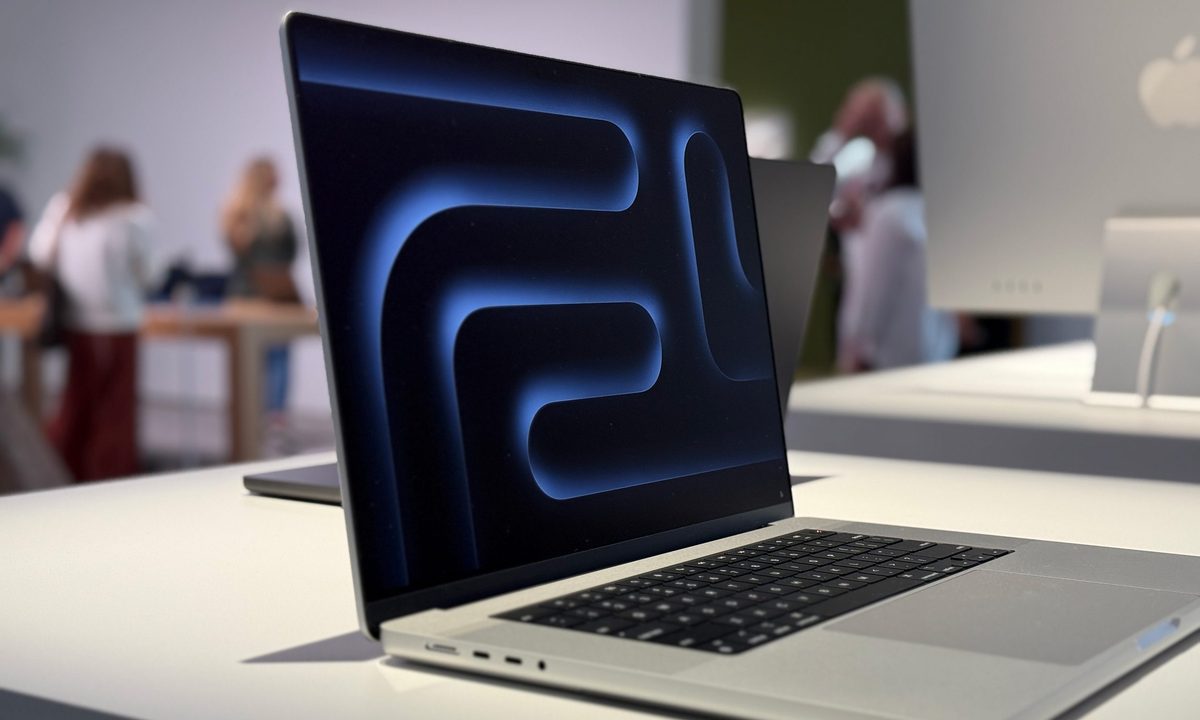
MacBook Pro with M4
Caleb Denison / Digital Trends

Apple has begun the mass production of its M5 chip, which is set to power next-generation products, including the upcoming Mac series and iPad. Coinciding with long-standing reports, the Cupertino-based tech brand is establishing a new node process for packaging the semiconductor. The technology is intended to provide improved AI performance on the devices it powers, according to ETnews.

Industry sources told the Korean publication that Apple began packaging the M5 chip last month. Taiwan’s TSMC began the initial production of the M5 chip circuit using its 3nm process (N3P). The technology is expected to improve the power efficiency of the M5 chip by between 5% and 10%, and performance by 5% in comparison to the previous M4 chip, which will aid in improving AI performance on upcoming Mac and iPad models.

Recommended Videos

Apple is known to be releasing a series of M5 chips, including the M5, M5 Pro, M5 Max, and M5 Ultra, each with its own performance and application levels.

Other companies assisting in packaging the M5 chip series are ASE in Taiwan, Amkor in the U.S., and JCET in China. The additional outsourcing suppliers are preparing to need extra facilities to expand the mass production of the high-end chips, including Pro, Max, and Ultra, ETnews detailed.

“Orders for equipment to expand the mass production volume of the M5 are continuously being made,” an industry insider told the publication.

“As it has begun full-scale production, it will be installed in Apple devices that will be released in the future,” they added.

Previous rumors suggested that Apple’s M5 launch might be lackluster, but that was before the brand made its intent in the AI market apparent. Notable analyst Ming-Chi Kuo said in December 2024 that the earliest M5 models should begin mass production during the first and second quarter of 2025, while the M5 Ultra would likely begin mass production in 2026. He added that higher-end chips would be “better suited for AI inferencing.”

Fionna Agomuoh
Fionna Agomuoh is a Computing Writer at Digital Trends. She covers a range of topics in the computing space, including…
Microsoft wants Copilot to answer all your health-related questions and store your medical records
Copilot Health is Microsoft's most personal AI feature yet. It is built with 250 physicians, and explicitly designed not to replace your doctor.
Page, Text, Business Card

Copilot Health is now in preview, and Microsoft’s ambition for it is clear, an AI assistant that knows your health history, understands your fitness data, and can help you make sense of your medical records, all in one place. 

Copilot Health is a dedicated space within the Copilot chatbot at copilot.microsoft.com/health where you can get answers to your health-related questions. 

Read more
MSI’s Triple Mode OLED monitor is a Computex showstopper and my eyes genuinely can’t wait for it
MSI's Triple Mode OLED raises the bar for gaming monitors at Computex 2026.
Computer Hardware, Electronics, Hardware

Dual-mode gaming monitors have been around long enough that the novelty has worn off. MSI has decided that two modes simply aren't enough and has unveiled the MPG OLED 322URDX36 ahead of Computex 2026.

It is the world's first Triple Mode gaming monitor, and if the execution is as good as it sounds, it could be one of the few gaming monitors that I’d be genuinely interested in. 

Read more
Dell doubles down on 5G cellular connectivity for its premium business laptops in the US
The new launch is Dell’s clearest statement that 5G cellular connectivity belongs in every premium business laptop, not just enterprise niches.
Computer, Electronics, Laptop

Dell released a wave of new laptops on May 29, 2026, just four days before Computex 2026 opens in Taipei on June 2. Amid a loaded spec sheet, nearly every flagship model in the new batch offers optional 5G cellular connectivity. 

While the capability has traditionally been reserved for ultraportable or enterprise-grade devices, Dell is signalling that always-connected laptops are no longer a niche requirement. 

Read more