
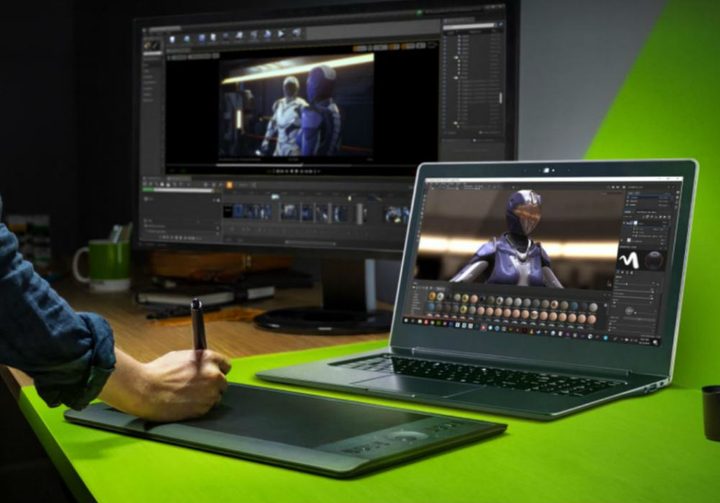

Ahead of the arrival of Apple’s revamped Mac Pro desktop this fall, Asus is targeting the same creative audience with its expanded ProArt PC lineup. While the ProArt PA90 that we reviewed from earlier this year is seen as a more affordable alternative to the older can-inspired Mac Pro design, the new ProArt laptops, displays, and workstations introduced by Asus at the IFA trade show are part of the company’s larger efforts to appeal to more creative professionals who may be part of Apple’s ecosystem.
The new ProArt StudioBook One, for example, brings desktop class graphics performance to a very mobile form factor powered by discrete Nvidia Quadro RTX GPUs.
ProArt StudioBook One and StudioBook Pro X
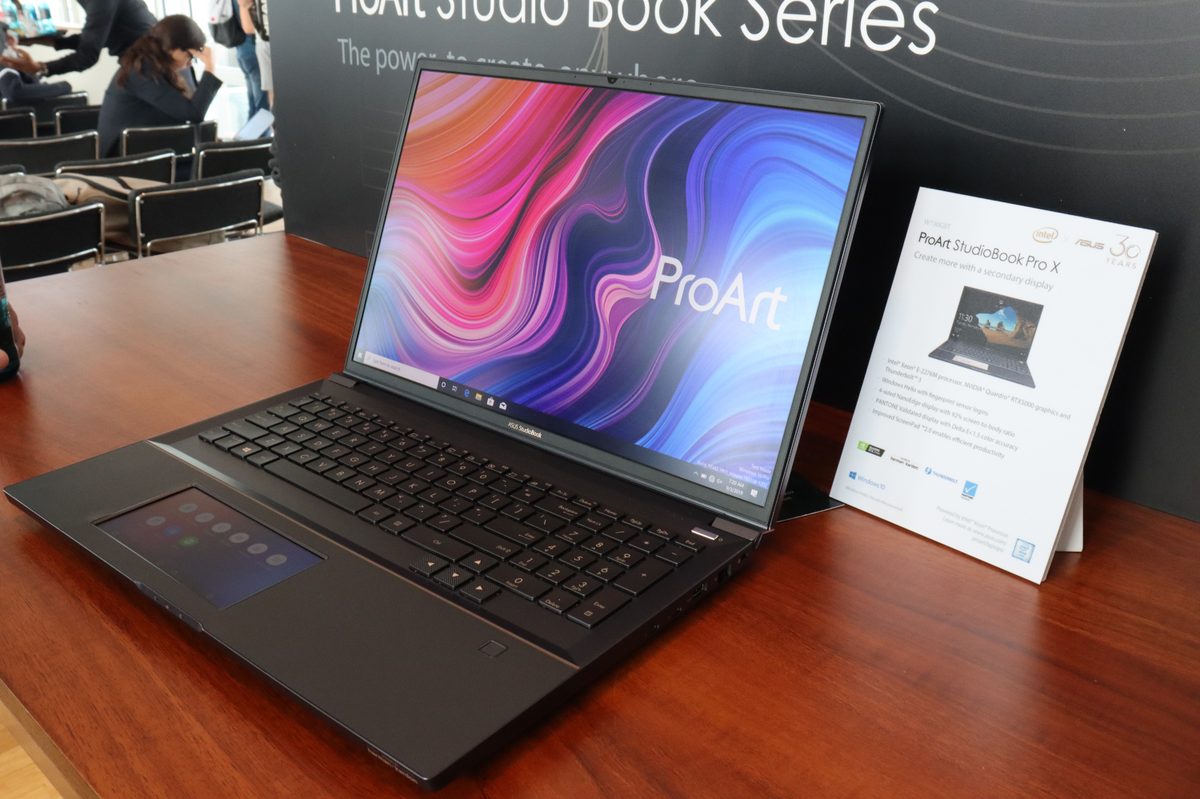
Creators who want power and performance in a mobile form factor can choose from two new Asus ProArt StudioBook models: The ProArt StudioBook One and the ProArt StudioBook Pro X, with the One series being the flagship RTX Studio laptop aimed at creatives. Designed in partnership with Nvidia, the two companies claimed that the StudioBook One delivers desktop-class GPU performance in a mobile form factor.
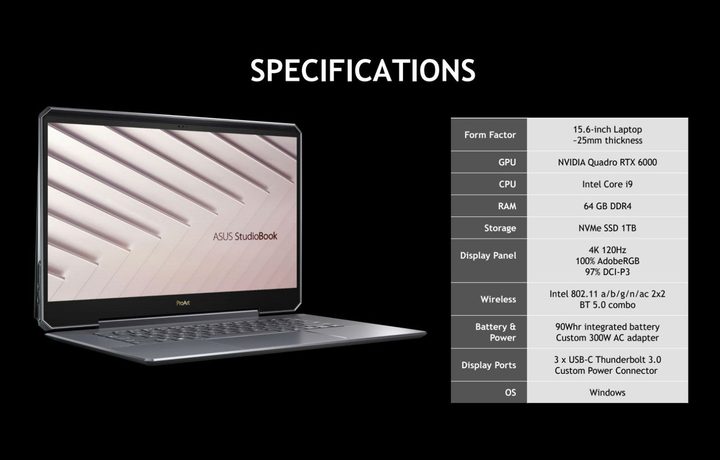
The ProArt StudioBook One is said to be the world’s most graphically powerful laptop, and it comes with the Nvidia Quadro RTX 6000 graphics and a 9th-gen Intel Core i9 processor to help it handle single- and multi-threaded applications. To keep its advanced internals cool, the ProArt StudioBook One relies on an innovative cooling design comprised of an aerospace-grade titanium thermal module and a lid that lifts to elevate the rear of the notebook up to allow more cool air inflow. The use of titanium also helps to keep the weight low and the form factor slim. The CPU and GPU both sit behind the display, and like the PA90 compact desktop, Asus also incorporated an exhaust system that opens to allow for better cooling.
Creators will appreciate the 4K UHD Pantone-validated display on the StudioBook One for high-resolution, color-accurate workflows. The panel on this laptop supports 100 percent of the AdobeRGB color space with a Delta of less than one, providing great color accuracy. For video editors, this screen also supports fast 120Hz refresh rates and features edge-to-edge glass with slim bezels.
Like the One line, the ProArt StudioBook Pro X also supports real-time ray tracing and A.I. acceleration with options that include Nvidia’s Quadro RTX 5000 graphics and either an Intel Xeon or 9th-gen Intel Core i7 processor. Asus claims that the Pro X is designed to operate at full loads without a need to throttle the processor or GPU. This model also features Asus’ ScreenPad 2.0 technology, which adds a secondary touchscreen to the trackpad to aid in multitasking. The idea is not unlike the Touch Bar on Apple’s MacBook Pro models. And with a 92 percent screen-to-body ration in a 16:10 aspect ratio display that supports 97 percent of the DCI-P3 color space, the 17-inch ProArt StudioBook Pro X feels more like a 15-inch notebook, giving you the best of screen real estate in a design optimized for mobility.
“Content creators are more mobile than ever and must keep up with tight deadlines and complex workflows,” said Bob Pette, vice president of professional visualization at Nvidia, in a statement. “The latest ASUS ProArt lineup, punctuated by the world’s fastest laptop, carries the RTX Studio badge and is powered by Nvidia RTX GPUs. They deliver high-end desktop performance and portability, so artists and designers can visualize and create their best work faster than before.”
New pro-level desktops and monitors
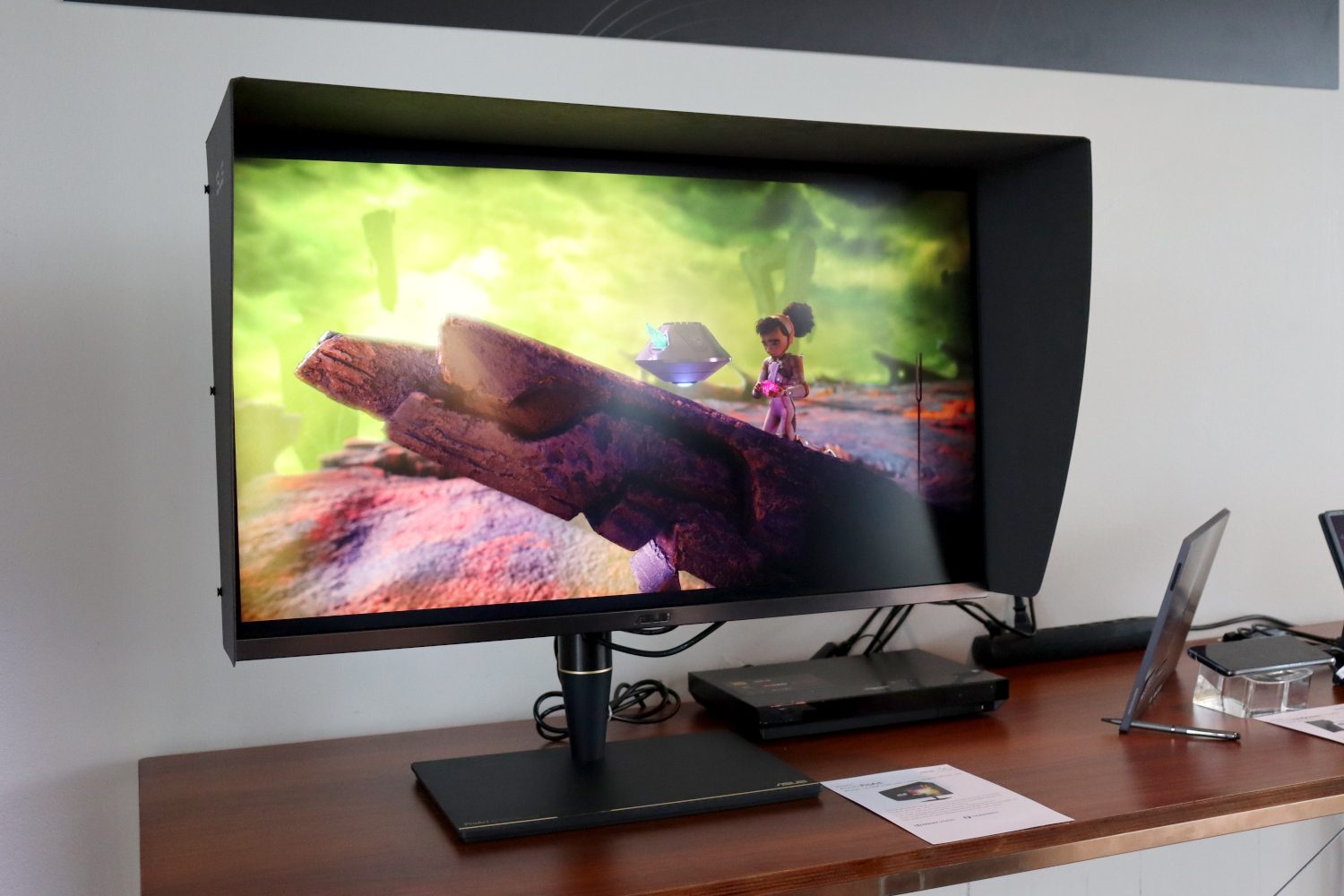
Along with these new laptops, Asus also announced a new workstation, the ProArt Station D940MX, and a pro-grade display, the ProArt Display PA32UCG. The ProArt monitor is the world’s first display that supports HDR 1600 and a variable-refresh rate between 48 and 120Hz that’s designed to eliminate motion blur, smearing, or tearing. According to Asus, this makes the panel great for creative work, video editing, and game development.
By using 1,152 individual mini LEDs backlit with local dimming, the 32-inch screen on the ProArt Display can reach 1,000 nits of brightness and up to 1,600 peak brightness with a 1,000,000:1 contrast ratio.


The quantum-dot screen technology aids in the panel’s support for wide color spaces, including DCI-P3, Adobe RGB, sRGB, REc. 709, and Rec. 2020. Ten-bit color depth and three-level factory color pre-calibration round out some of the advanced features on this display. Connectivity is handled by either three HDMI ports, two Thunderbolt 3 ports, or a single DisplayPort connector. There is also a built-in USB hub and hardware calibration technology designed for dependable color accuracy.
Asus did not reveal pricing information or availability for its ProArt notebooks, display, or the business-friendly B9 laptop.


