
This story is part of our continuing coverage of CES 2020, including tech and gadgets from the showroom floor.
Last year at CES, we counted (and ranked) over 40 gaming laptops. This year, there weren’t quite as many to look at. That’s because there weren’t any new hardware launches from the likes of Intel and Nvidia.
But of the few new gaming laptops there were, we did see some standouts. Whether it’s the implementation of the new Ryzen 4 processors or smaller updates of some of our favorites, these are the best gaming laptops from CES 2020.


Asus ROG Zephyrus G14
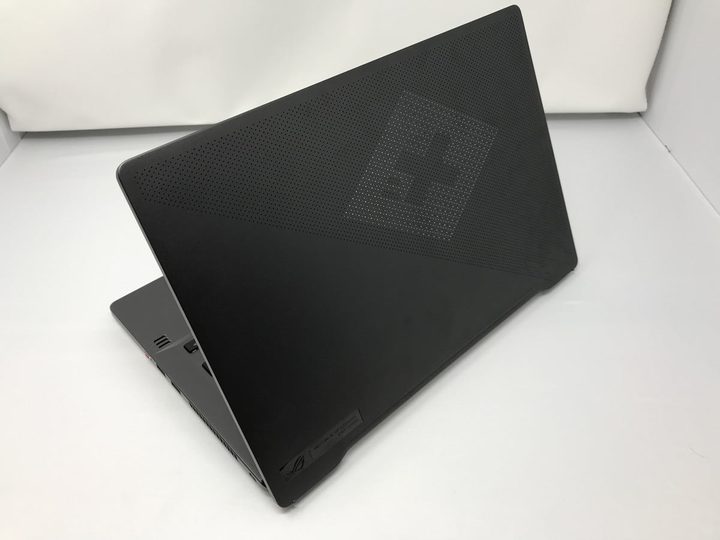
AMD is fighting an uphill battle. Its new eight-core Ryzen 4000 processors look amazing, but there are only a handful of laptops that actually use them so far. The standout is the ROG Zephyrus G14 from Asus.
Between the Ryzen 7 4800H and the RTX 2060 inside, the Zephyrus G14 has a ton of gaming prowess. In fact, it might be the most powerful 14-inch laptop ever made. But the true benefit of Ryzen 4 is its power efficiency, which AMD says allows for development of more power in more portable form factors. At just 0.7 inches thick and 3.5 pounds, it’s more portable than something like a Razer Blade, which is already known as a thin and light laptop.
As the cherry on top, the G14 features a cute lighting system built into the back of the lid that lets you customize it to your liking.
Razer Blade

Our favorite laptop didn’t get a major update this year at CES. Same chassis, same colorways, and even the same internals. There was one big change, though. The screen now supports up to a 300Hz refresh rate — up from the 240Hz it had before. You might not notice the exact difference between 240 and 300, but if you’re coming from 60 or 144, you probably will.
The refresh rate is the amount of times the screen refreshes per second. A faster refresh rate lets you make use of the powerful internals of these new gaming laptops. In other words, pushing a framerate of 150 frames per second will do you no good if your screen can’t refresh more than 60 times per second. And for twitchy shooters that require lightning-fast reactions, the higher the better.
MSI GS66 Stealth
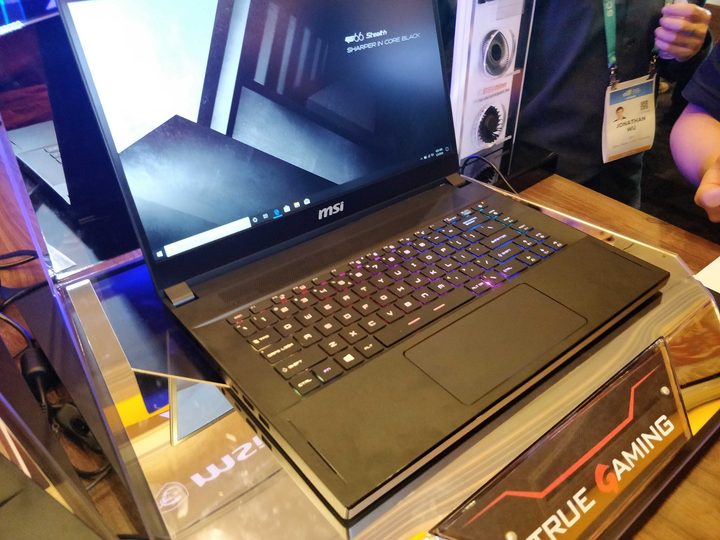
MSI’s GS65 Stealth has been a favorite since its launch as one of the first truly thin and light gaming laptops. But as that portability has become a bigger emphasis in gaming laptops, the GS65 Stealth isn’t quite as unique.
With its sequel, the GS66, MSI has made some improvements to the formula. One of the biggest complaints was about build quality. Compared to some of its competitors, it just wasn’t as sturdy and well-built. While it’s still not as rigid as a Razer Blade, the build quality has been significantly improved this time around. There are also a new set of upward-facing speakers located on the palm rests. MSI says it provides up to 15% more bass.
Like the new Razer Blade, the GS66 Stealth also features a 300Hz refresh rate screen.
Follow our live blog for more CES news and announcements.


