This story is part of our continuing coverage of CES 2020, including tech and gadgets from the showroom floor.
I kicked off CES 2020 by whining about the price of cutting-edge monitors from Acer, Asus, and Samsung, among others. I feel a little better now because I’m starting to think gamers craving a spectacular display can just skip monitors entirely.
LG’s CX-series OLEDs now include a 48-inch model, the smallest OLED from the company so far. That’s small enough to make sense in a variety of setups, from gaming dens to large PC gaming battle-stations. The 48-inch CX-series is a 4K HDR set that supports G-Sync, has a 120Hz refresh rate, and serves up a response time of five milliseconds.
What more could a PC gamer ask for?
I had a chance to try LG’s 48-inch CX-Series OLED for myself, and wow. I appreciate G-Sync and a high refresh rate. Image quality, however, is what makes the TV awesome for games. It exceeds the quality of every monitor I saw at CES 2020, including the extravagant Mini LED models like Acer’s $3,599 Predator X32. The contrast and vibrant color of OLED can’t be beat.
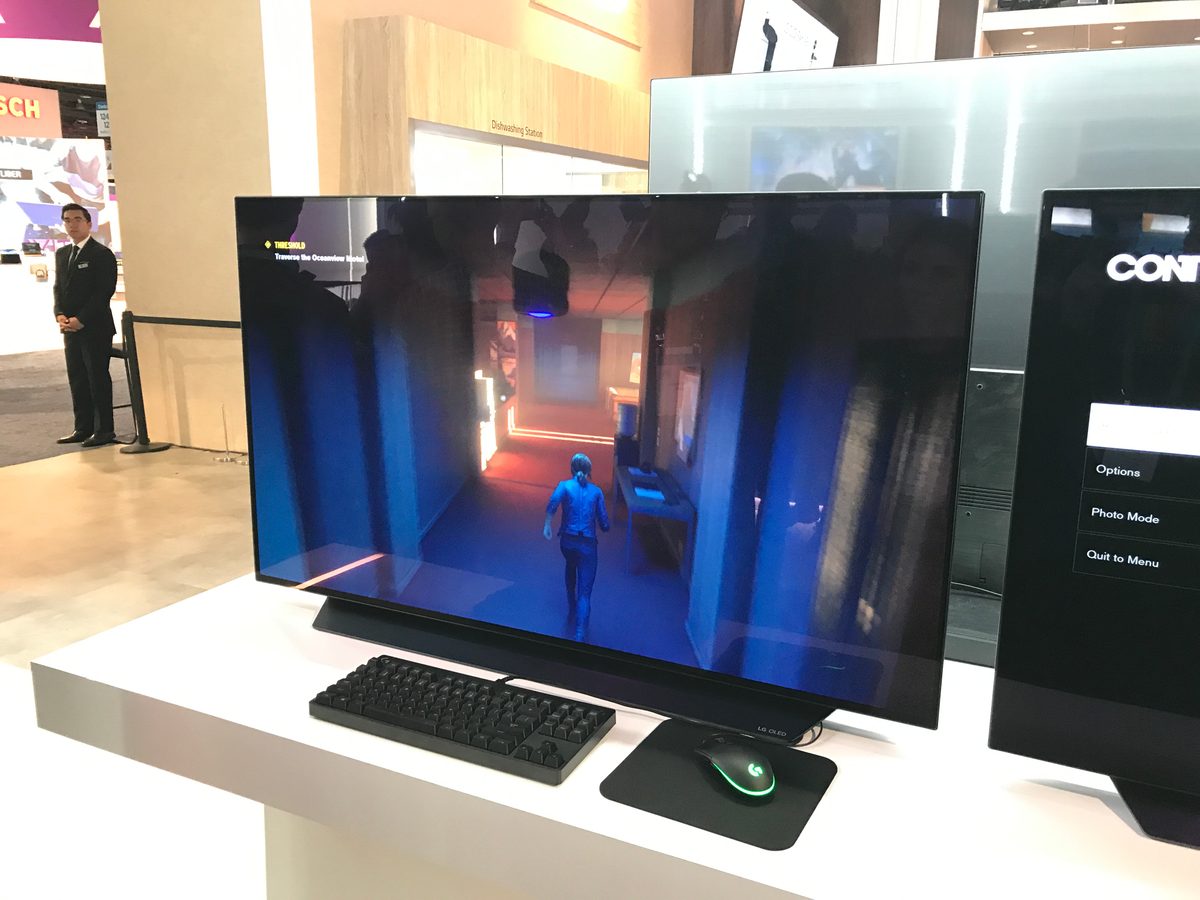
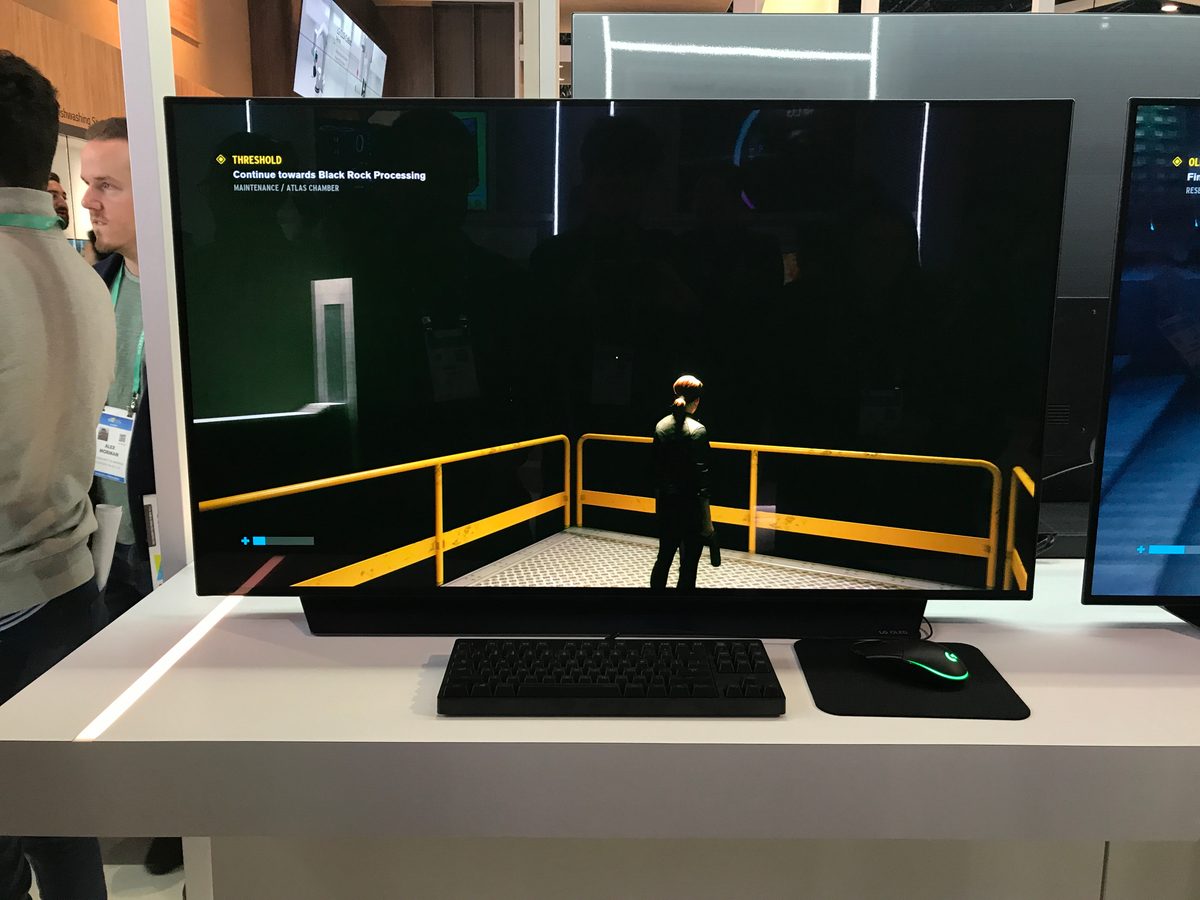
LG wisely used Control, one of 2019’s most attractive games, for its demo. Control is a spooky, strange, atmospheric title that easily exposes the weaknesses in a display. LED-backlit monitors have issues with the game’s darker areas, displaying them as a murky grey. The LG CX-Series can render them pitch black.
The CX-Series can’t match the brilliance of the Mini LED monitors I saw at CES 2020, but it can still sear your retinas when required. That, combined with the extremely deep black levels, gave Control an awesome level of contrast.
LG isn’t alone
Sony also announced a 48-inch OLED to CES 2020. The company’s Master Series A9S may be small, but the 4K HDR television packs many of the brand’s most anticipated features. That includes the Processor X1 Ultimate, an image processor chip that delivers superior image quality to Sony’s competitors.
Like LG’s 48-inch CX Series, Sony’s Master Series A9S includes some gamer-friendly features. It has a 120Hz refresh rate and promises very low response times though, unlike LG, no specific figure is quoted. Strangely, the Master Series A9S doesn’t seem to support G-Sync or FreeSync, which is a mark against it.
Pricing for LG and Sony’s OLED televisions hasn’t been announced. Using past models as a gauge, however, they should be under $2,000. That’s a deal compared to Mini LED and OLED monitors.
And don’t forget about televisions that aren’t new to CES 2020. Many Samsung sets now support FreeSync. That includes Samsung’s 43-inch QLED television, the Q60R, with a 4K HDR panel and FreeSync support. It’s even affordable, starting at just $599. You’ll trade some image quality for the lower price, but the Q60R is competitive with the best PC monitors.
Welcome the competition
Televisions like LG’s 48-inch CX-Series OLED are only the start of potential competition with traditional monitors. As television companies change their line-ups, aim for lower price points, and add gaming-centric features, the competition could only become more intense.
I expect we’ll see more sets with gamer-friendly features throughout 2020 and at CES 2021. Thank the new console generation. The Xbox Series X and PlayStation 5 will embrace adaptive sync, 120Hz refresh rates, and 8K resolution. That’s all great for PC gamers. We need better displays to support those same features.
I, for one, welcome our new television overlords.
Follow our live blog for more CES news and announcements.