
Gigabyte has unveiled a new SSD that it says is “the highest-performance storage device among all consumer SSDs in the market.” The Aorus Xtreme Gen4 SSD is an add-in card (AIC) that boasts 32TB of storage and a transfer speed of 28GB/s — only 4GB/s less than the maximum bandwidth of the PCIe 4.0 interface.
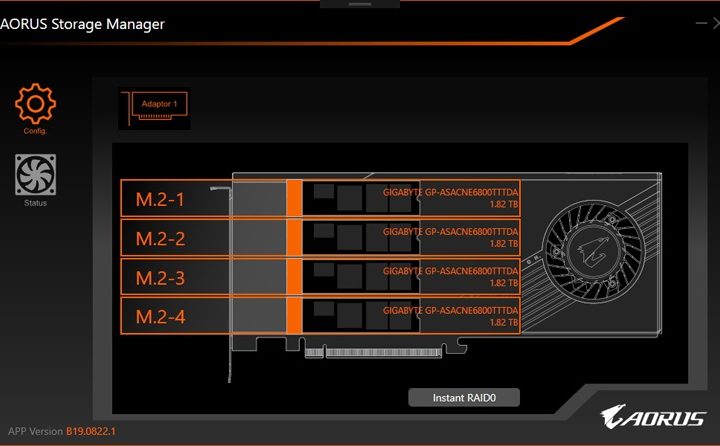
The drive features eight 4TB NVMe SSDs, providing a total of 32TB of storage. Configured in RAID 0, the SSDs split the workload of reading and writing data between them, which boosts the transfer speed up to four times beyond Gigabyte’s own Aorus Gen4 7000s SSDs. Users can enable a RAID 0 configuration with a single click through the Gigabyte SSD Tool Box, providing sequential read speeds of up to 28GB/s and sequential write speeds of up to 26.6GB/s.
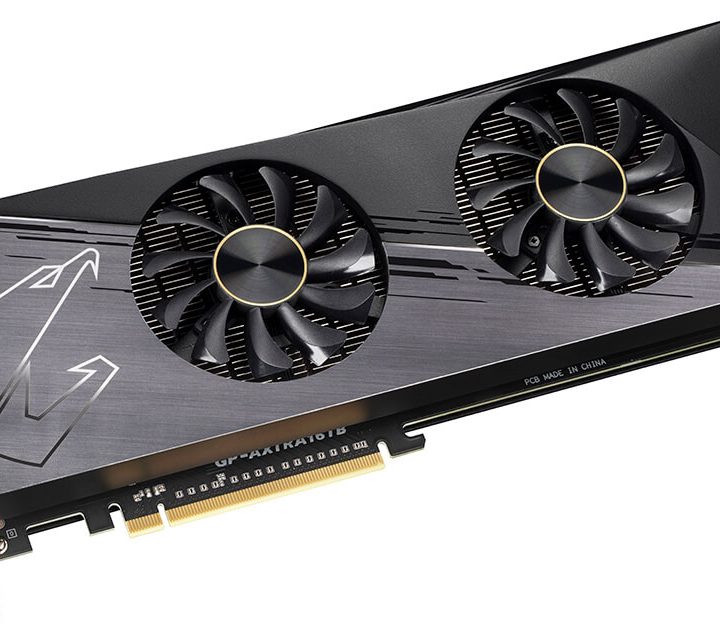
All of that performance produces heat, so Gigabyte outfitted the card with a dual-fan configuration reminiscent of a graphics card. The fans sit on top of a large aluminum heat sink, beefing up the card to occupy the space of a full-length, full-height AIC. The fans run based off data pulled from 10 temperature sensors on the card, which you can monitor through the SSD Tool Box.
Don’t get you wallet oit just yet, though. The Aorus Extreme Gen4 SSD requires a PCIe 4.0 x16 slot to reach its maximum speed, which, combined with a graphics card that also uses a PCIe x16 slot, will go beyond the available PCIe lanes on consumer processors.
AMD’s Ryzen 5000 processors only come with 24 PCIe lanes, for example, while the high-end Threadripper chips come with 128. Although you can technically use the card with Intel 11th-gen and AMD Ryzen 5000 processors, you’ll need a Threadripper or Xeon CPU (particularly the most recent series) to use it with anything else that uses PCIe lanes.
That’s not surprising in the space of high-end computing, though. Gigabyte hasn’t released pricing details for the Aorus Extreme Gen4 SSD, but it will likely sell for several thousand dollars.
Although we doubt it will be an issue, the Aorus Extreme Gen4 SSD is backward compatible with PCIe 3.0, so you can use it on older chipsets. Keep in mind that it’s designed for PCIe 4.0, so you’ll severely limit the performance with a PCIe 3.0 connection.


