  1. Home
  2. Computing
  3. News

Seven nuclear reactors to power Google’s AI ambitions

Add as a preferred source on Google
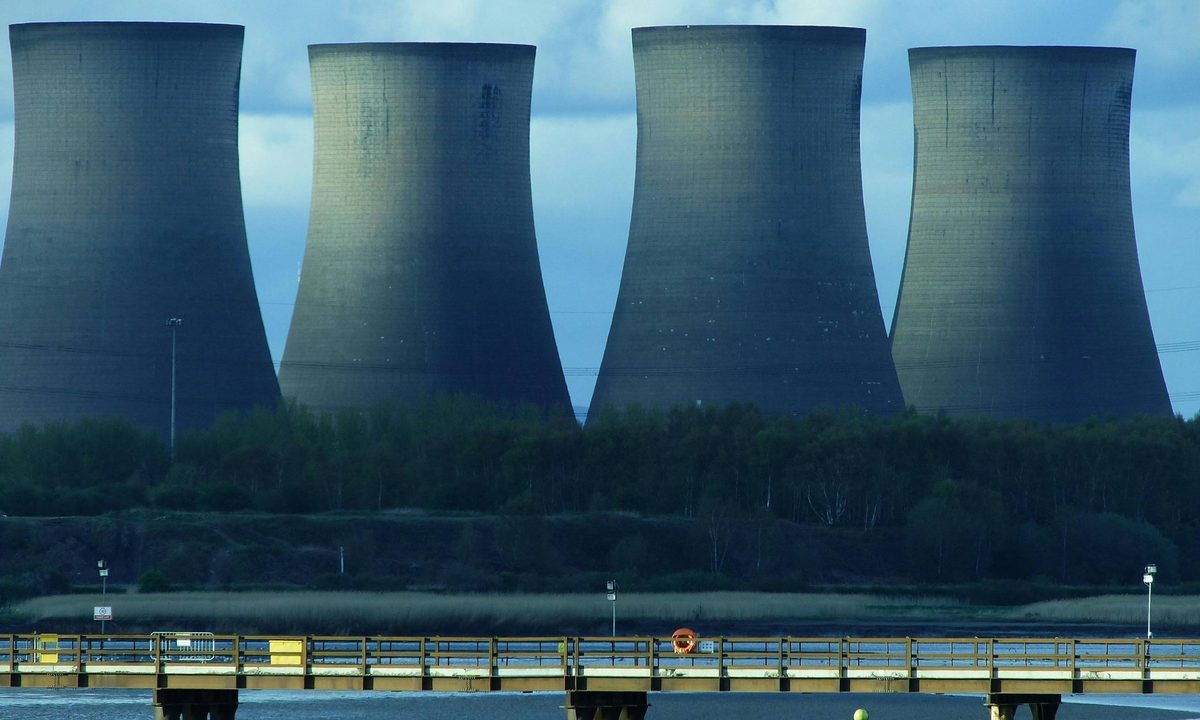
Four nuclear power plants.
Pixabay / Pexels

Google announced on Tuesday that it has signed a deal with nuclear energy startup Kairos Power to purchase 500 megawatts of “new 24/7 carbon-free power” from seven of the company’s small modular reactors (SMRs).  The companies are reportedly looking at an initial delivery from the first SMR in 2030 and a full rollout by 2035.

“The grid needs new electricity sources to support AI technologies that are powering major scientific advances, improving services for businesses and customers, and driving national competitiveness and economic growth,” Michael Terrell, Google’s senior director of Energy and Climate, wrote in a Google Blog on Tuesday. “This agreement helps accelerate a new technology to meet energy needs cleanly and reliably, and unlock the full potential of AI for everyone.”

Recommended Videos

Terrell argues that the adoption of nuclear power will complement the company’s existing solar power and wind power investments and help it achieve its net-zero energy goals. He also touts nuclear energy as a source of high-paying, long-term jobs, citing a U.S. Department of Energy (DOE) estimate that building out to 200 gigawatts of capacity by 2050 will require an additional 375,000 workers.

Google's first advanced nuclear clean energy deal

Google is far from the only major tech company eyeing nuclear energy as the answer to its AI power problems. Amazon Web Services purchased a 960-megawatt data center campus from Houston-based Talen Energy in March for a sum of $650 million. In September, Microsoft announced that it is working to restart Unit 1 at New York’s Three Mile Island in an effort to power its AI data centers.

That same month, Oracle announced that it is designing a 1-gigawatt data center that will be powered by a trio of small nuclear reactors. “The location and the power place we’ve located, they’ve already got building permits for three nuclear reactors,” Oracle CEO Larry Ellison said during a quarterly investors call. “These are the small modular nuclear reactors to power the data center. This is how crazy it’s getting. This is what’s going on.”

Kairos is also facing increasing competition from other small modular reactor manufacturers. Westinghouse, for example, is currently testing a micro reactor that can run 24/7 for five years without needing to be refueled. Given the astronomical energy (and cooling) requirements of today’s frontier AI models, these advancements can’t come soon enough.

Andrew Tarantola
Former Computing Writer
Andrew Tarantola is a journalist with more than a decade reporting on emerging technologies ranging from robotics and machine…
Apple’s biggest MacBook Pro redesign in years may skip the chip everyone expected
The next MacBook Pro may bring OLED and touch support without M6 Pro silicon
MacBook Pro on Table

Apple is expected to launch a refreshed MacBook Pro later this year, but according to Bloomberg, it won't come equipped with a next-gen processor. Instead, Apple is going to equip the highly anticipated device with Pro and Max variants of the current-gen M5 silicon.

It was widely speculated that when the redesigned MacBook with an OLED display and touch-screen capability debuts, it will also mark the arrival of the M6 series processors. Well, it appears that Apple has changed its silicon strategy pretty significantly.

Read more
You may have to wait until 2027 for Macs with Apple’s best chips
Lighting, Purple, Computer Hardware

If you’ve been holding off on buying a new MacBook Pro because the next generation of Apple Silicon is just around the corner, you might want to reset your expectations.

A new report by Bloomberg’s Mark Gurman suggests Apple is making its biggest change yet to the Mac chip roadmap. Instead of releasing a full family of M6 processors like it has with every generation since the original M1, the company is reportedly planning to launch only the standard M6 chip first. The more powerful Pro and Max variants? They may not arrive until 2027, and they’ll reportedly skip the M6 branding altogether.

Read more
I found these two Prime Day flagship laptop deals for display snobs and practical buyers
Samsung has the sharper discount and OLED screen, while Microsoft is the simpler Windows clamshell buy under $1,000.
Samsung Galaxy Book5 Pro 360 front view showing tend mode.

A flagship laptop deal has to survive the full spec check: chip, RAM, storage, display, seller, and final price. These two listings pass that test in different ways, which is why they’re the first pair I’d compare before chasing louder Prime Day discounts.

Samsung Galaxy Book5 Pro 360

Read more