
OpenAI’s ChatGPT has taken the world by storm, but it will soon have a formidable rival. Google has just announced that its new “experimental conversational AI service” called Bard has now entered the testing phase.
For Google, perfecting this AI model seems to be an absolute priority, and it’s running out of time to do so. Luckily for Bard, it will have a certain edge over this version of ChatGPT.

The era of AI has long been upon us, but the Microsoft-backed ChatGPT has certainly propelled certain kinds of AI to mainstream popularity. It also pushed other companies to start unveiling their own versions of the technology as soon as possible. Enter Bard, Google’s conversational AI that might soon become part of its proprietary search engine.
ChatGPT is not without its flaws, but it can compile easily readable answers to all kinds of questions. Seeing as Microsoft plans to integrate it into Bing, it might become a force to be reckoned with, for the first time giving Google a run for its money. It’s no wonder that Google rushed to prepare Bard, and perhaps because of the tight deadline, it doesn’t say much about the tech in the blog post announcement.
Google’s Bard employs the LaMDA (Language Model for Dialogue Application) AI model, whereas OpenAI’s ChatGPT relies on GPT-3.5. Google’s edge over Microsoft is clear here because Bard has access to up-to-date information, while ChatGPT relies on training that stopped in 2021. Microsoft will reportedly use GPT-4 for Bing integration, however, leveling the playing field.
Sundar Pichai, CEO of Google, said in the blog post: “Bard seeks to combine the breadth of the world’s knowledge with the power, intelligence, and creativity of our large language models. It draws on information from the web to provide fresh, high-quality responses.”
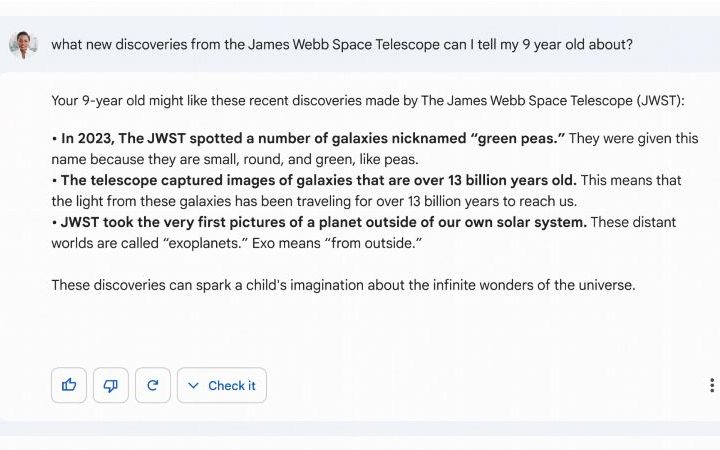
The initial release of Bard will run on a lightweight version of LaMDA. Google says that this will consume significantly less computing power, which in turn will allow it to make the tech available to a large group of users. For the time being, Google’s plan is to open up Bard to “trusted testers.” In the following weeks, more and more users will gain access to Bard for testing purposes. Google has big plans for Bard, and it’s clear that it might one day become a part of the search engine we all use today.
“AI can be helpful in these moments, synthesizing insights for questions where there’s no one right answer. Soon, you’ll see AI-powered features in Search that distill complex information and multiple perspectives into easy-to-digest formats, so you can quickly understand the big picture and learn more from the web: whether that’s seeking out additional perspectives, like blogs from people who play both piano and guitar, or going deeper on a related topic, like steps to get started as a beginner. These new AI features will begin rolling out on Google Search soon,” said Pichai.


