  1. Home
  2. Computing
  3. Web
  4. News

House votes to restore net neutrality rules, but effort faces long odds

Add as a preferred source on Google
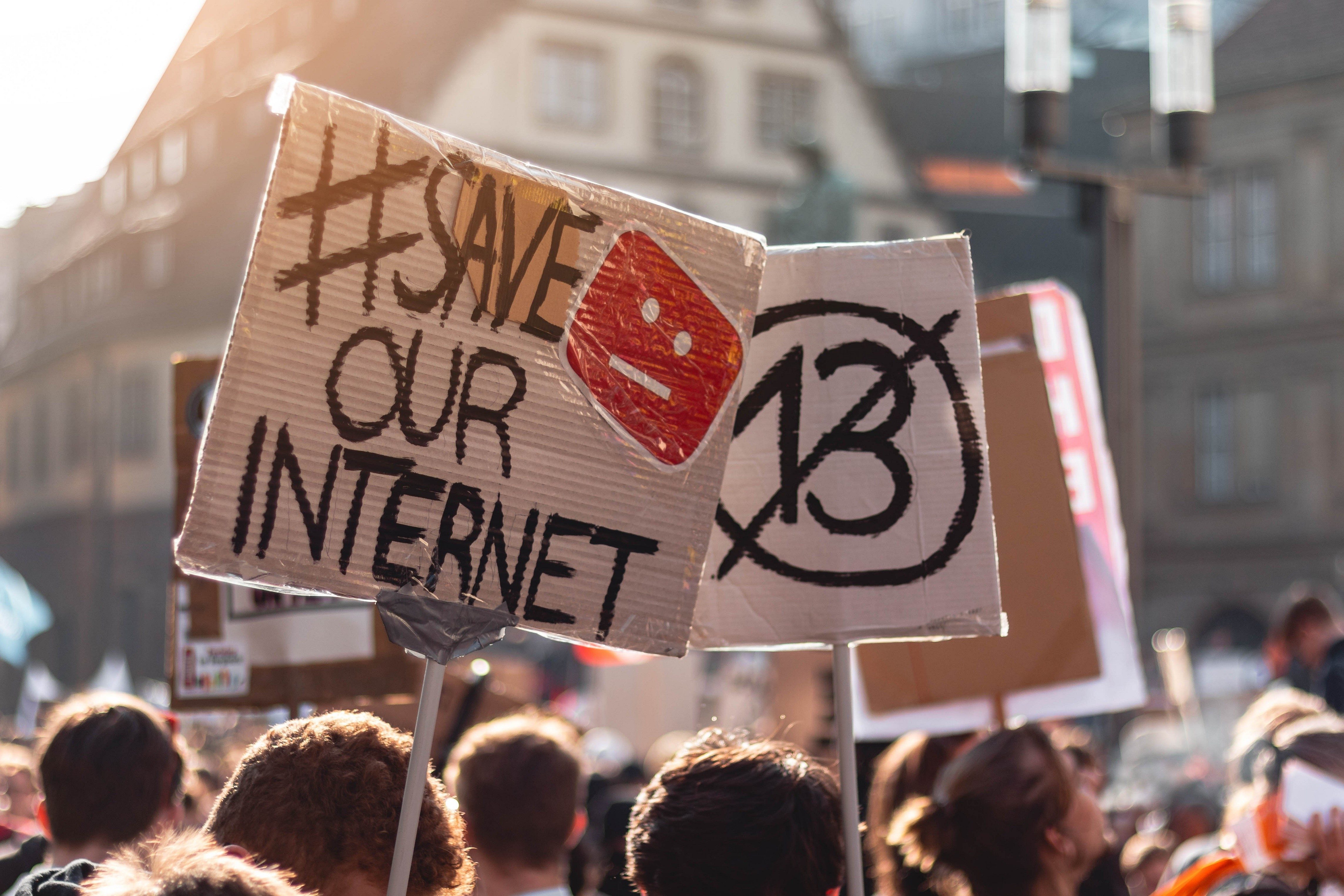
Save the Internet protest stock photo
Christian Wiediger/Unsplash

A step was taken toward the restoration of net neutrality regulations when the U.S. House of Representatives voted to approve the Save the Internet Act this week.

According to The Verge, the Save the Internet Act was approved on April 10, with 232 votes in favor of the measure and 190 votes against it. Also known as HR 1644, the Save the Internet Act is a bill intended “to restore the open internet order of the Federal Communications Commission [FCC].”

Recommended Videos

While the Save the Internet Act seemingly now has a chance to restore net neutrality, that chance still looks relatively slim. There is still significant opposition to the bill, which is unlikely to pass the Senate. It would need 60 votes to do so and, according to The Verge, the bill hasn’t been able to get those votes. In addition,  the White House issued a statement saying that President Donald Trump would veto the bill if it were presented to him.

Essentially, if the Save the Internet Act does become law, the measure would reinstate the net neutrality protections that were established in 2015 by the Obama administration’s Open Internet Order,which was repealed  in 2017. The Open Internet Order was intended to preserve net neutrality, which is the concept that consumers are given equal internet access and/or speed by their internet service providers (ISPs) and that their access won’t be slowed down or blocked by their ISPs if they choose to access certain kinds of online content or online services from their provider’s competitors.

Under the Save the Internet Act, net neutrality protections such as the prohibition of internet service providers blocking or throttling their customers’ internet access would be restored. The act would also, as the The Verge notes, establish the FCC as “the main authority to enforce those rules” and give the commission the authority to penalize ISPs who violate the net neutrality rules. The restoration of the FCC’s authority would be in large part due to classifying the ISPs as “common carriers” under Title II of the Communications Act. Title II common carriers are generally more closely monitored when it comes to violating regulations.

Anita George
Anita George has been writing for Digital Trends' Computing section since 2018. So for almost six years, Anita has written…
Don’t try this $3 app that makes your MacBook moan, but I know you want to
This absurd $3 Mac app went viral for all the wrong reasons
Computer, Electronics, Laptop, MacBook

There are useful apps, there are pointless app,s and then there is SlapMac, which sits in a category all by itself.

This app has gone viral online for one very stupid (and fun) reason: it makes your MacBook play sound effects when you slap it. Just spank your Mac and hear it moan, fart, or throw punches. The app creator has apparently made $5,000 in just three days, which is what makes the story even more absurd.

Read more
Apple’s ridiculous $700 wheels for its desktop PC are gone for good
The $700 Apple wheels are dead, long live ridiculous tech accessories
Machine, Wheel, Tire, Apple Mac Pro Wheels

Apple has officially discontinued the Mac Pro, and by extension, the $700 Mac Pro Wheels Kit is also dead.

Yes, that sentence is still funny in 2026. It marks the end of one of the company's most infamous desktop add-ons. For anyone who somehow missed this saga, the Wheels Kit launched back in 2020 as an upgrade for the Mac Pro. It allowed you to add wheels for $400, but buying the standalone kit later costs a whopping $700 because the base machine already included the standard feet. Apple also sold a separate $300 Feet Kit for people who wanted to swap back.

Read more
Macbook Neo stress test shows Apple could’ve made it run cooler with a simple fix
This simple mod makes the MacBook Neo faster.
Apple MacBook Neo with users hands on it

Apple's MacBook Neo arrived as a shock to the industry. It is the new cheap MacBook that is designed to be silent, efficient, and affordable. But a new stress test suggests that it could have been noticeably better with a very simple change.

As per a recent test, the addition of a basic copper plate to the cooling setup can improve both thermals and performance by a meaningful margin. And the frustrating part? It isn't some complex engineering overhaul and is relatively straightforward.

Read more