
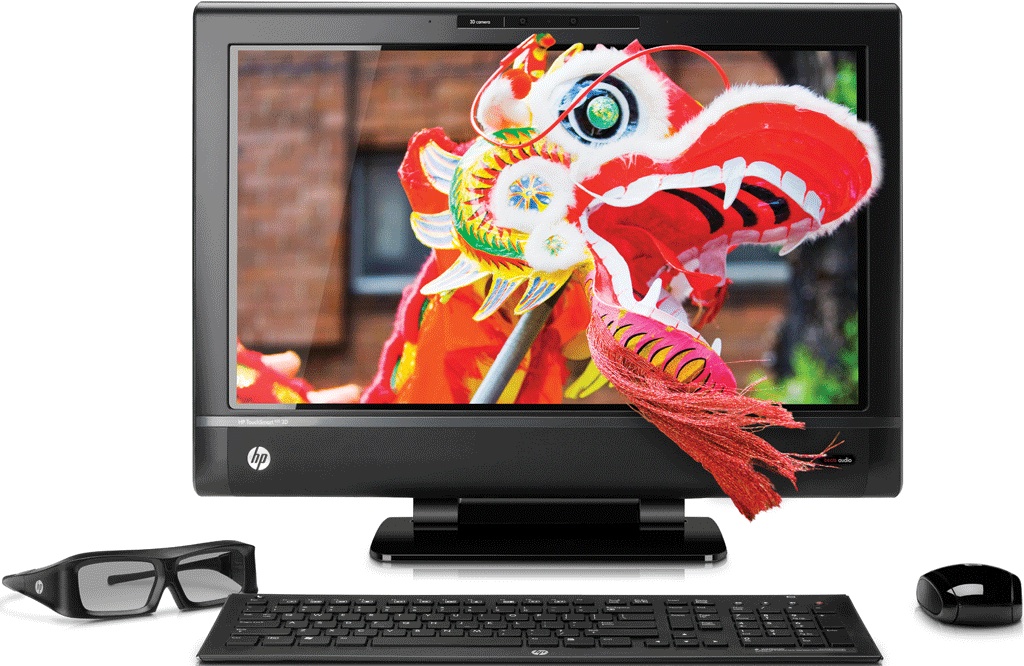
Back in February, HP rolled out a new reclining design for its high-end all-in-one desktop PCs, the TouchSmart 9300 Elite (for businesses) and the TouchSmart 610 (for home users). Now that HP has decided that, yes, it think it will stay in the PC business for a while, the company has updated the consumer version of the all in one—not so much with more brawn or storage, but with 3D display capabilities. The new TouchSmart 620 features a 23-inch touchscreen display, but folks who want to strap on 3D glasses can enjoy 3D depth and entertainment in full HD (1080p) resolution.
As a computer, the TouchSmart 620 is much like the earlier TouchSmart 610: an Intel Core i5 2400 processor running at 3.1 GHz, along with a 1.5 TB 5400 rpm hard drive, a slot-loating Blu-ray player, 8 GB of RAM, 802.11b/g/n Wi-Fi and gigabit Ethernet, all under a 23-inch multitouch LED-backlit display with a 1,000:1 contrast ratio, 4ms response time, and 250 nit of brightness. The system also features Beats Audio and an integrated TV tuner that enables users to watch, pause, and rewind live TV, along with seven USB ports, a six-in-one memory card reader, IR blaster, remote control, mic and headphone ports, etc. The real new addition to the mix is an AMD Radeon HD 6670A graphics controller with 1 GB of video memory to handle 3D content. HP is also shipping the systems with CyberLink PowerDVD 10 software that can generated 3D effects from 2D video, and the system also comes with a 3D-capable webcam, so user can shoot 3D images of themselves—or whatever else is in front of their computer—and post them to sharing sites, thereby encouraging other people around the world to, um, wear 3D glasses.
HP says the TouchSmart 620 should be available November 15 with a starting price of $1,900 (with one pair of active shutter glasses); however, HP will initially be offering the system with a $300 instant rebate.
Folks looking for 3D without the computer can check out HP’s new 2311gt 3D display, offering 23 inches and 1,920 by 1080-pixel resolution, although it uses Film Patterned Retarder (FPR) technology to more-or-less align alternating rows of pixels with the left or right eye in a focused area about two to two-and-a-half feet from the display—generally, the technology isn’t as well-regarded as 3D sets that use active shutter glasses, but it does have the advantage of, well, not using shutter glasses. The 2311gt display should go on sale tomorrow for a suggested price of $299.


