

In what is one of the most bizarrely aggressive pieces of marketing material I’ve seen, Intel compared AMD’s Ryzen 7000 mobile chips to snake oil. Over the weekend, Intel posted its Core Truths playbook, which lays out how AMD’s mobile processor naming scheme misleads customers. The presentation has since been deleted, according to The Verge.
There’s an element of truth to that, which I’ll get to in a moment, but first, the playbook, which was first spotted by VideoCardz. Intel starts with claiming that there’s a “long history of selling half-truths to unsuspecting customers” alongside images of a snake oil salesman and a suspicious used car seller. This sets up a comparison between the Ryzen 5 7520U and the Core i5-1335U. Intel’s chip is 83% faster, according to the presentation, due to the older architecture that AMD’s part uses.
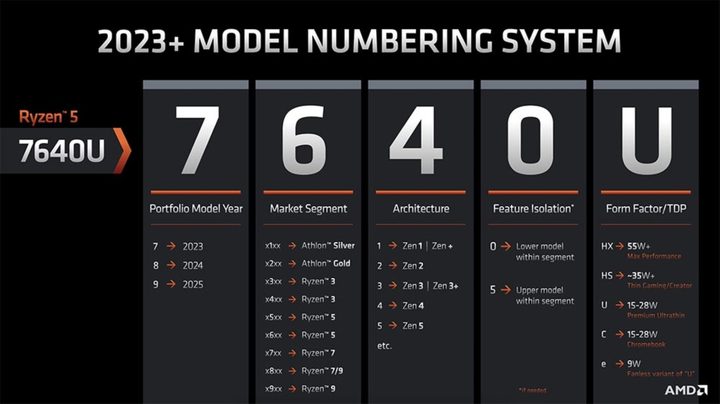
Intel has a point here. Last year, AMD changed its mobile naming convention, which obfuscated underpowered parts using an older architecture. Instead of matching architecture with generation, as Intel and AMD have done for years, AMD now says all of its mobile processors are part of the latest Ryzen 7000 generation regardless of the architecture they use.
Now, the third number in the name shows the architecture the CPU uses. For example, the Ryzen 5 7640U uses the Zen 4 architecture, while the Ryzen 5 7520U uses the Zen 2 architecture. It’s clear how this can be misleading when a chip using an older architecture is shown alongside the latest generation of CPUs.
It’s a little ironic coming from Intel, though. This was a few years ago, but it’s hard to forget that Intel sat behind its 14nm node introduced with Skylake on desktop for years, making incremental performance improvements with each generation that followed.
Some of that still applies today. Intel just released its 14th-gen processors for desktop, which are basically rebranded versions of its 13th-gen Raptor Lake processors. There are some performance improvements, but they aren’t very large. Similarly, we’re about to get 14th-gen Meteor Lake processors for laptops, but we aren’t seeing those chips on desktop, creating a mismatch for what “14th-gen” means for Intel across its product stack.
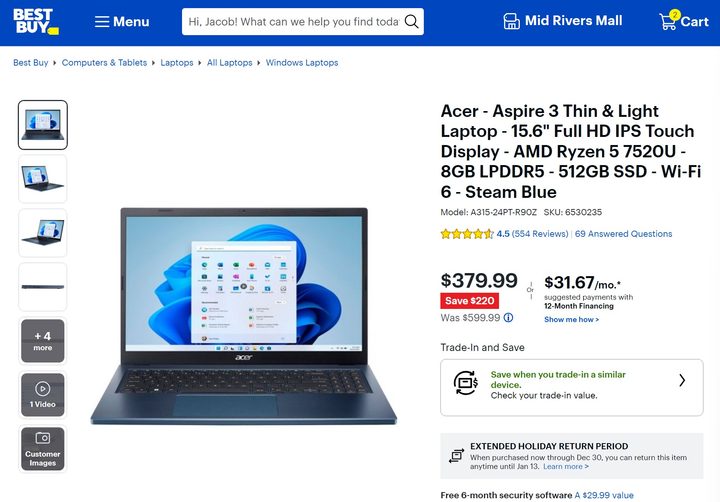
Still, Intel’s shuffling with naming shouldn’t distract from AMD’s fault here. The Ryzen 7000 naming scheme is confusing on mobile, and it can mislead buyers into buying a processor that’s older than what the name implies. There are laptops using these chips, too. For instance, the Ryzen 7 7520U is featured in the Acer Aspire 3, which is an affordable laptop available at Best Buy right now .
Thankfully, AMD’s chips aren’t available in a ton of laptops, at least not compared to Intel. Otherwise, the naming scheme would be a much bigger issue.
Intel’s playbook holds some truth, even if it is a little aggressive. Regardless, it’s proof that it’s always important to read up on a product you’re interested in buying, no matter if it comes from AMD or Intel.


