
Intel Arc Alchemist beta drivers have leaked, containing a list of many Intel GPUs, including a few that have not yet been announced.
The drivers, aside from the full range of Intel desktop and laptop GPUs, mention Intel Arc A-Pro — a GPU we haven’t heard of before. Seeing as these are the official drivers, did Intel just leak its entire Arc Alchemist lineup ahead of time?
Intel Arc Graphics Windows DCH Driver – BETA 30.0.101.1732https://t.co/KmEIz8EhFF
Intel Game On Driver support for Vampire: The Masquerade – Bloodhunt, Evil Dead: The Game, and
Dolmen on Intel Arc A350M and A370M Graphics.— 188号 (@momomo_us) May 15, 2022
The information comes from hardware leaker momomo_us on Twitter, who looked through the latest Intel beta graphics driver and found a lot of interesting mentions of Intel Arc. The v30.0.101.173 beta driver, aside from already existing integrated graphics cards as well as the mobile versions of Intel Arc, contains the elusive desktop range of the lineup, too.
So far, the beta driver supports the only two GPUs that are already out in some capacity — the mobile Arc A370M and ARC A350M. The support also stretches toward all integrated GPUs on the Intel Alder Lake processors. What’s also interesting is that there’s an entry for the Intel Raptor Lake-S mobile graphics controller, which won’t be released for a good few months yet. The expected launch of Intel’s 13th generation of processors is in the second half of the year, but the graphics drivers already made it into the official beta release.
The list reveals the full range of Intel’s mobile graphics cards, some of which are still unreleased as of yet. We’ve got laptop GPUs ranging from the budget A350M (already launched) all the way to the flagship A770M. The desktop lineup, still entirely off the market, looks much the same, but the drivers give us a sneak peek into the desktop GPUs we can expect to see later this year.
The lineup of Intel’s Arc DIY cards includes A310, A380, A580, A750, and lastly, the A770. There are also two mentions of “Pro” Arc graphics cards that we haven’t heard much about previously. These include an Intel Arc Pro A30M laptop graphics card and Arc Pro A40/A50 graphics cards. Seeing as previous leaks about the desktop Arc GPUs indicated that there would be a total of seven different variants, this seems to check out, adding up to five “standard” models and two “Pro” versions.
A lot of rumors have emerged about the specifications of Intel’s desktop GPUs. While everything remains a little up in the air until Intel confirms the specs of the entire lineup, it seems that the flagship Intel Arc A770 may, at best, be able to compete with Nvidia’s GeForce RTX 3070. So far, Intel seems to be targeting the entry-level and midrange sectors, leaving the high-end battles up to Nvidia and AMD.
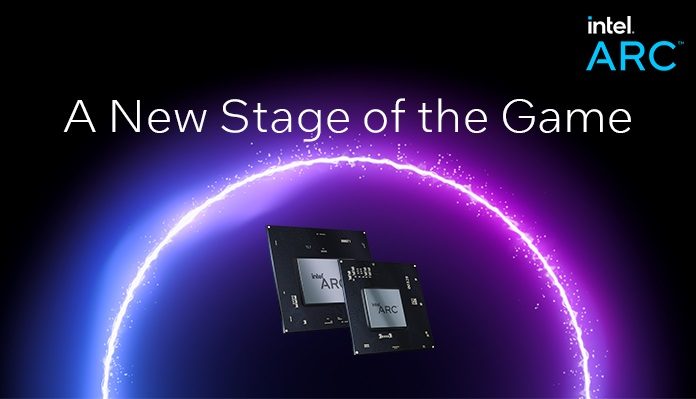
Where does the Arc Pro fit into that equation? Again, there is no telling. Assuming it’s an improvement over the previously leaked GPUs doesn’t seem like a stretch, but then again, there haven’t been many rumors about Intel potentially working on a more premium GPU. Even if the Arc Pro makes it to market, it might be a while before most users can actually try it out, regardless.
To call the desktop version of Intel Arc “elusive” is not much of an overstatement — the release date for the GPUs keeps moving up, and the latest Intel update told us that it’s planning a staggered release over the summer, starting with the Chinese market.
The budget-friendly Arc A3 line will launch first as part of pre-built desktops made by Intel’s partners, followed by the release of stand-alone GPUs, again from the A3 range. Next, Intel Arc A5 and A7 graphics cards will start appearing in pre-builts, and this could happen as late as near the end of the summer of 2022.
When will Intel Arc flagships become available for sale so that desktop users can actually install them inside their own PCs? Intel hasn’t specified yet. Considering that Nvidia and AMD are each set to release the next-gen graphics cards around the same time, this might be a tough act to follow for Intel.


