
The rocky road of the Intel Arc Alchemist discrete graphics lineup continues. This time, a new report from Igor Wallossek of Igor’s Lab suggests that Intel may have run into trouble with its board partners.
According to Wallossek, at least one of Intel’s partners decided to cease the production of Intel Arc due to “quality concerns.” Amidst whispers of Intel Arc possibly being canceled, this doesn’t sound like good news for the lineup, but are things really as bleak as they seem?
In his latest report, Wallossek talks about the various challenges that Intel Arc is currently facing, and may yet face, as it prepares for its global launch. While Igor’s Lab can’t reveal his sources, he mentions several worrying issues and says that the lineup is “on the brink.” Many factors add up to this — let’s go over them one by one.
Priorities coming in to focus
As per the report, Intel may have gotten on the wrong side of its add-in board (AIB) partners. Intel has allegedly told its board partners to focus on the manufacturing of system integrators and pre-built PCs as opposed to discrete graphics cards, and Wallossek claims that several representatives confirmed this to him directly. This isn’t exactly news — we’ve already noticed that Intel’s DIY graphics solution is lagging behind the (also scarcely available) GPUs found in laptops and pre-built PCs.
Focusing on that side of the market has its perks, but it also comes with a share of flaws. It’s more difficult for a new player in the GPU arena to make a name for itself if the graphics cards are chiefly found bundled with a bunch of other components. Let’s not forget that Intel Arc markets itself as a gaming graphics card, and many gaming enthusiasts enjoy the optimization that building your own PC can provide.
For the manufacturers, Intel’s focus is also not-so-great — for a number of reasons. For one, the margin on these PCs is often lower. Two, there might not be all too much interest from the customers. Intel can hit the budget segment if it wants to, and that seems to be the plan, but according to Wallossek, many potential distributors and manufacturers in Europe are simply not interested in working with Intel Arc.
It seems that this so-called fear of the unknown doesn’t stem from simply not wanting to gamble on a new product. After all, Intel is an absolute giant and it’s hardly a new company — it’s simply embarking on a new adventure. However, Igor’s Lab says that Intel was not able to provide its partners with some crucial information that might sway them in the right direction.
“The most important argument was always that Intel, in contrast to Nvidia and AMD, could not or did not want to give any price guarantee and that the framework conditions and bases for cost drivers like RMA and returns were significantly worse than those of the competitors,” said Igor Wallossek in his report.
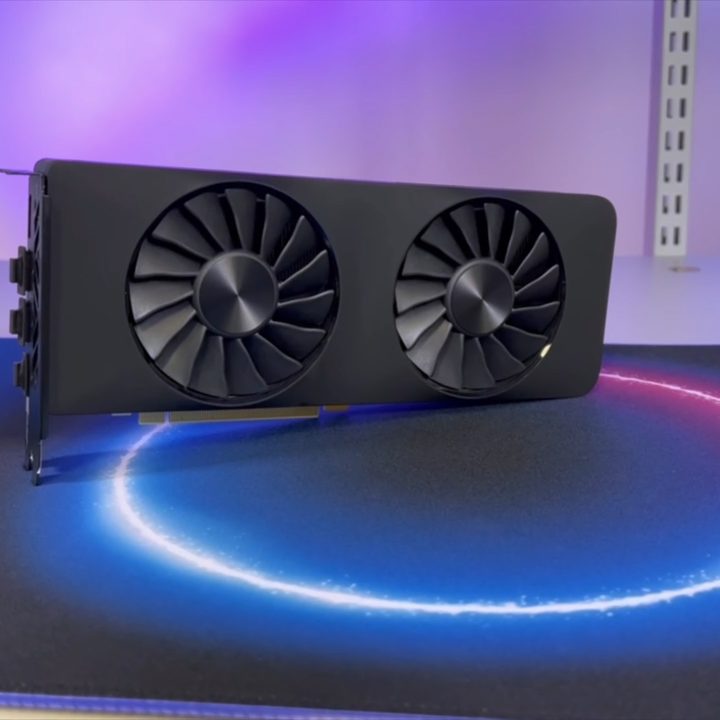
This lack of interest from both potential customers and retailers affects Intel’s board partners, and this is where things get even bleaker. Wallossek says that at least one of Intel’s “big board partners” has completely ceased to produce Intel cards due to quality concerns. While Wallossek doesn’t go into detail about the alleged quality concerns, it could be any number of things — plenty of benchmarks support the claim that Intel Arc still needs to work on the software side of things.
On top of all of the above, many of Intel’s partners still have plenty of AMD and Nvidia graphics cards sitting around and waiting to be bought before the launch of the next generation. With an oversupply of some of the best graphics cards on the market and even better GPUs on the way, it’s no wonder that AIBs may be hesitant to take a gamble on Intel Arc.
On the other hand, Intel is not giving up on Intel Arc and continues to show off the upcoming graphics cards in regular videos. It’s clear that the experts involved in the creation of Intel’s first discrete gaming GPU line are passionate about the project, and that will certainly go a long way. Let’s hope that the execution of the launch will catch up to the enthusiasm Intel has for its own product and we will see some success for Intel Arc.


