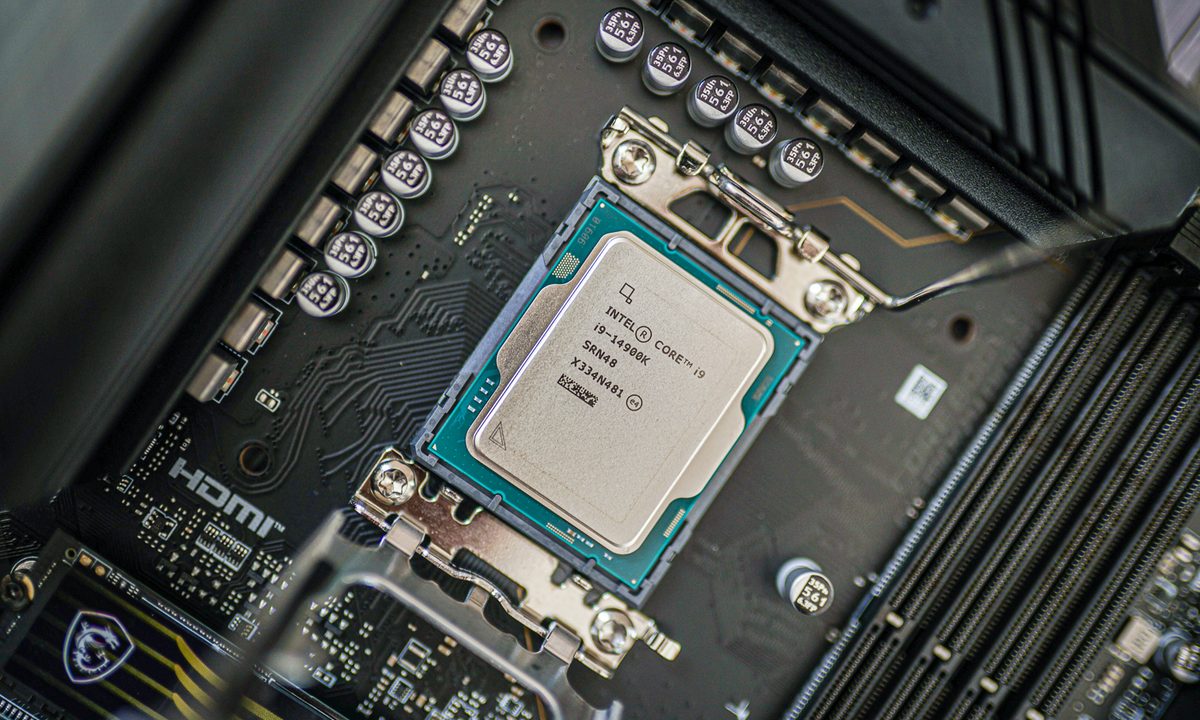
Intel has finally provided an update on instability issues on 13th-gen and 14th-gen CPUs. An update posted by Thomas Hannaford, Intel’s communications manager, pins the instability on an error in the microcode that requests incorrect voltage numbers, leading to instability in the processor.
The company is releasing a microcode patch that “addresses the root cause of exposure to elevated voltages.” Intel says that update should arrive in mid-August. In the meantime, Intel encourages users who are experiencing instability issues to reach out to its support team for assistance. The microcode error was discovered after Intel reviewed processors that were returned due to stability issues, suggesting Intel wants to make the situation right with affected users — though it stopped short of apologizing for a months-long drought on communication on the matter.
Up to this point, Intel’s guidance has been a list of dense BIOS settings that could reduce performance by upwards of 9% on CPUs like the Core i9-13900K and Core i9-14900K. The microcode update gets at a deeper issue within the processor, which should hopefully improve the situation on Intel’s recent high-end CPUs.
The timing is strange, however. Intel has stayed mostly silent on instability up to this point, leaving it to third parties to investigate the scope and severity of the problem. The post today comes a little over a week before AMD is set to launch its Ryzen 9000 desktop CPUs. The instability issues on 13th-gen and 14th-gen CPUs is sure to be a topic of conversation, with some, such as Gamer’s Nexus, going as far to say that they refuse to recommend an Intel CPU until the stability issues are addressed.
Intel is also ignoring a host of issues that have been brought up since the stability concerns came to light. An investigation from Level1Techs revealed that even 13th-gen and 14th-gen CPUs running in servers experienced instability, despite much more conservative power settings.
In addition, it’s been several months since the first reports of instability came out. We typically see microcode issues addressed in a matter of days, and if it was truly a microcode error requesting improper voltages, you’d expect Intel would be able to narrow down that issue quickly. I’ve asked Intel why it took so long to find the microcode error, and here’s what it told me:
“Due to the highly complex nature of instability issues and related causes – including the difficulty associated with physical failure analysis on returned parts from customers – in-depth debug, modelling, and analysis is required to fully understand the nature of the instability issue and its related causes. Determining the causes of this complex issue and developing appropriate mitigations requires a significant amount of testing, analysis, and validation.”
Although it’s reassuring to know that Intel is working on a solution, the saga with instability is far from over. Given the scope and timeline of this issue, it’s hard to imagine a microcode error requesting improper voltages is truly the root cause. Right now, all we can do is wait until mid-August, when Intel plans to release its microcode update to see if the stability situation improves.