  1. Home
  2. Computing
  3. Legacy Archives

Iomega eGo Portable and Desktop Drives Get USB 3.0

Add as a preferred source on Google

Storage developer Iomega has unveiled new updates to its eGo line of portable and desktop hard drives—and they feature speedy USB 3.0 interfaces that can offer up to 10 times the transfer speeds of everyday USB 2.0 drives.
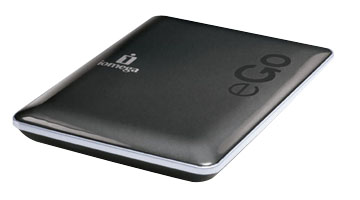
Image used with permission by copyright holder

The new Iomega SuperSpeed USB 3.0 eGo Portable Hard Drive features a 500 GB capacities and runs off bus power—so there’s no need for a separate AC adapter, weights just 0.4 pounds, and is just 5/8ths of an inch thick. The drive sports USB 3.0 connectivity, but is backward compatible with USB 2.0 and 1.1 connections so the drive can be used with older gear—albeit at slower transfer speeds. Folks who don’t have a USB 3.0 port on their computers can add one via an ExpressCard accessory if the transfer speed matters that much to them in the real world. The drive carries a suggested retail price of $129.99.

Recommended Videos

On the desktop front, the new USB 3.0 eGo Desktop Hard Drives are available in 1 and 2 TB capacities; they’re pre-formatted with the NTFS file system and feature an 8 MB cache; unlike the eGo portable drive, these desktop drives do need an external power adapter, but at least it’s Energy Star certified so it doesn’t waste as much power when the drive is off or disconnected. The 1 TB version carries a suggested retail price of $149.99, while the 2 TB version goes for $229.99.
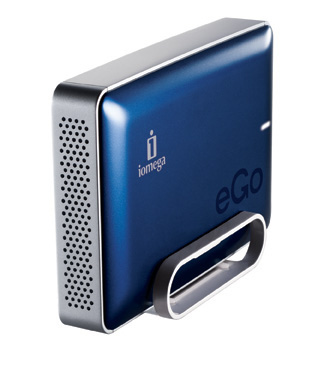
Image used with permission by copyright holder

Iomega has also rolled out a Mac edition of its eGo Desktop hard drive; it’s USB 2.0 but also sports a FireWire 800 port along with a FireWire 800/400 conversion cable; it runs $159.99 for the 1 TB version and $249.99 for the 2 TB edition. The company has also rolled out a 1TB Mac edition of its eGo BlackBelt portable drive: also USB 2.0, but with dual FireWire 800 ports and a FireWire 400 converter cable. It should land in Apple retail stores this June for $229.99.

Geoff Duncan
Former Contributor
Geoff Duncan writes, programs, edits, plays music, and delights in making software misbehave. He's probably the only member…
Apple’s ridiculous $700 wheels for its desktop PC are gone for good
The $700 Apple wheels are dead, long live ridiculous tech accessories
Machine, Wheel, Tire, Apple Mac Pro Wheels

Apple has officially discontinued the Mac Pro, and by extension, the $700 Mac Pro Wheels Kit is also dead.

Yes, that sentence is still funny in 2026. It marks the end of one of the company's most infamous desktop add-ons. For anyone who somehow missed this saga, the Wheels Kit launched back in 2020 as an upgrade for the Mac Pro. It allowed you to add wheels for $400, but buying the standalone kit later costs a whopping $700 because the base machine already included the standard feet. Apple also sold a separate $300 Feet Kit for people who wanted to swap back.

Read more
Macbook Neo stress test shows Apple could’ve made it run cooler with a simple fix
This simple mod makes the MacBook Neo faster.
Apple MacBook Neo with users hands on it

Apple's MacBook Neo arrived as a shock to the industry. It is the new cheap MacBook that is designed to be silent, efficient, and affordable. But a new stress test suggests that it could have been noticeably better with a very simple change.

As per a recent test, the addition of a basic copper plate to the cooling setup can improve both thermals and performance by a meaningful margin. And the frustrating part? It isn't some complex engineering overhaul and is relatively straightforward.

Read more
The Mac Pro is dead at Apple, and I’ll miss the cheese-grater powerhouse
RIP Mac Pro. The Mac Studio is taking the throne, and we're okay with that.
Electronics, Computer, Pc

Apple has officially discontinued the Mac Pro. It’s been removed from Apple’s website, and Apple has confirmed to 9to5Mac that there are no plans to release a future version. The buy page now redirects to Apple’s Mac homepage, where the Mac Pro no longer exists.

Why did Apple kill the Mac Pro?

Read more