

“The Lenovo ThinkPad Z13 Gen 2 is a solid compact laptop, but it's best reserved for business use.”
- Solid and attractive build
- Very strong productivity performance
- Quality OLED display
- Excellent keyboard and touchpad
- Superior security and manageability
- Last-gen AMD CPU
- Displays are just 60Hz
- Below-average battery life

“Why you can trust Digital Trends – We have a 20-year history of testing, reviewing, and rating products, services and apps to help you make a sound buying decision. Find out more about how we test and score products.“
After reviewing and using so many 14-inch laptops, as well as larger ones, getting a bona fide 13-inch laptop to review seems weird to me. Lenovo’s ThinkPad Z13 Gen 2 is one such machine, and it feels downright tiny.
That’s not to say it’s anything less than a real computer. It packs in an AMD Ryzen 7 CPU that promises strong productivity performance, an OLED display, and the typical ThinkPad build quality, along with the new Z-series look and feel. If you’re a ThinkPad fan, the ThinkPad Z13 Gen 2 offers a solid small laptop option, but the updates feel a bit behind given all the new hardware launching in 2024.
Specs and configurations
| Lenovo ThinkPad Z13 Gen 2 | |
| Dimensions | 11.59 x 7.86 x 0.55 inches |
| Weight | 2.78 pounds |
| Processor | AMD Ryzen 5 Pro 7540U AMD Ryzen 7 Pro 7840U |
| Graphics | AMD Radeon 740M graphics AMD Radeon 780M graphics |
| RAM | 16GB 32GB 64GB |
| Display | 13.3-inch 16:10 WUXGA (1,920 x 1,200) IPS 13.3-inch 16:10 WUXGA IPS touchscreen 13.3-inch 16:10 2.8K (2,880 x 1,800) OLED touchscreen |
| Storage | 256GB SSD 512GB SSD 1TB SSD 2TB SSD |
| Touch | Optional |
| Ports | 2 x USB-C with Thunderbolt 4 1 x 3.5mm audio jack |
| Wireless | Wi-Fi 6E and Bluetooth 5.1 Optional WWAN LTE |
| Webcam | 1080p with infrared camera for Windows 11 Hello facial recognition |
| Operating system | Windows 11 |
| Battery | 51.5 watt-hour |
| Price |
$1,241+ |
Lenovo’s pricing and configurations constantly change, meaning you’ll want to check its website and retail partners for the latest pricing. But as of when this review was written, Lenovo has the ThinkPad Z13 entry-level configuration at $1,241 for an AMD Ryzen 5 Pro 7540U CPU, 16GB of RAM, a 256GB SSD, and a 13.3-inch WUXGA non-touch IPS display. That’s a decent value, though the 256GB of storage will be low for most people.
When fully configured, the laptop costs $2,348 for a Ryzen 7 Pro 7840U, 64GB of RAM (available only with the Ryzen 7), a 2TB SSD, and a 13.3-inch 2.8K OLED display.
There’s a Flax Fiber Bronze color that sports a woven flax fiber cover on the lid, but I couldn’t find that configuration option available anywhere online just yet.
As good-looking as the original
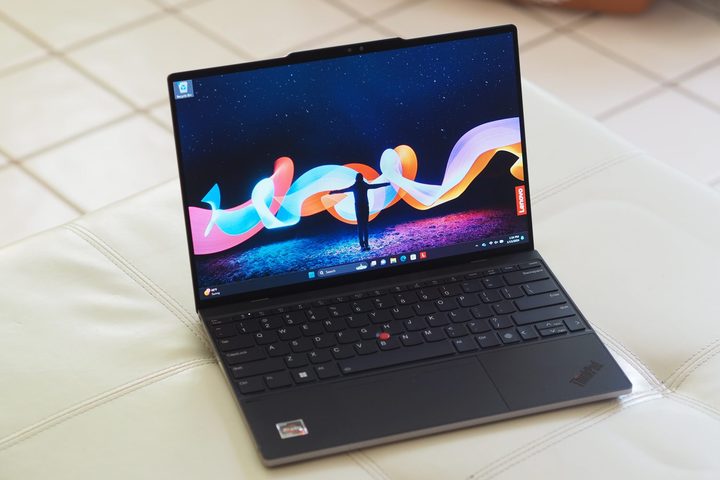
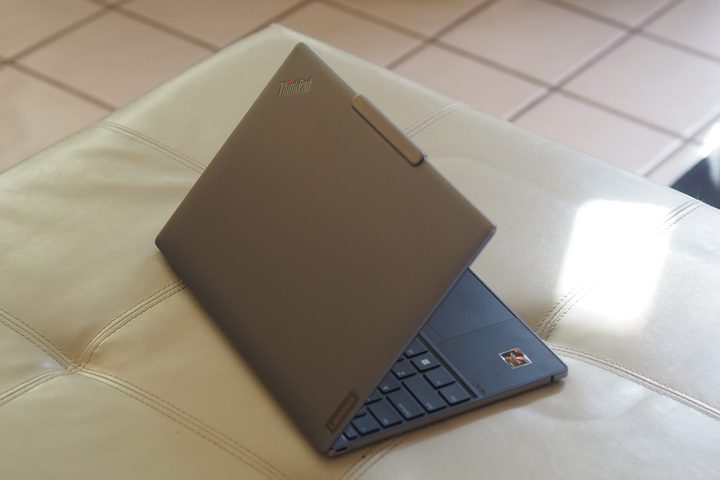
Like the larger ThinkPad Z16 Gen 2, the 13-inch update retains the same all-aluminum chassis with a revised aesthetic as the original, groundbreaking model. From the outside, the ThinkPad Z13 Gen 2 looks a lot more like the Apple MacBook Air than the Lenovo ThinkPad X1 Nano Gen 3. It comes in either Arctic Gray or Flax Fiber Bronze, with the former being a more conservative silver-gray finish and the latter sporting a lid cover made of sustainable woven flax fibers. The Flax Fiber model looks like it makes for a standout appearance, while my review model was the more conservative version.
It’s plenty attractive, but it no longer stands out against, say, the latest Dell XPS 13. You’ll notice the reverse notch at the top of the display, which allows for a thin top bezel that rival’s Dell’s while fitting in a modern webcam and infrared camera.
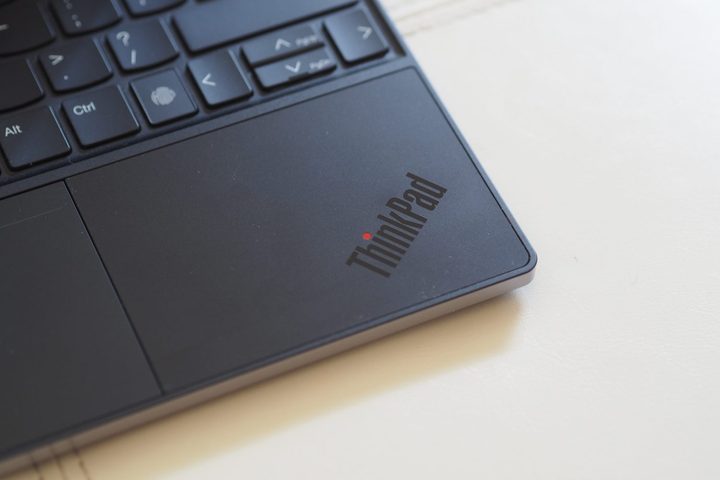
Open the laptop, and you’ll find the usual all-black keyboard and palm rest, with only the red TrackPoint nubbin in the middle of the keyboard breaking up the color scheme. That matches up with the red LED ‘i’ on the ThinkPad logo on the lid, which helps the device maintain a link to the overall ThinkPad lineup.
Another important ThinkPad attribute is the build quality. There’s zero bending, flexing, or twisting in the lid, keyboard deck, or bottom chassis. Lenovo adheres to military standards for durability, and the laptop felt like it could take a beating. It’s as well-built as the MacBook Air and arguably feels even more robust.
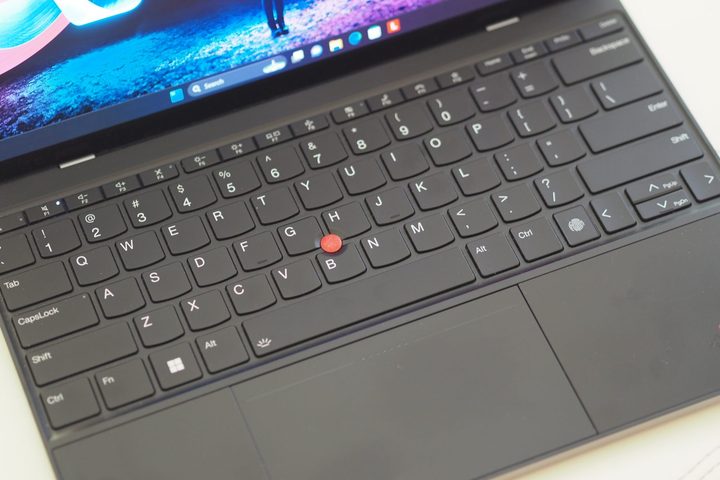
The keyboard has the usual ThinkPad layout and sculpted keycaps, and there’s plenty of spacing for such a small laptop. The switches were lighter than on older ThinkPads, though, and I found them more snappy and precise without generating fatigue. They keyboard is almost as good as the best around, Apple’s Magic Keyboard, and so close that you might not notice the difference.
The haptic touchpad is also excellent, in a wide format that matches the display and with an upper edge that provides virtual buttons to support the TrackPoint. The touchpad was precise with fast, natural-feeling haptic button presses.


Connectivity is a weak spot, but it’s no worse than with other modern 13-inch laptops. You’ll find two Thunderbolt 4 ports and a 3.5mm audio jack and nothing more. Wireless connectivity is now officially a step behind at Wi-Fi 6E and Bluetooth 5.1, as we’re now seeing laptops support the brand-new Wi-Fi 7 standard. If you want always-connected internet, you can opt for a nano-SIM slot and LTE cellular support.
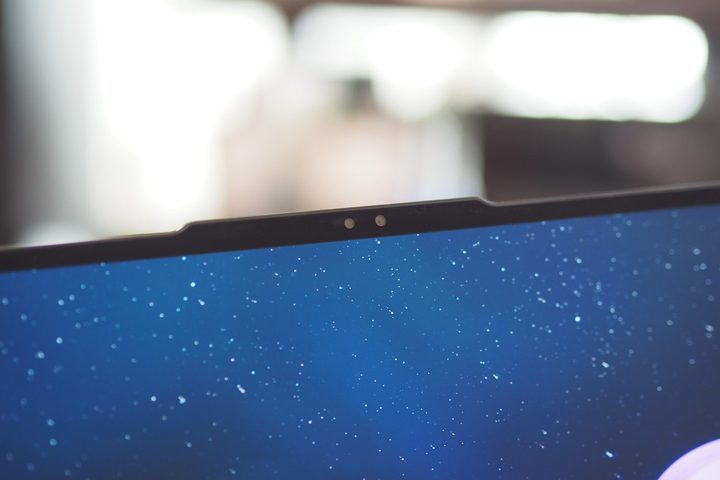
There’s a 1080p webcam that provides very good image quality for videoconferencing, and it sports an infrared camera for Windows 11 Hello facial recognition. Lenovo includes its user presence-sensing technology that can lock the ThinkPad and put it to sleep when a user walks way and wake it up and unlock it when a user returns.
That was once a standout feature, but is becoming the norm, and some newer laptops like the HP Spectre x360 14 use AI technology that is claimed to make the process better somehow.
AMD provides competitive productivity performance
You can choose between a 6-core/12-thread AMD Ryzen 5 Pro 754oU or an 8-core/16-thread Ryzen 7 Pro 7840U. Both run at between 15 watts and 30W, making them competitive in terms of power with Intel’s latest 28-watt Meteor Lake Core Ultra CPUs. They’re AMD’s latest mobile business-ready CPUs, with Microsoft’s Pluton Security Processor and AMD Profeatures that offer additional security and manageability. Of course, the ThinkPad Z13 Gen 2 is coming at a time when we’re seeing tons of talk around the AI in Meteor Lake and AMD’s Ryzen 8000 series, making it seem suddenly outdated.
As we can see in our suite of CPU-intensive benchmarks, the ThinkPad Z13 Gen 2 was competitive with Intel’s latest chipset in multi-core applications and even won out in single-core tests. The ThinkPad integrates its performance-tuning feature into the standard Windows performance setting, and selecting performance mode made a larger impact than usual.
I didn’t notice much difference in fan noise with performance turned up, thanks to a cooling system that utilizes relatively quiet fans, but performance was between 35% and 60% faster.

Overall, the ThinkPad Z13 Gen 2 provides stellar productivity performance, even competing with slightly larger laptops like the 14-inch Asus Zenbook 14X OLED with a 45-watt Intel Core i7.
Graphics performance was typical for integrated GPUs, with the AMD Radeon 780M graphics hitting just 2,134 in the 3DMark Time Spy benchmark. That’s similar to Intel Iris Xe graphics and considerably slower than the Intel Arc graphics in the Core Ultra 7 155H chipsets that hit around 3,500 in the same test. That means that gaming performance and creativity workflows in apps that can use the GPU will be limited.
| Geekbench 5 (single/multi) |
Handbrake (seconds) |
Cinebench R23 (single/multi) |
PCMark 10 Complete | |
| Lenovo ThinkPad Z13 Gen 2 (Ryzen 7 PRO 7840U) |
Bal: 1,709 / 7,893 Perf: 1,751 / 10,633 |
Bal: 123 Perf: 77 |
Bal: 1,622 / 8,605 Perf: 1,686 / 11,931 |
6,529 |
| HP Spectre x360 14 (Core Ultra 7 155H) |
Bal: 1,588 / 10,548 Perf: N/A |
Bal: 111 Perf: N/A |
Bal: 1,750 / 9,832 Perf: N/A |
6,316 |
| AMD Swift G 14 (Core Ultra 7 155H) |
Bal: 1,533 / 9,015 Perf: N/A |
N/A | Bal: 1,762 / 10,773 Perf: N/A |
6,665 |
| Lenovo Yoga 9i Gen 8 (Core i7-1360P) | Bal: 1,843 / 8,814 Perf: 1,835 / 10,008 |
Bal: 122 Perf: 101 |
Bal: 1,846 / 8,779 Perf: 1,906 / 9,849 | 6,102 |
| Asus Zenbook 14X OLED (Core i7-13700H) | Bal: 1,848 / 11,157 Perf: 1,852 / 11,160 |
Bal: 84 Perf: 82 |
Bal: 1,819 / 11,066 Perf: 1,826 / 12,795 | 6,020 |
| HP Pavilion Plus 14 2023 (Ryzen 7 7840U) |
Bal: 1,819 / 9,655 Perf: N/A |
Bal: 84 Perf: N/A |
Bal: 1,721 / 12,234 Perf: N/A |
6,804 |
| Apple MacBook Air (M2) |
Bal: 1,925 / Perf: 8,973 Perf: N/A |
Bal: 151 Perf: N/A |
N/A | N/A |
Below-average battery life
AMD processors typically get better battery life than their Intel counterparts, but that’s not true with the ThinkPad Z13 Gen 2. It has a 51.5 watt-hour battery, which is around average for 13-inch laptops, while the high-resolution OLED display is power-hungry, so I wasn’t sure what to expect.
As it turned out, the combination resulted in just six hours of web browsing and 8.75 hours of video. That’s a couple of hours less than average, and that means you’ll be grabbing for your power adapter before a full day’s work is done. If battery life means a lot to you, then you’ll want to opt for one of the lower-resolution IPS display options.
An unsurprisingly excellent display, with one catch
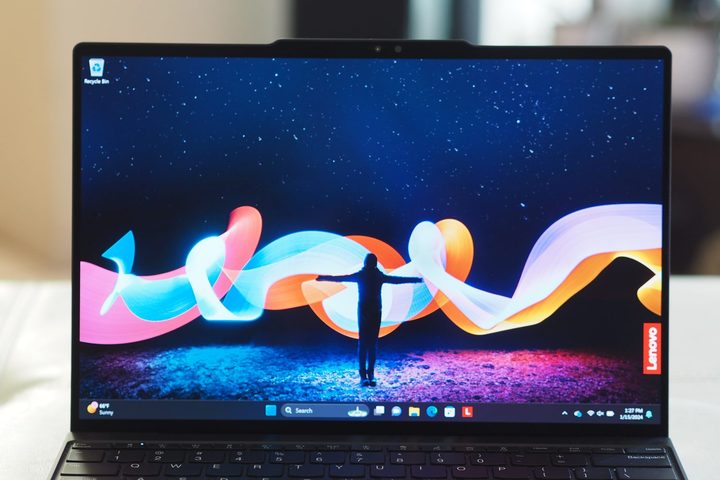
If you unpack and turn on a laptop with an OLED display, you’ll love the bright, dynamic colors and inky blacks. If you don’t like the display, there are few others that will please you. The ThinkPad Z13 Gen 2’s 13-inch 16:10 2.8K OLED panel is no different.
According to my colorimeter, the display is as good as any other OLED panel. It’s bright at almost 400 nits, has perfect blacks, and its colors are wide at 100% of sRGB, 96% of AdobeRGB, and 100% of DCI-P3 and accurate with a DeltaE of 0.75 (1.0 or less is considered excellent).
The only downside to the display is its 60Hz refresh rate, which is increasingly old school when 120Hz displays are becoming the premium laptop standard. Whether you’d actually notice the difference is debatable, but by the numbers, the ThinkPad’s panel is a bit behind the curve.
You can also choose a touch or non-touch FHD+ IPS panel if you don’t need the same sharpness or display quality. You’ll gain in battery life, which some people will prefer, and you’ll spend less. I recommend the OLED option because I love sharp displays and high dynamic range (HDR) video — something that the ThinkPad Z13 Gen 2 is very good at producing.
Audio quality is average, with two downward-firing speakers providing enough volume for system sounds and the occasional YouTube video. Mids and highs are clear enough, but there’s little bass, making a good pair of headphones a must.
Best for business users
The ThinkPad Z13 Gen 2 provides solid productivity performance, a solid and attractive build, and a keyboard, a touchpad, and a display that are all excellent. None of those stand out, though, with some 13-inch laptops offering the same and others with more modern, AI-aware components.
Where the ThinkPad stands out most is in its support for enhanced security and manageability, wixh will appeal to business buyers. I can strongly recommend the laptop for those users, while the typical consumer should look at the incoming slate of laptops for their next machine.


