
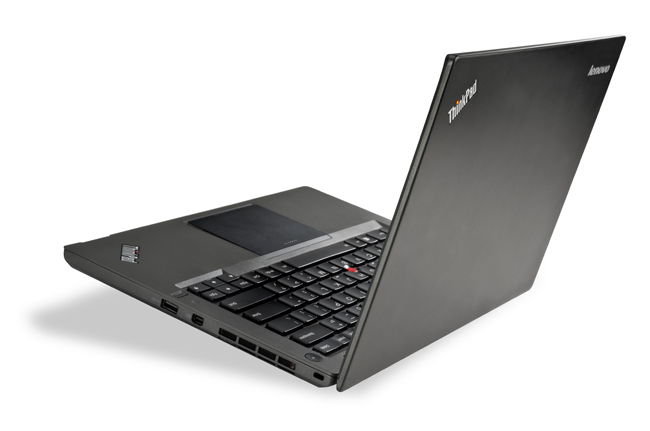
 Check out our full review of the Lenovo ThinkPad T431s laptop.
Lenovo proves that it pays to listen to users, as the new and improved ThinkPad T431 Ultrabook is thinner and has a more streamlined design, thanks to user input.
The computer maker spent over nine months shadowing and observing user behaviors and discovered that we really care about the keyboard layout and shortcut keys, the trackpad and display. Gone are the classic red-and-black buttons above the trackpad to make room for a larger glass-based TouchPad for multi-touch controls for Windows 8, while keeping the iconic TrackPoint intact. It also has the thinnest bezel around its 14-inch HD+, 1600 x 900 pixel resolution display compared to other T-Series Ultrabooks, so the T431s should be more compact to tote around for users.
Besides its new looks, the T431s also has been given some new parts like third-generation Intel processors, up to 12 GB of RAM, and the option to choose between a traditional spinning hard drive (HDD), a solid state drive (SSD), or a hybrid storage system. Though the T431s is designed for corporate use, consumers can also opt to have a fingerprint reader on the side of the keyboard so they can log into their laptops with their fingerprint rather than a password that hackers can crack. Unlike most Ultrabooks, this Lenovo comes with two USB 3.0s ports so you can charge devices even the laptop is turned off, and supports Dolby Home Theater for theater-like sound when you’re kicking back and enjoying a movie. Curiously, the press release says the T431s is “loaded with Windows 7” but other T-Series laptops offer the option for Windows 8 and even Windows 8 Pro, so you should be able to use the operating system you want with this Ultrabook.
With a laptop cover made of carbon fiber and a magnesium body, the T431s is also strong yet light, weighing just 3.6 lbs, compared to its predecessor the T430s’ 3.9 lbs. At just 0.82 inches thin, the T431s is slim enough to be an Ultrabook, but just because it is relatively thin and light doesn’t mean the T431s is a delicate flower: it meets the United States Military Standard for ruggedness and durability (Mil-SPEC 8) so it can probably handle challenging environments better than you.
Though Lenovo did not specify its retail partners on its press release, the 14-inch T431s should be available direct from Lenovo’s website in April, starting at $950 for the base configuration.


