
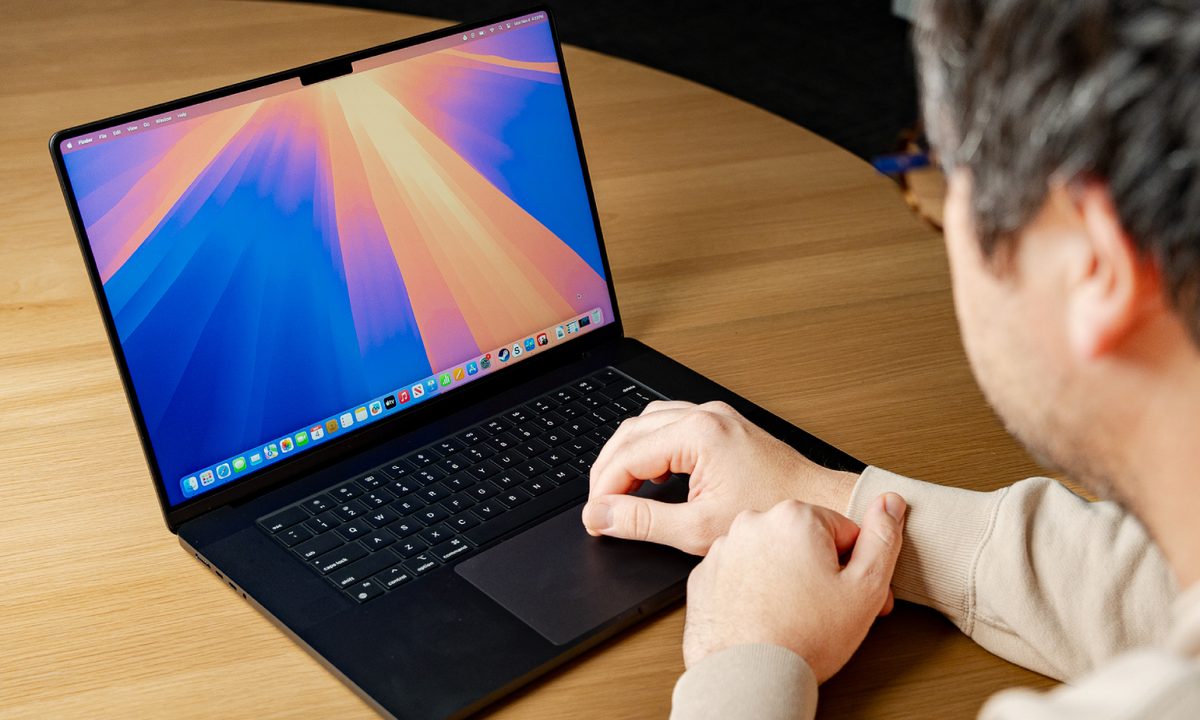
I’ve spent this whole week testing the new M4 chip, specifically the M4 Pro in both the Mac mini and 16-inch MacBook Pro. They are fantastic, impressive chips, but in my testing, I noticed something pretty surprising about the way they run that I haven’t seen others talk much about. I’m talking about the pretty significant change Apple made in this generation to power modes.
First off, Apple has extended the different power modes to the “Pro” level chips for the first time, having kept it as an exclusive for Max in the past. The three power modes, found in System Settings, are the following: Low Power, Automatic, and High Power. The interesting thing, however, is that in my testing, the Low Power drops performance far more this time around.
| Low Power | Automatic | High Power | |
| Cinebench R24 (single-core) | 154 | 166 | 178 |
| Cinebench R24 (multi-core) | 765 | 1622 | 1707 |
| Cinebench R24 (GPU) | 6039 | 9222 | 9294 |
The scores shown above came from on the M4 Pro Mac mini in Cinebench R24. The difference between modes in single-core is closer to what I’d expect, and closer to what they’ve been in previous generations. We’re looking at a 13% higher score for the High Power mode than the Low Power mode.
Multi-core is where things get wild though. With the M4 Pro, you can see just how big of a disparity there is when running the system in Low Power. This Mac mini is 55% faster in High Power than in Low Power. That’s not much higher than the scores we see on the base M3 or M1 Pro chips. This massive drop in performance is also present on the M4 Pro MacBook Pro.
For comparison’s sake, I ran this same test on the previous-gen M3 Max MacBook Pro. There, the High Power mode is only 33% faster in multi-core performance than in Low Power. In fact, although the M4 Pro gets an 8% faster score in multi-core than the M3 Max in High Power mode, the M3 Max is actually 27% faster in Low Power mode.

Of course, this won’t cause any wonky performance changes for most people, since Automatic is the default mode, and Apple has kept the performance scaling between Automatic and High Power modes unchanged.
I also haven’t tested the M4 Max yet, so it’s possible that Apple the lower performance in the Low Power mode is exclusive to the M4 Pro. Maybe it’s exclusive to the “Pro” chips.
One possible explanation could be to optimize the efficiency curve. In order to stay at a reasonable power budget in Low Power mode, Apple may have needed to clamp down the cores, which would explain why the impact is so much stronger on multi-core than on single-core.
I’ll be curious to see when I eventually get my hands on an M4 Max. Apple doesn’t seem to have distributed many M4 Max units for review, so very few have been tested so far.
The other question that remains is whether that Low Power mode extends battery life in the MacBook Pro more than it did in the past. Apple claims that these new M4 chips get extra battery life over their predecessors, but didn’t explain where that extended life came from. The size of the batteries hasn’t changed over the previous generation, after all.
If it’s true that the more restricted Low Power mode was turned on during battery life testing, it could result in some extra battery life that wasn’t there before. That might sound like Apple would be fudging the numbers a bit to increase battery life claims, but in the experience of the user, that might not matter. So long as they know that when they’re on battery and using Low Power mode, they’re getting less than half the performance out of the M4 Pro.


