

Meta just announced its second-generation smart glasses, once again partnering with Ray-Ban to add more style to this collection of tech-enhanced glasses and shades. The headline feature is the ability to livestream video directly to Instagram and Facebook, but unlike some more premium options, the frames don’t include displays for a mixed reality experience.
Each pair of smart glasses in the Ray-Ban Meta collection contains visible cameras in the frames, one on each side. The earpieces hide speakers and microphones, so you can listen to music, take calls, and more. Unlike the more expensive Xreal Air smart glasses, there are no displays in the Ray-Ban Meta smart glasses. Meta’s solution is somewhat like Amazon’s Echo Frames but with cameras.
The first-generation glasses, Ray-Ban Stories had 5MP cameras, limiting the quality of photos and videos. With the new Ray-Ban Meta smart glasses, the 12MP cameras deliver portrait mode pictures with 3,024-by-4,032 pixels. That’s the same resolution as many smartphones.
Video recording has 1080p resolution at 30 frames per second (fps). At that size, the on-board 32GB memory won’t fill up too quickly. For important events, you’ll still want to take out your smartphone, but having instant access to video recording could let you capture moments that might otherwise be lost. An LED lights up on the front to let others know you’re recording.
When recording videos, Ray-Ban Meta smart glasses use a five-mic array to capture sound. For audio playback and calls, the two speakers in the earpieces have an open-ear design. That means audio isn’t as private as it is with earbuds, but Meta claims there is less audio leakage than the original Ray-Ban Stories. The second-generation smart glasses have 50% louder sound, deeper bass, and greater clarity.
While the Ray-Ban Meta smart glasses aren’t the AR glasses of the future, you can say “Hey Meta” to give voice commands. The voice assistant can take photos, start recordings, place calls, control music, and check the battery level, and it’s all powered by Meta’s AI.

Another great new feature is water resistance rated at IPX4. That means the smart glasses are splash- and sweat-resistant, but you shouldn’t take them swimming.
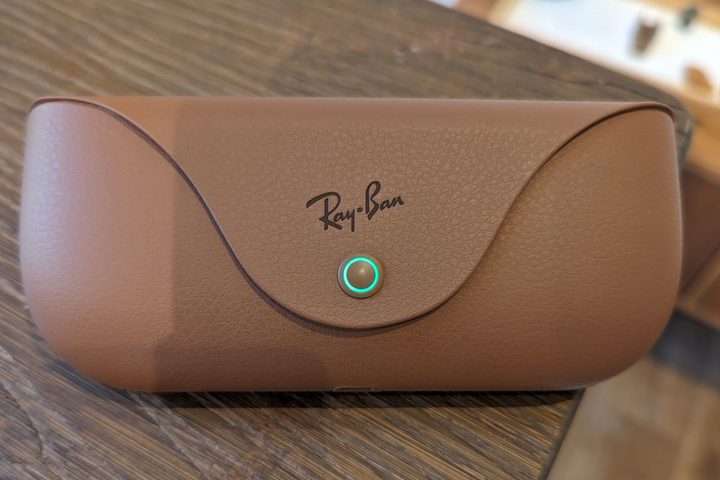
Meta estimates the battery life at four hours with mixed use and the included charging case extends usage to up to 32 hours. 22 minutes of charging fills the battery halfway. It takes 75 minutes for a full charge.
Since Meta worked with Ray-Ban on the design, the smart glasses are available in classic Wayfarer frames in two sizes and a variety of colors. The new Headliner style is more rounded and looks similar to Ray-Ban’s Erika style. The weight is under two ounces, so these should be fairly comfortable for extended use.
Prices start at $299 and are available to order today. For $329, you can get Polarized lenses and with Transitions lenses, the price is $379. Sunglasses with Transitions lenses are photochromatic, so they are clear when you wear them indoors and become darker when you step into sunlight, automatically shading your vision in bright light.
You can learn more and order at Ray-Ban’s website.


