  1. Home
  2. Computing
  3. Legacy Archives

NPD: Netbooks Sales Even Hotter Than Expected

Add as a preferred source on Google
NPD: Netbooks Sales Even Hotter Than Expected
Image used with permission by copyright holder

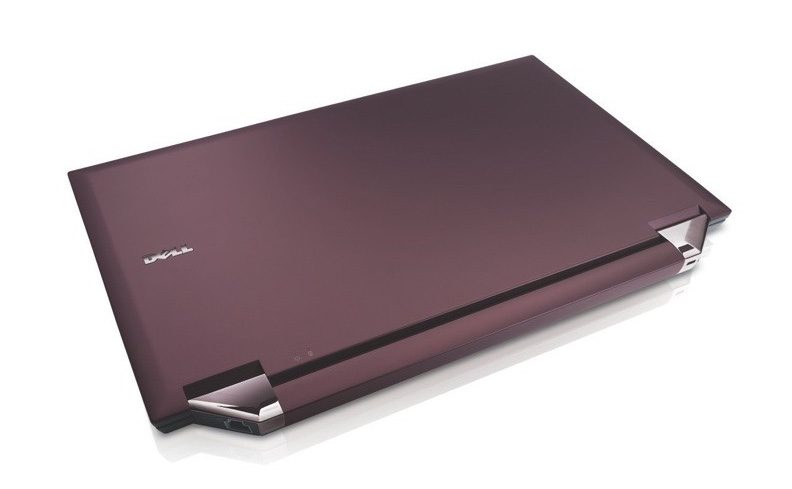
During the current economic downturn, about the only bright spot in computer sales has been netbooks, those infamously low-cost, under-powered mini-notebooks that offer users an inexpensive way to deal with email and the Web…and, typically, very little else. Now the DisplaySearch arm of retail analysis group NPD is reporting that sales of netbooks are even hotter than expected: the firm expects nearly 33 million netbooks will be snapped up in 2009, meaning netbooks will account for about 20 percent of the PC market worldwide. DisplaySearch also expects the market for traditional notebooks&mdaash;defined as notebooks with 12.1-inch or larger screens—to remain flat for the year.

“Mini-notes are forecast to continue to be a significant portion of the market,” said DisplaySearch’s director of notebook market research and the report’s author John F. Jacobs, in a statement. “While these devices have certainly created a new market, our research indicates that they are predominantly used as secondary PCs by consumers, and are not replacing notebooks.”

Recommended Videos

Part of the irony of netbooks’ popularity as secondary PCs in developed nations is that the products were originally intended to bring computing to emerging and developing markets. DisplaySearch finds that markets like Latin America and EMEA (Europe, the Middle East, and Africa) are buying a greater proportion of netbooks compared to traditional netbooks, relative to their overall market share. The forecast predicts netbook penetration will pass 26 percent in Latin Amerca, and 22 percent in EMEA.

In comparison, the Asia-Pacific region, China, and North America lag behind the netbook’s overall grwoth rate; DisplaySearch even found the Japanese netbook market will shrink by 13 percent this year.

The report also doesn’t hold out much hope for success for subsidized netbooks being offered by the likes of Verizon; although subsidized netbooks have done will in Europe, the report notes 3G connectivity in Europe is considerably less expensive than in the United States, making the subsidized netbooks more appealing.

The report also notes that netbook owners aren’t altogether happy with the cramped quarters on netbooks. “As display sizes of these devices have quickly moved from 7.0 inches to 8.9 inches to 10.1 inches, and now with the emergence of 11.6-inch and 12.0-inch mini-note products, it is clear that buyers want a light-weight device, but that they also want a bigger display,” noted Jacobs.

Geoff Duncan
Former Contributor
Geoff Duncan writes, programs, edits, plays music, and delights in making software misbehave. He's probably the only member…
Layr is a new macOS clipboard manager that replaces hotkeys with trackpad gestures
This new Mac app opens clipboard history with a four-finger tap instead of a keyboard shortcut
Cursor open on Mac

macOS users already have several clipboard manager options, including Paste and Maccy. Most of them work well, but they are usually built around keyboard shortcuts. That is useful for keyboard-heavy users, but it can feel out of place for users who rely on the trackpad for most of their work.

Layr, a new clipboard manager from the developer behind Declutr, takes a different approach. Rather than assigning a keyboard shortcut to open the clipboard history, the app lets users bring up a clipboard overlay with a four-finger tap on the trackpad.

Read more
YouTube’s AI content labels are getting a much-needed makeover
No more hunting through descriptions. YouTube's AI labels are finally moving front and center.
YouTube ai declaration longform video

This year’s Google I/O marked the transition of Google from a search company to a fully AI-focused company. The company launched several AI tools, but the one that matters the most for YouTubers is Google Omni, built for video generation and editing. 

While tools like Omni lower the barrier for creators, which is a good thing, it also results in the platform being inundated with low-effort AI content. The company understands that this will annoy a large percentage of its users, so it has been asking creators to disclose AI-generated content since 2024. 

Read more
AI models have a religion favoritism problem, and new research exposes it
AI models are subtly steering users toward certain religions, and most people have no idea it's happening.
Artificial Intelligence

A new research consortium has found something worth paying attention to: when you ask AI about grief, love, loss, or moral decisions, it almost never brings religion into the conversation.

The Consortium for Evaluation of Faith and Ethics in AI (CEFE-AI), a collaboration among researchers at Brigham Young University, Baylor University, the University of Notre Dame, and Yeshiva University, published its findings this week at the Summit on AI Ethics in Athens, Greece.

Read more