
Nvidia is now the second most valuable company in the U.S., taking a back seat only to Microsoft by about $140 billion (a small amount given the scale we’re dealing with here). The company crossed the $3 trillion mark for the first time ever, overtaking Amazon, Alphabet (Google), and most telling, Apple.
At this same point last year, we reported on Nvidia passing the $1 trillion mark for the first time. A little over 12 months later, Nvidia has tripled in value, and it’s on track to overtake Microsoft as the most valuable company in the U.S.
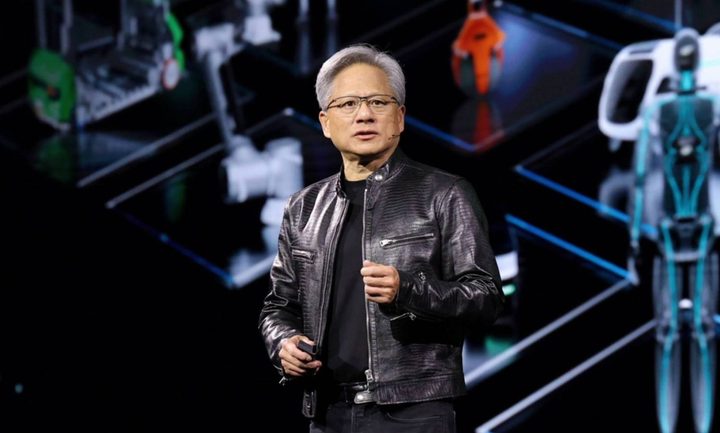
The milestone comes hot the heels of a two-hour Computex presentation where Nvidia effectively took a victory lap. It didn’t make major announcements, instead reserving reveals for sunch things as Project G-Assist and its new small form factor guidelines for press releases. Nvidia CEO Jensen Huang instead spent the time talking about generative AI, how Nvidia powers that generative AI, and why a room full of the most powerful executives in the tech industry should continue buying Nvidia’s products.

Just two years ago, Nvidia wasn’t even remotely in the same conversation as companies like Apple, Amazon, and Microsoft. Its monumental rise was brought on by ChatGPT, which unleashed a frenzy throughout the tech industry less than two years ago. Nvidia’s hardware is at the heart of the GPT model, and it has become the gold standard for generative AI hardware in data centers around the world since then. Its main competitors, AMD ($268 billion market cap) and Intel ($131 billion market cap) have spent the last 18 months trying to respond.
This rise is really due to AI, too. In May, when Nvidia released its financial results, it noted revenue of $22.6 billion for its data center business — a 427% increase from a year ago. For context, that’s close to 10 times more than its gaming business that sells PC graphics cards, and even that segment saw an 18% growth over the past year. A year ago, the data center business was only twice as large as gaming.
It’s a strange situation for gamers who have primarily known Nvidia for graphics cards, and a strange situation for the tech industry as a whole. We don’t often see massive keynote presentations like the one Nvidia showcased at Computex where there are effectively no announcements. Nvidia is one of the only companies that can stand in that position. The CUDA foundation it has invested in for decades is the bedrock of generative AI, effectively giving Nvidia its own space in the market that competitors like AMD and Intel have struggled to enter.

Nvidia is so prominent in generative AI that the U.S. Justice Department and Federal Trade Commission are launching investigations into Nvidia, Microsoft, and OpenAI, Politico reports. These three companies, two of which are now the most valuable companies in the U.S., are at the center of the generative AI conversation.
Although Nvidia is now the second most valuable company in the U.S., there’s still a war raging over generative AI. Apple is hosting its annual Worldwide Developer’s Conference (WWDC) on Monday, where we expect to see a host of new generative AI features for Apple products. Amazon has experimented with generative AI features over the past year as well.
The battlefield for the AI war isn’t on your phone or PC, though. It’s taking place in the data center. Companies like AMD and Intel are the ones gunning for Nvidia’s crown, trying to regain the ground they lost since the introduction of ChatGPT.


