
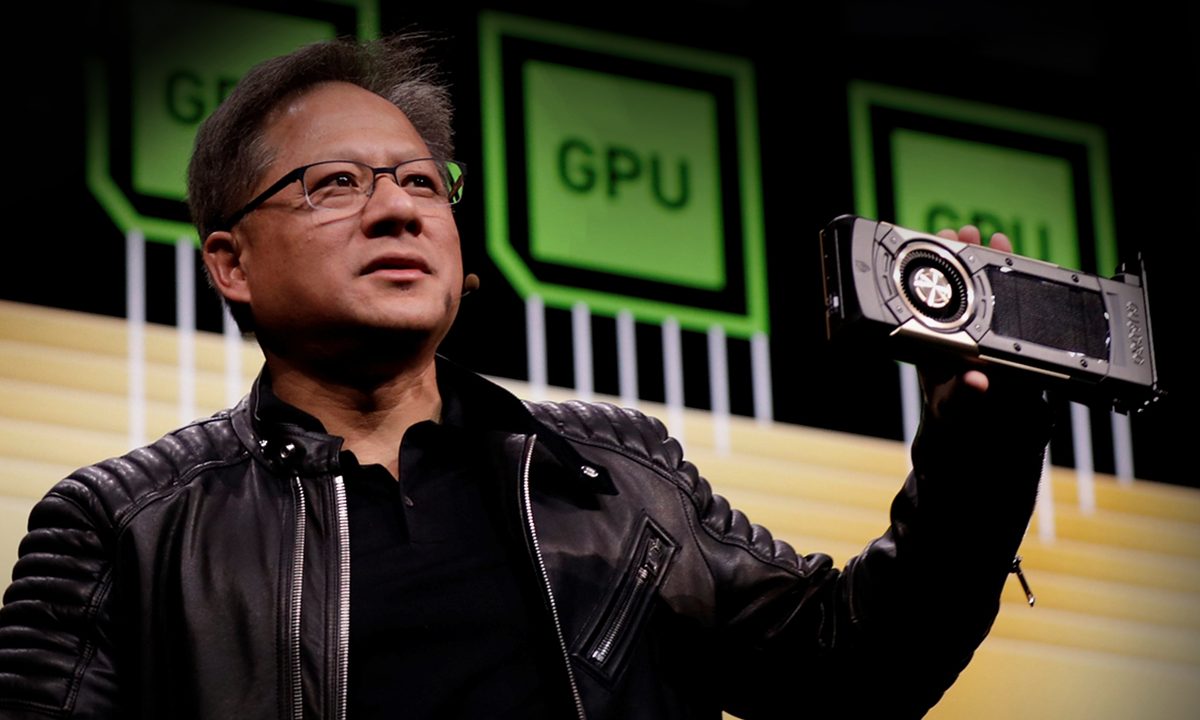
Those headline above includes strong words from the maker of the best graphics cards you can buy, and they have extra significance considering where Nvidia sits today in relation to Intel. But in 1997, things were a bit different. The quote comes from the upcoming book The Nvidia Way, written by columnist Tae Kim, and was shared as part of an excerpt ahead of the book’s release next month.
The words from Nvidia CEO Jensen Huang came as part of an all-hands meeting at the company in 1997 following the launch of the RIVA 128. This was prior to the release of the GeForce 256, when Nvidia finally coined the term “GPU,” and it was a precarious time for the new company. Shortly following the release of the RIVA 128, Intel launched its own i740, which came with an 8MB frame buffer. The RIVA 128 came with only a 4MB frame buffer.
“Make no mistake. Intel is out to get us and put us out of business,” Huang said at the time. “They have told their employees, and they have internalized this. They are going to put us out of business. Our job is to go kill them before they put us out of business. We need to go kill Intel.”
The excerpt describes a wild company culture at Nvidia in the late 1990s, with Huang cited as often working 15-hour days, along with many of his employees. Part of the reason for that feeling of wildness, according to the excerpt, is how Huang would “unload on the first person he encountered” each morning. In one example, the excerpt describes Huang standing next to an employee at a urinal and asking what they’re working on. “I’m going to get fired because he thinks I’m not doing anything,” Nvidia’s Kenneth Hurley thought at the time.
It’s a fascinating look inside a business that has quickly become one of the most valuable companies in the world. Nvidia currently is the wealthiest company in the world with a $3.5 trillion market cap, though it often trades places with Apple and Microsoft — the only other companies in the world with a market cap above $3 trillion.
The revelation about Nvidia’s standing against Intel is especially interesting in 2024. Intel is in one of the worst financial positions it has ever been. On top of that, Nvidia’s CEO is now worth more than all of Intel. At the time, Intel was very much in a similar position that Nvidia is in today, dominating the PC market across corporate and consumer markets. Now, it’s a question of who is gunning for Nvidia’s crown.


