
Nvidia has only just launched the RTX 4090 and the RTX 4080, but there’s another GPU that’s just starting to appear for sale — the RTX 6000.
The card is not only more powerful than the flagship RTX 4090, but it also has a hefty $9,999 price tag. What is the RTX 6000, exactly, and what does it mean for Nvidia’s next-gen cards? Here’s what we know.
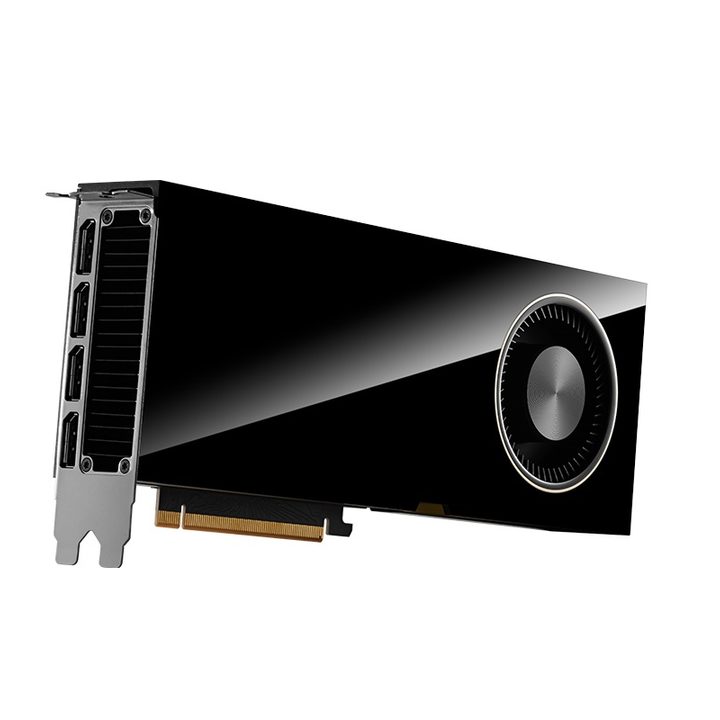
Don’t worry, you didn’t miss a major graphics card release — it’s just Nvidia’s confusing naming scheme. The Nvidia RTX 6000 is a new professional graphics card based on the latest Ada architecture. Being a “prosumer” card, it’s aimed not at enthusiasts but at professionals, and it will find its home in workstations rather than gaming PCs.
This particular model is an Nvidia reference design, but it was manufactured by PNY, and the company published the whole spec sheet. In short, this card is quite a monster, as it should be. It comes with 18,176 CUDA cores, 568 Tensor cores to support artificial intelligence-related tasks, 76.3 billion transistors, and 142 third-gen ray tracing (RT) cores. While it uses the AD102 die, it still doesn’t make the most of it; the fully unlocked die has 18,432 CUDA cores.
Compared to the RTX 4090, the GPU has several advantages. It has more CUDA cores (the RTX 4090 has 16,384) and a massive 48GB of ECC (error correction code) GDDR6 memory across a 384-bit interface. This type of memory is used in workstations and servers, so it would make no sense for the RTX 4090 to be equipped with it.
Perhaps more importantly, the RTX 6000 is much less power-hungry than the 4090 — it has a total board power (TBP) of 300W as opposed to the 450W on the RTX 4090. Oftentimes, workstations will feature more than a single GPU, so it makes sense that Nvidia decided to cut back on the TBP here.
The pricing is downright scary, however. The recommended retail price of the RTX 6000 is $9,999, but Tom’s Hardware spotted it up for sale at discounted prices. It costs $8,209 at CompSource and $7,377 at ShopBLT. These prices make the RTX 4090 look super cheap, but don’t be fooled — it’s not.
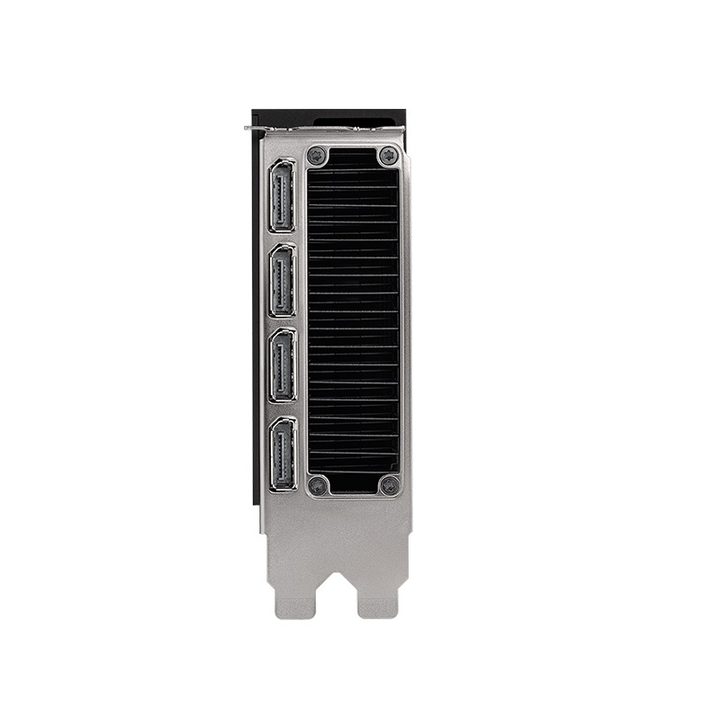
The card itself is certainly powerful, but it’s Nvidia’s weird naming scheme that makes us pause. When it comes to workstation cards, the previous generation was dubbed the RTX A6000, so for this gen, Nvidia only dropped the “A” and released a whole new product, which is a bit confusing, but acceptable.
However, calling it the RTX 6000 creates an interesting problem down the road — what happens in two generations when Nvidia’s consumer GPUs reach the level of RTX 6000? This won’t happen for a good few years, of course, but when it does, Nvidia might have to come up with a new name for those next-gen graphics cards.
If it decides to stick to RTX 6000, we’ll have some awkward “Nvidia releases the RTX 6000 … for the second time” announcements to look forward to.


