  1. Home
  2. Computing
  3. News

Apple faces challenges with bringing OLED to the MacBook Air

Add as a preferred source on Google
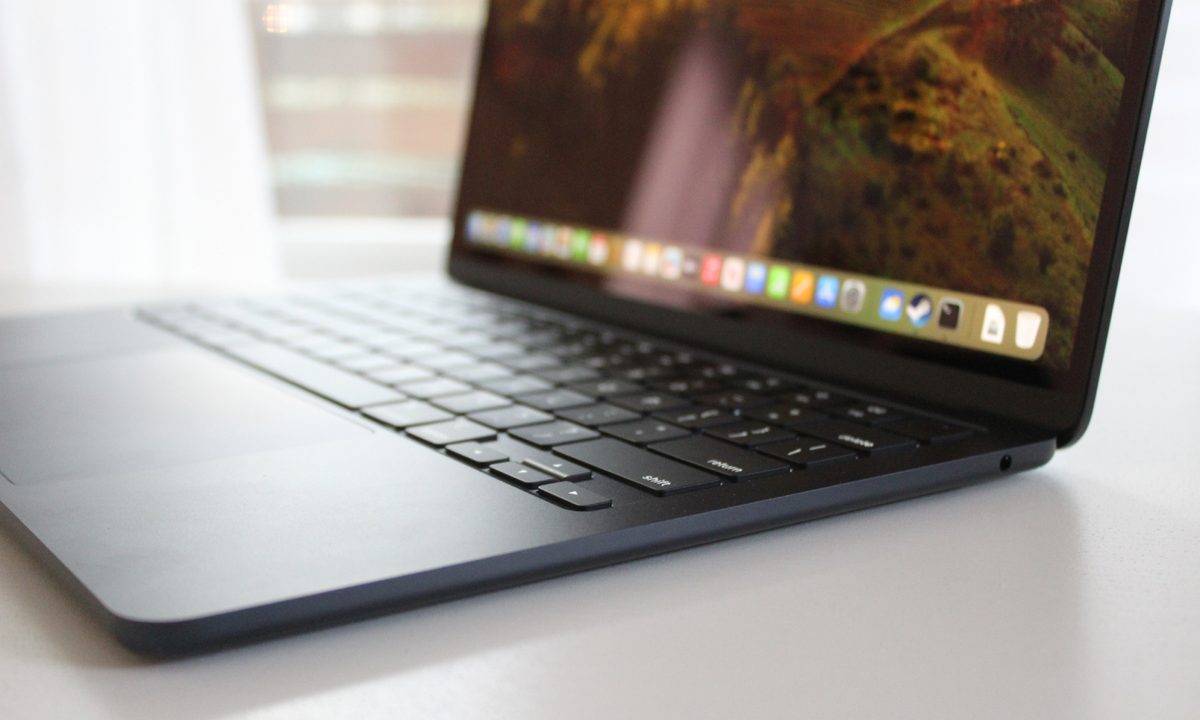
The MacBook Air on a white table.
Luke Larsen / Digital Trends

A report from Korean outlet The Elec suggests the OLED MacBook Air that Apple was allegedly planning to release in 2027 could face significant delays. While progress for the OLED MacBook Pro seems to be going smoothly, the price increase caused by the new display technology is a much bigger problem for the budget MacBook Air models.

One of the biggest selling points of the MacBook Air is its lower price, making it great for first-time Mac buyers, students, and anyone else who doesn’t expressly need the power of a Pro. While price increases are a natural part of the tech industry, the slightly disappointing sales of the 2024 OLED iPad Pro suggest that a new display simply isn’t enough of an incentive for consumers to justify a higher price tag.

Recommended Videos

At launch, Apple was planning a shipment of 10 million iPad Pro units for the year but it has since dwindled to between 6 million and 7 million. This really won’t cause too much of a problem for the OLED MacBook Pros which are still rumored to be coming in 2026. Companies and hardcore individuals set the specs to max and spend as much as $7,000 on these high-end models, so a high-quality display will suit both the product and its audience just fine.

The Air, however, has much harder job. It is and has to be both high-end and affordable — and if the MacBook Pros get OLED displays, MacBook Air customers will expect to have them too before long. The main cause of Apple’s pricing struggle right now, according to The Elec, is the limited number of OLED manufacturers. The company currently works with just Samsung and LG to make its OLED displays, and it’s impossible to generate competition and drive down prices in this kind of environment.

If you’re wondering why Apple doesn’t just use a slightly lower-end OLED for the MacBook Airs — it seems that is already the plan and the pricing problems are persisting despite this. The planned OLED MacBook Pro would use the same Tandem OLED technology as the iPad Pro, using two panels to allow for better brightness while minimizing the chances of burn-in.

The OLED MacBook Air, on the other hand, would reportedly use just one OLED panel. The report continues to say that it’s extremely unlikely that manufacturing methods and costs will naturally drop by 2027, so Apple will have to come to some kind of compromise with its manufacturers if it wants to keep the MacBook Air prices within an acceptable range.

Willow Roberts
Willow Roberts has been a Computing Writer at Digital Trends for a year and has been writing for about a decade. She has a…
The size of a credit card: This fully functional computer even packs an e-ink screen
This credit card-sized computer packs Wi-Fi, NFC, and an e ink display
Muxcard

A developer has built a remarkably thin computer that is almost the same size and thickness as a standard credit card, potentially opening the door to a new category of ultra-portable computing devices.

Called the “Muxcard,” the experimental device combines a fully functional microcomputer, wireless connectivity, NFC support, sensors, and an E Ink display into a body measuring just 1mm thick - thin enough to fit inside a regular wallet alongside bank cards. The project, created by GitHub user “krauseler,” has quickly drawn attention from the maker and hardware enthusiast community for pushing the physical limits of compact electronics.

Read more
If your router or drone maker is banned in the US, it will get an update lifeline until 2029
Your “banned” router isn’t dead yet, says the FCC
Drone

The Federal Communications Commission has extended a key waiver allowing certain foreign-made routers, drones, and drone components to continue receiving software and firmware updates in the United States until at least January 1, 2029.

The move comes after growing concerns that millions of already-deployed devices could become cybersecurity risks if manufacturers were suddenly blocked from issuing security patches and compatibility updates. The decision was announced through the FCC’s Office of Engineering and Technology (OET), which also expanded the scope of the waiver to cover additional software-related changes needed to maintain device functionality.

Read more
AI-pilled graduates are not a big hit for finance jobs with their shallow ideas
Turns out ChatGPT can’t survive every finance interview
Artificial Intelligence

Artificial intelligence may be transforming the financial industry, but some firms are beginning to push back against a growing trend: graduates who rely too heavily on AI tools without demonstrating deeper analytical thinking.

According to a report by The Financial Times, the issue recently surfaced through experiences shared by senior finance professionals, including one New York financier who described his company’s 2025 interns as the first group of “true AI natives.” These students had grown up using both digital platforms and generative AI systems, and initially appeared highly capable during recruitment.

Read more