  1. Home
  2. Computing
  3. News

OpenAI’s advanced ‘Project Strawberry’ model has finally arrived

Add as a preferred source on Google
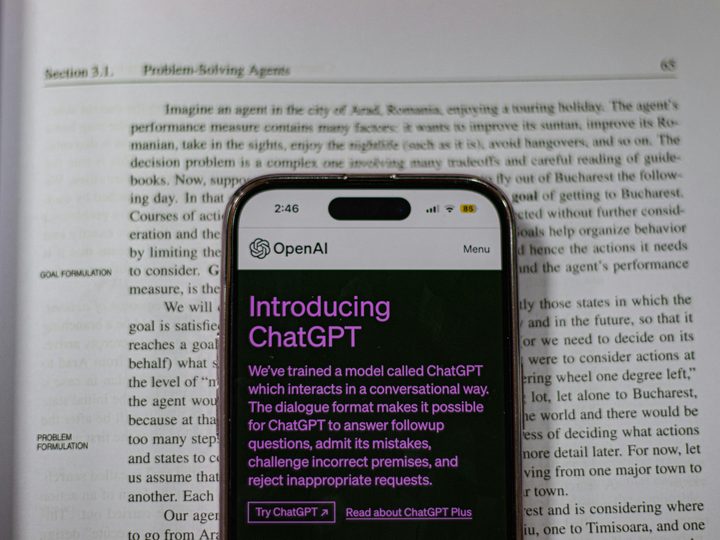
chatGPT on a phone on an encyclopedia
Shantanu Kumar / Pexels

After months of speculation and anticipation, OpenAI has released the production version of its advanced reasoning model, Project Strawberry, which has been renamed “o1.” It is joined by a “mini” version (just as GPT-4o was) that will offer faster and more responsive interactions at the expense of leveraging a larger knowledge base.

It appears that o1 offers a mixed bag of technical advancements. It’s the first in OpenAI’s line of reasoning models designed to use humanlike deduction to answer complex questions on subjects — including science, coding, and math — faster than humans can.

Recommended Videos

For example, during testing, o1 was fed a qualifying exam for the International Mathematics Olympiad. While its predecessor, GPT-4o, only managed to correctly solve 13% of the problems presented, o1 got 83% of them right. In an online Codeforces competition, o1 scored in the 89th percentile. What’s more, o1 can respond to queries that stumped previous models (like, “which is bigger, 9.11 or 9.9?”). However, the company makes clear that this release is only a preview of the neophyte model’s full capabilities.

The new o1 “has been trained using a completely new optimization algorithm and a new training dataset specifically tailored for it,” OpenAI’s research lead, Jerry Tworek, told The Verge. Using a combination of reinforcement learning and “chain of thought” reasoning, o1 reportedly returns more accurate inferences than its predecessor. “We have noticed that this model hallucinates less,” Tworek said, however, “we can’t say we solved hallucinations.”

Both ChatGPT-Plus and Teams subscribers will be able to test out o1 and o1-mini beginning today. Enterprise and Edu subscribers should have access by next week.

The company says that o1-mini will eventually become available to free-tier users, though it did not specify a timeline. Developers will notice a steep increase in the API pricing for o1, compared to GPT-4o. Access to o1 will cost $15 per million input tokens (compared to $5 per million for GPT-4o) and $60 per million output tokens, four times more than 4o’s $5 per million fee. The real question is whether the new model thinks the word “strawberry” contains two R’s or three.

Andrew Tarantola
Former Computing Writer
Andrew Tarantola is a journalist with more than a decade reporting on emerging technologies ranging from robotics and machine…
Claude’s Sonnet 5 is built to do more on its own and cost you less
Better than its predecessor, nearly as good as the flagship, and meaningfully cheaper than both.
Art, Floral Design, Graphics

Every major AI lab is racing to prove its models can work autonomously with minimal hand-holding; we’re now seeing pricing emerge as the next battleground. 

Anthropic just fired its latest shot, Claude Sonnet 5, a model the company says performs nearly as well as its flagship Opus 4.8 at a fraction of the cost.

Read more
Apple Creator Studio adds AI tools across Final Cut Pro, Logic Pro and Pixelmator Pro
Final Cut Pro gets AI captions, Auto Mask and better Pixelmator Pro workflows in Creator Studio update
Computer Hardware, Electronics, Hardware

Apple has introduced a major update to Apple Creator Studio, adding new AI features, deeper Pixelmator Pro integration, and workflow upgrades across Final Cut Pro, Logic Pro, Keynote, Pages, Numbers, Motion, Compressor, Freeform, and Final Cut Camera.

The update makes Creator Studio more useful across Mac, iPad, and iPhone, especially for people who move between video editing, image editing, presentations, documents, spreadsheets, and music production.

Read more
AI browsers like Perplexity Comet can be tricked into spilling your password through BioShocking exploit
Six AI browsers were found leaking saved passwords and many of them haven't fixed it yet.
MacBook Air in hand, Comet browser loaded—let’s see what Perplexity’s AI can really do

Security researchers just found a strange way to trick AI browsers into handing over your passwords. They managed to trick AI browser agents into exposing sensitive data like saved passwords, session cookies, and private tokens by disguising the theft as part of a harmless "game."

The technique is called BioShocking, named after the popular video game BioShock, where a brainwashed character is manipulated into believing a false reality. Once an AI browser falls for the same trick, it stops following its own safety rules entirely.

Read more