
Razer is bringing a substantial upgrade to its smallest gaming laptop, the Blade Stealth 13. The most notable change is the GPU, but Razer has also tweaked the keyboard, display choices, and processor options.
Let’s start with graphics. The Blade Stealth 13 will offer Nvidia’s GTX 1650 Ti, an upgrade over the 1650 used in previous models. The Razer Blade Stealth was already the only 13-inch laptop to use a GTX-level graphics card. Razer says the graphics bump will result in a 10% increase in game performance over the 1650, and as much as 80% over the GTX 1050, which is more frequently found in small laptops.
You’ll still need to reduce settings in the most demanding games to see excellent frame rates, but this upgrade takes the Blade Stealth one step closer to being the ultimate portable gaming laptop. It’ll handle many 3D games without issue.
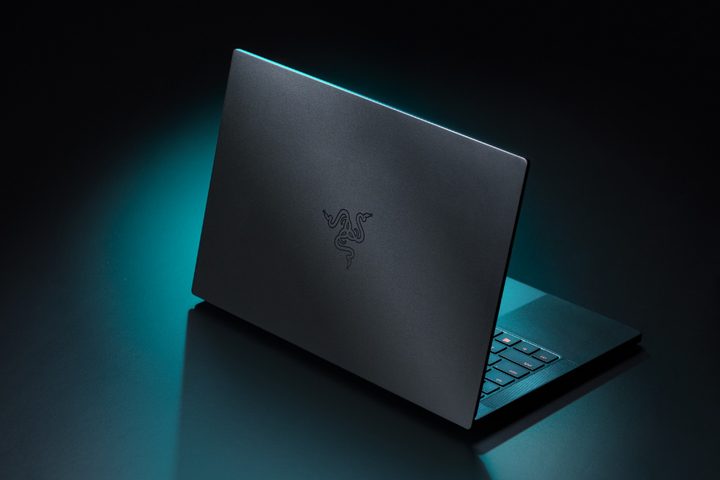
These graphics options will be available alongside both the 4K and 1080p displays. The 1080p model also comes with a 120Hz refresh rate for smoother, more responsive gameplay.
Razer already upgraded the processors to the latest Intel 10th-gen Ice Lake chips in late 2019, but this spring it’s making a small change to the lineup. All models will include a 25-watt version of the Core i7-1065G7. Previously, this was reserved for only the models with integrated graphics, while a thermally-limited 15-watt Core i7 was used on Blade Stealth models with discrete graphics.
In line with the changes made to the Razer Blade 15, Razer has switched up the keyboard layout of the Stealth. It now features conventional half-sized up and down arrow keys. All Razer laptops previously used full-sized arrow keys that altered the position of the Shift key. The keyboard still has single-zone RGB lighting, unlike the per-key lighting of the Razer Blade 15.
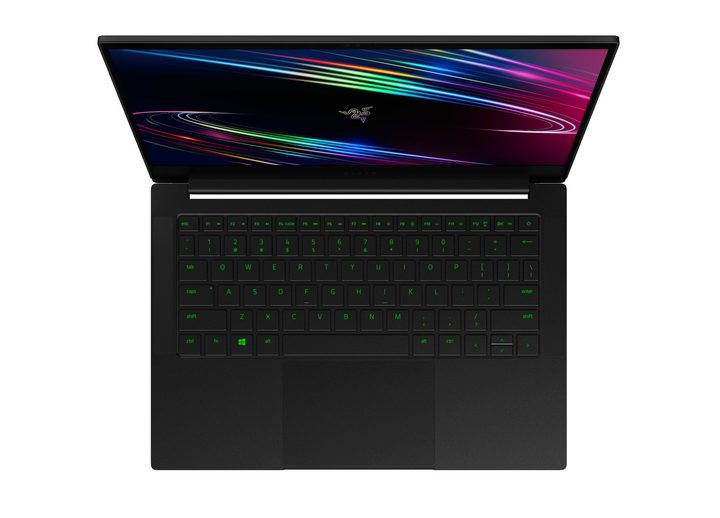
Lastly, the new Razer Blade Stealth will serve up LPDDR4X memory, capable of speeds up to 3,733MHz. The Blade Stealth comes standard with 16GB of soldered RAM, as well as a 512GB SSD. Storage can be upgraded after purchase.
The Razer Blade Stealth originally launched back in 2016, but without a discrete graphics card. Only in recent years can it be called a legitimate gaming laptop, and Razer continues to beef it up with better internals and more powerful graphics.
The 1080p model remains just 3.1 pounds, while the 4K model weighs 3.3 pounds. Even better, the Razer Blade Stealth is just 0.6 inches thick, which is thinner than the MacBook Air. That’s a serious feat for a laptop with a GTX 1650 graphics chip.
Price and availability
You can buy the Razer Blade Stealth today, April 21, 2020, starting at $1,800 for the 1080p model. From there, it’ll cost you an extra $200 upgrade the screen to 4K. Just remember, most games won’t play smoothly at 4K resolution on this laptop. The 4K screen will cost you battery life, as well.
Razer will continue to sell the $1,400 model with Intel integrated graphics, known as the Mercury White model. This configuration has a 60Hz screen, a 256GB SSD, and relies on Intel’s Iris Plus integrated graphics. It is currently on sale for $1,300. The older 8th-gen model has been discontinued.


