

Samsung today unveiled a brand-new high-spec monitor, just ahead of the beginning of CES 2023. The Viewfinity 5K is the latest release in the Viewfinity range and boasts a number of eye-catching specs that could appeal to demanding, pro-level users — especially those that might be considering an alternative to Apple’s Studio Display.
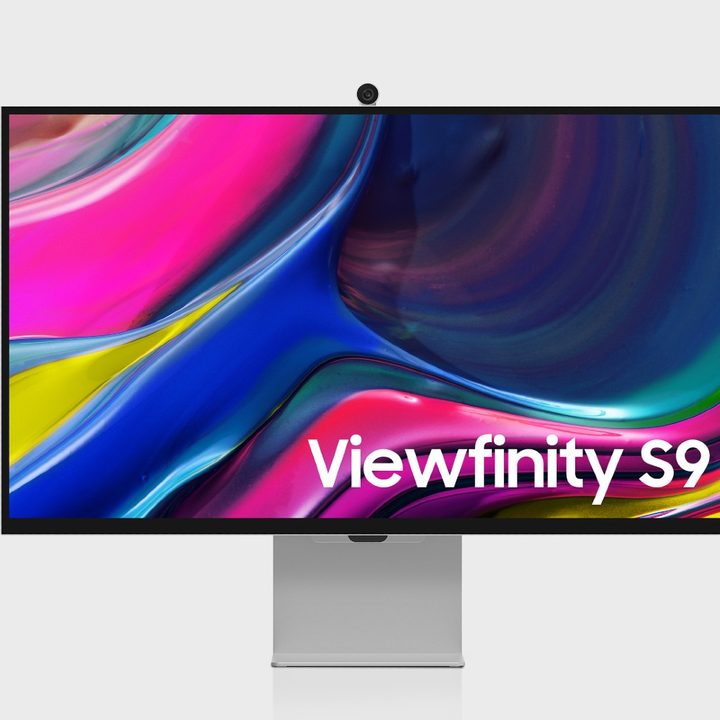
As the name suggests, this monitor comes with a 5K resolution, making it one of the company’s most pixel-heavy displays. Its 16:9 panel is fitted inside a slimline 27-inch metal frame and features IPS technology for strong viewing angles and color accuracy. Speaking of which, the Viewfinity 5K has a wide color gamut (99% DCI-P3), which lends itself to color-accurate work.
There’s even a way to bring your smartphone into play thanks to the monitor’s Smart Calibration feature. This lets you point your phone’s camera at the display and use Samsung’s companion app to calibrate the monitor in order to score the perfect image quality.
Given its high-end spec sheet — and the rivalry between Samsung and Apple — comparisons to Apple’s Studio Display seem apt. Both are 5K, include a webcam, and feature some very slim bezels.
The Viewfinity 5K’s HDR rating of 600 means it can get plenty bright too, though it’s not clear yet if that is an official VESA specification or not. At the time of writing, we also don’t know the Viewfinity 5K’s contrast ratio, but since this is a conventional IPS panel, don’t expect anything that can compete with OLED.
It’s also a little disappointing that Samsung isn’t offering a mini-LED or OLED option. Sure, that would have pushed the price up considerably, but when it comes to image quality, nothing else compares. While the panel in the Viewfinity 5K still sounds impressive, we would have loved to have seen it switch out the IPS for something even better, as the company is doing with its new Odyssey gaming monitors.
Interestingly, the Viewfinity 5K has a matte finish rather than a glossy one. Matte screens tends to reduce how bright and clear monitors appear, but gives you the advantage of reducing glare and reflections.

Still, there are plenty of options if you want to hook up peripheral devices. The Viewfinity 5K comes with support for Thunderbolt 4, USB-C, DisplayPort and HDMI 2.1, and can support 96W of Power Delivery, meaning it can juice up most laptops. It can also comes with lots of adjustability, including the ability to flip vertical into portrait mode.
There are other handy extras, including a detachable 4K webcam that can automatically center subjects in the frame, and the Viewfinity 5K doubles up as a smart TV platform too.
Right now, pricing hasn’t been announced, but we expect this to be a fairly expensive monitor. Samsung says it will be available sometime in early 2023.
In addition to the Viewfinity 5K, Samsung has also announced an update to its TV-like Smart Monitor M8, which made its own splash last year at CES. The new model, the M80C, comes in a new 27-inch size (the original was 32 inches) and updates some of its smart features. All without a PC connected, a new feature called “My Contents” brings photos, schedules, and weather to the screen’s ambient display, while a SmartThings Hub has also been embedded for controlling smart devices from the monitor.
Pricing and availability for the Smart Monitor M80C has not yet been announced.


