  1. Home
  2. Computing
  3. News

Digital Trends may earn a commission when you buy through links on our site. Why trust us?

Samsung’s Vision Pro competitor is one step closer to a 2025 release

Add as a preferred source on Google

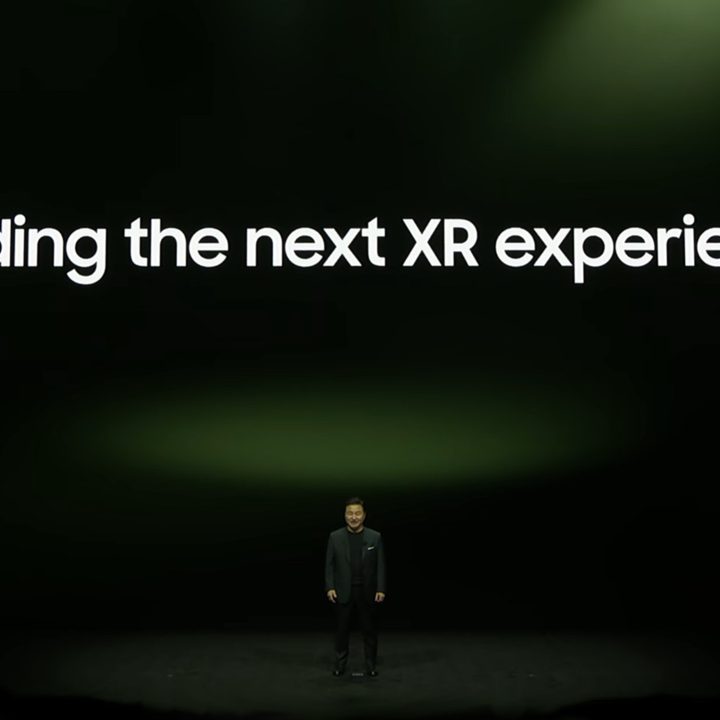
Samsung's TM Roh shares XR plans at the 2023 Galaxy Unpacked event.
Samsung’s TM Roh shares XR plans at the 2023 Galaxy Unpacked event. Samsung

Samsung has confirmed it still has plans to release an XR device that will be available sometime next year.

Recommended Videos

The company shared tidbits of information about the XR eXtended reality project in its third-quarter 2024 earnings report, updating guidance that previously suggested the brand would release such a product in 2024. Samsung now indicates that its goal for 2025 is to “improve connectivity among products, including upcoming XR devices.”

While the brand didn’t mention specific details about its XR devices in its earnings report, there is already considerable news surrounding the prospective products. Samsung’s collaboration with Qualcomm and Google on a mixed-reality product that can execute AR, VR, and XR functions dates back to 2023.

Again, without much detail about the collaboration, it’s pretty easy to assume how it would unfold. Samsung would bring the branding, design, and user experience, Qualcomm would provide the chipset, and Google would provide the software. Qualcomm’s last XR chip, the Snapdragon XR2+ Gen 2, has been available since January 2024. The companies came together during Samsung’s Galaxy Unpacked event in July to reiterate its plans for a launch.

Much of the confusion about Samsung’s XR device is likely due to the lack of feature details available about the product. However, a recent Android Authority report details that the Google Play Store was updated to include support for XR headset app installation right before Samsung shared its third-quarter 2024 guidance. No other Android brands are known to be working on XR devices at this time, so the correlation is that Google is preparing per its collaboration with Samsung.
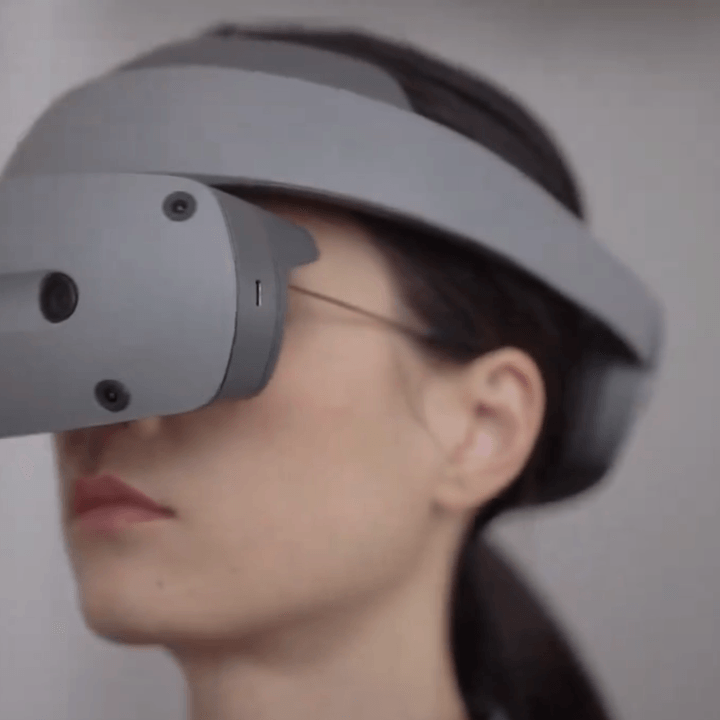
The Sony XR headset being worn on a someone's face.
The Sony XR headset Sony

Samsung has now confirmed a 2025 timeline. In fact, Business Insider claimed as early as July that the Samsung XR project would not launch in 2024, but potentially sometime in March 2025 for consumers.

Though there haven’t been any updates until now, industry leaders noted the device could be a competitor to the Apple Vision Pro, which was released in February at $3,500. Prior rumors suggested the Android-based XR platform could sell for between $1,000 and $1,500.

Samsung and Apple are far from the only company working on future XR headsets. Sony has been showing off its own upcoming XR headset since July, and in addition to recently launching the Quest 3S, Meta is partnering with companies like Lenovo and Asus for upcoming future headsets in its own Horizon OS ecosystem.

Fionna Agomuoh
Fionna Agomuoh is a Computing Writer at Digital Trends. She covers a range of topics in the computing space, including…
Apple could go back to Intel for chips, but not how you would expect (or dread)
Apple MacBook

Apple and Intel are reportedly exploring a manufacturing partnership that could reshape how future Apple chips are produced. But despite the headline, this does not mean Apple is abandoning Apple Silicon or returning to Intel-powered Macs.

According to a new Wall Street Journal report, Apple and Intel have reached a preliminary agreement for Intel to manufacture some chips designed by Apple. Bloomberg’s Mark Gurman later clarified on X that there is still no finalized production agreement in place and discussions remain at an early stage. His post also noted that Apple continues to have concerns about Intel’s manufacturing technology and long-term competitiveness.

Read more
Apple wants you to verify your identity before you get Education discount on products
Apple moving the US Education Store off the honor system also seems about making a globally consistent verification infrastructure that could eventually support more aggressive Education Store expansion.
Computer, Electronics, Laptop

Getting an Apple Education discount in the United States used to be as simple as claiming you’re a student or a teacher; it didn’t need a formal verification. That era is officially over. 

Starting May 8, 2026, Apple now requires formal identity verification for all Education Store purchases in the US, ending the informal honor system that was in place for years (via MacRumors). 

Read more
OpenAI’s Codex just moved into Chrome, where the useful work and the risks live
The new extension lets Codex move beyond coding and handle real browser tasks across signed-in sites
Page, Text, File

OpenAI is giving Codex a larger stage than the coding window. Its new Chrome extension lets the agent use an authenticated web session, so it can help with work that already lives inside Gmail, Salesforce, LinkedIn, dashboards, and internal apps.

That pushes Codex out of the developer sandbox and into the web apps where daily work already happens. With Chrome access, it can step into research, CRM updates, dashboard checks, and browser-based debugging, which is where plenty of work gets stuck across tabs.

Read more