

In 2020, PCs have never been more important.
It goes against the overall trend of the industry, but this is 2020 and “unprecedented” is the word of the year. Not only have laptops, monitors, and webcams sold like crazy this year, but the industry has also responded with some much-needed innovation. Whether it’s game-changing processor technology or new world-class designs, these are my picks for the best computing tech of 2020.
The best overall computing tech of 2020: The Apple M1 processor
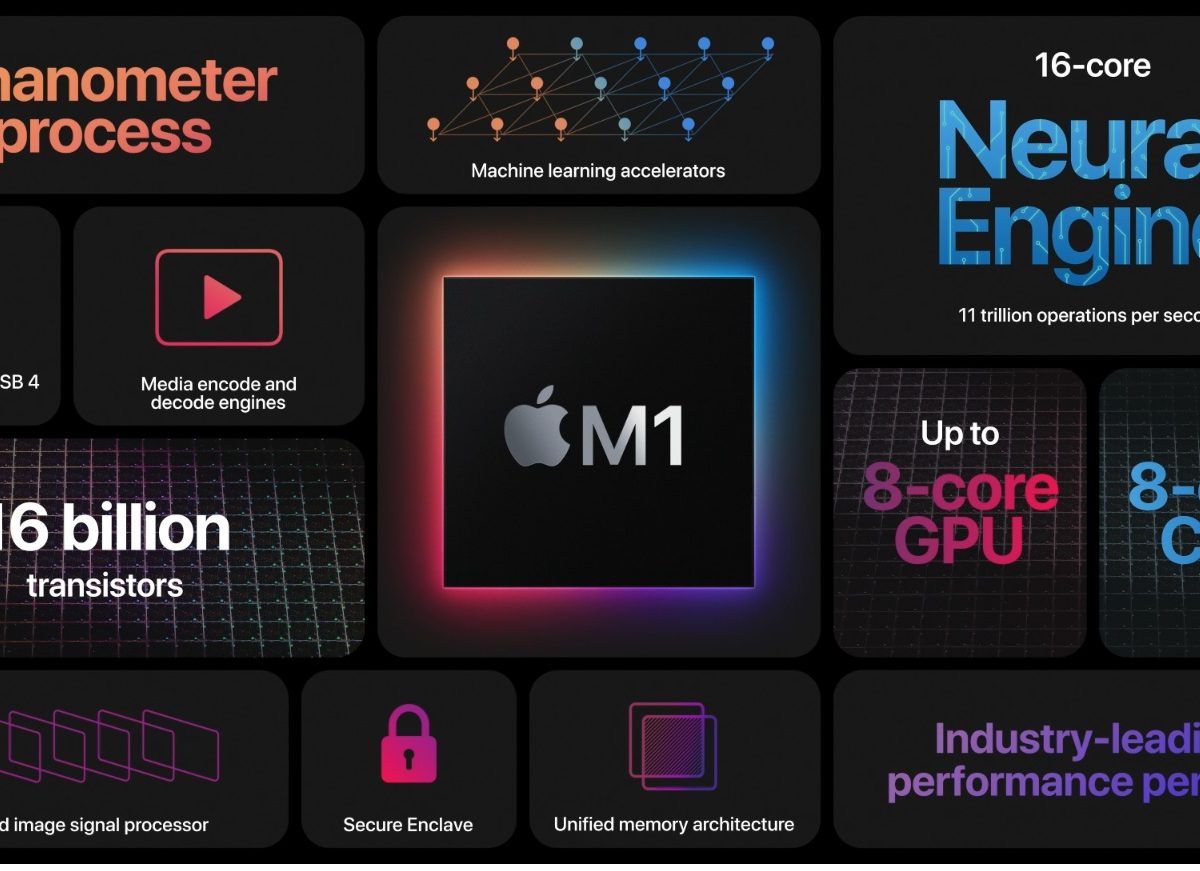
The company’s first custom Mac chip is more than just a leap ahead in terms of performance, efficiency, and battery life. It is all those things in spades, and that alone makes it a standout piece of kit.
But beyond making for faster MacBooks, the M1 is the first successful step at unifying the device you work on with the one you carry in your pocket. The split between “mobile” and “desktop” — between smartphone and laptop — has always felt like an impassable divide. Don’t switch back and forth too fast or you’ll get some serious digital whiplash.
The M1 unifies the worlds of mobile and desktop, giving both access to the same features — and even the same libraries of apps. Finally, there’s an unbreakable synergy between your MacBook and your iPhone.
The best part? The average person won’t notice the difference at first. They’ll go on using their Mac as they would have, perhaps only marveling at how fast it turns on or how long it lasts on a single charge.
But under the hood, Apple has started a revolution. It’ll be a few years before we see the full results of the change, but a decade from now, we’ll look back at the M1 as the chip that started it all.
The best laptop design of 2020: Dell XPS

Dell came out of the gate swinging this year with the redesigned XPS 13. With the tiniest bezels you’ve ever seen on a laptop, a taller 16:10 screen, and an extended touchpad, it was hard to even imagine where the design could go in the future. I called it the laptop endgame.
Little did I know at the time that there would be much more to that story. Later in the year, the company launched this same design in its fan-favorite XPS 15, as well as a brand-new size with the XPS 17. Why should small laptops get all the design innovation? The XPS 17 proves that all those tweaks to the formula play just as well in the larger form factors.
Despite having a massive 17-inch screen, the XPS 17 still feels portable. It’s light enough to fit into a standard 15-inch laptop backpack pocket and won’t break your back taking it from your home office to your couch.
Of course, the XPS 17 is also powerhouse performer, with its eight-core Intel Core i9 processor and a full-powered Nvidia RTX 2060. It eats up video exports like nobody’s business, and even matches that performance with a color-precise 4K screen. These XPS laptops are the best-looking laptops you can buy in 2020, and I can’t wait for the rest of the industry start catching up.
The most experimental laptop of 2020: Lenovo ThinkPad X1 Fold

So, 2020 was supposed to be the year of the dual-screen and foldable screen laptop. That didn’t pan out. The big holdup was the delay of Microsoft’s Windows 10X operating system, the software that was supposed to power these exciting new devices. Microsoft even delayed its own dual-screen PC, the Surface Neo.
That didn’t stop Lenovo. Determined to be first to the market, it launched its ThinkPad X1 Fold without Microsoft’s software, instead relying on the wow factor of the device’s multiple modes. You can use it as a large foldable tablet, a tiny netbook-sized laptop, or even in a unique detached mode as shown above. That one, in particular, is what won me over.
The screen can fold open into a large, 4:3 portable monitor that can be propped up with the built-in kickstand. From there, the wireless keyboard accessory can be moved to whatever position is most comfortable. It’s a PC setup unlike any other, and I found the extra-large screen conducive for multitasking and getting work done. When you consider just how small the X1 Fold package is, it’s impressive.
In the world of work-from-home quarantines, I’ll admit the idea of this all-in-one, futuristic device might not make as much sense as it once did. But that doesn’t make the X1 Fold any less cool. For a first-generation product, it has me endlessly curious about how other companies might iterate on the design.
The most groundbreaking performance of 2020: AMD Ryzen 5000

For most of the year, I’ve been celebrating the success of AMD’s Ryzen 4000 processors. These mobile chips were AMD’s most ambitious effort at taking on Intel on its home turf: Laptops. AMD even saw a wealth of highly powerful, affordable Ryzen 4000 laptops launch from the likes of Lenovo, Acer, Dell, and many more. They were great options for budget-minded laptop buyers, but more than anything, they were much-needed pushback to the status quo.
Then AMD’s next-generation desktops chips came out and again threw out my expectations for AMD’s rapid pace of development. Ryzen 5000, featuring the redesigned Zen 3 core, definitively topples Intel’s 10th-gen desktop chips. The Ryzen 9 5900X and 5950X max out at 16 cores for insane multithreaded workloads, all while also upping the ante for single-core performance. The result is the best PC processor at any and all tasks — including gaming.
It’s not just power on the top end, either. The $299 Ryzen 5 5600X is the everyman processor for budget builds that you’ve always dreamed of. How will Intel respond in 2021? Will AMD be able to outdo itself again by this wide of a margin? Both are open questions, but I’ve never been so excited about the future of desktop processors.


