
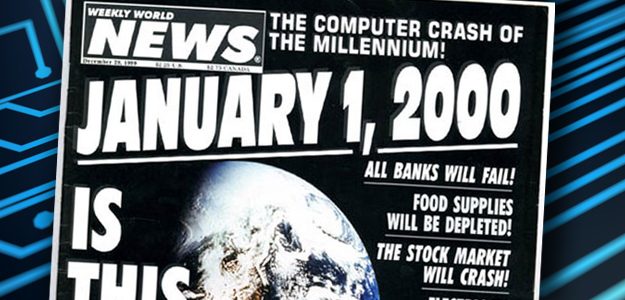
Hysteria. A media flurry. Basements full of canned beans. That was the situation leading up to the turn of the century, just 24 short years ago — for those of us who remember it. Of course, the Y2K frenzy ended up being unfounded, and in retrospect, most of us have since chalked up the silly worries to nothing more than apocalyptic anxiety.
That’s what makes the ongoing events of last night so shocking. Not only is a Y2K-level event possible — it just happened.
Just like that, the entire technical infrastructure of our world collapsed in a moment. Seemingly everything except our own personal devices was offline — leaving banks, airports, and even 911 call centers in the dark. Though many of us sitting at home aren’t experiencing the weight of the situation the same way, the skies being emptied of planes and airports abandoned help make the point.
The exact cause of the incident is as obscure as what people were saying leading up to Y2K — and for most people, it’ll never matter. A line of code in an update pushed through by a cybersecurity company resulting in mass Blue Screens of Death? Really? It’s as senseless and abstract as errors in the formatting of calendar data when the big numbers change.
The feeling of fragility, though, stays with you. It’s that nagging feeling that this whole system we all live in could implode overnight — and not even a company as big as Microsoft could fix the situation quickly.
It’s not just me who got a flashback to 1999, either. The creator of haveibeenpwned.com, the iconic website that checks whether your personal data has been compromised, took to X (formerly Twitter) to make that exact same comparison.
This is basically what we were all worried about with Y2K, except it's actually happened this time ☠️
— Troy Hunt (@troyhunt) July 19, 2024
I don’t think Hunt is implying that there’s some technical similarity to the Y2K countdown. His point, and mine, is that a technical glitch — no matter how small — could somehow disrupt the entire apparatus of modern life that we all depend on.
There are certainly lessons to be learned here from an IT infrastructure perspective — something I’m sure will be taken to heart by the industry at large. But maybe there’s another reminder to be had. Not that airlines should go back to Windows 3.1 and we should become Luddites waiting around for a cataclysm.
But to remember that there’s a brittle nature to the world we live in. And while technology has helped us tame the chaos, if we’re not careful, the whole house of cards can come tumbling down when just a single card wobbles under the pressure.
Maybe we’ve always known that in theory, but to see it happen in the real world? At the very least, it gives me some more empathy for my parents’ stockpiled basement in the winter of 1999.


